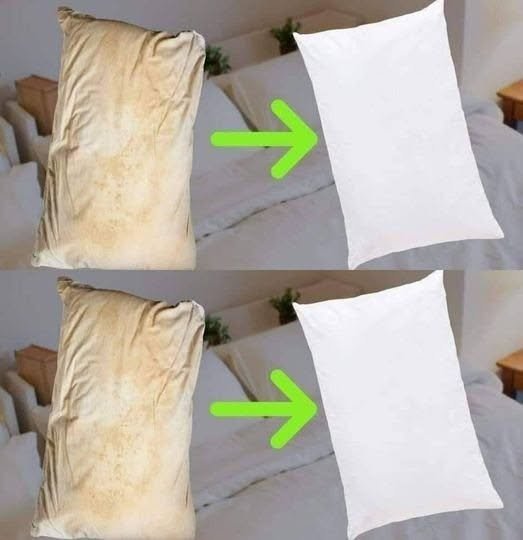
Here’s How to Clean Dirty Bed Pillows to Leave Them White and Smelling Fresh
A thorough rinse is important.
Laundry detergent left inside a pillow can contribute to residue and odors.
If the washing machine has an additional rinse option and the care label permits it, an extra rinse can be useful.
The goal is to remove as much detergent as possible without subjecting the pillow to unnecessary mechanical stress.
Step 6: Dry the Pillow Completely
This is one of the most important steps.
A pillow must be completely dry before it is returned to the bed.
Remaining moisture inside the filling can encourage unpleasant odors and potentially promote microbial growth.
If the care label allows tumble drying, use the recommended setting.
For some pillows, adding clean dryer balls can help separate and fluff the filling during drying.
If air-drying, place the pillow somewhere clean and well ventilated and turn it periodically so that all sides dry properly.
Don’t put a damp pillow back into a pillowcase.
How to Clean Memory Foam Pillows
Memory foam requires different treatment.
Most memory foam pillows should not be machine washed or soaked because water can become trapped inside the foam and damage its structure.
Instead:
Remove and wash the cover if it is removable.
Vacuum the foam gently if appropriate.
Spot-clean stains using a small amount of suitable mild cleaning solution.
Avoid saturating the foam.
Allow it to dry completely in a well-ventilated area.
Always follow the manufacturer’s instructions because memory foam products can vary.
How Often Should You Wash Your Pillows?
The pillowcase should generally be washed much more frequently than the pillow itself.
A washable pillow can be cleaned periodically according to its care instructions and how heavily it is used.
A pillow protector can reduce the need for frequent deep cleaning.
If a pillow remains stained, smells unpleasant after washing, has permanent clumping, or no longer provides adequate support, cleaning may not be enough.
When It’s Better to Replace the Pillow
Cleaning can refresh a pillow, but it cannot restore every old pillow.
Consider replacement when the pillow:
Has permanent lumps or clumps
Has lost its support
Remains unpleasantly odorous after cleaning
Has extensive mold or mildew
Has badly deteriorated filling
Has damaged seams that allow filling to escape
No longer feels comfortable
A pillow is part of your sleep environment, so comfort and condition matter as much as appearance.
How to Keep Pillows Cleaner for Longer
Prevention can make cleaning much easier.
Use a pillow protector underneath your pillowcase and wash it regularly.
Other useful habits include:
Wash pillowcases regularly
Keep hair and skin-care products from heavily coating the pillow
Allow bedding to air out
Avoid putting damp hair directly onto the pillow
Follow the pillow manufacturer’s washing instructions
Make sure pillows are completely dry after cleaning
These simple habits can reduce the buildup responsible for many odors and stains.
Final Thoughts
Dirty or yellowing pillows don’t necessarily need to be thrown away immediately.
If the pillow is washable and still in good condition, a careful cleaning can remove accumulated sweat, oils, odors, and surface grime.
The most important rules are simple: check the care label, use appropriate cleaning products, don’t overdo the detergent, and dry the pillow completely.
For memory foam, latex, and other specialty pillows, use the manufacturer’s recommended cleaning method rather than treating them like ordinary washable fabric pillows.
And if a pillow is badly damaged, persistently musty, or no longer provides proper support, replacing it may be the better solution.