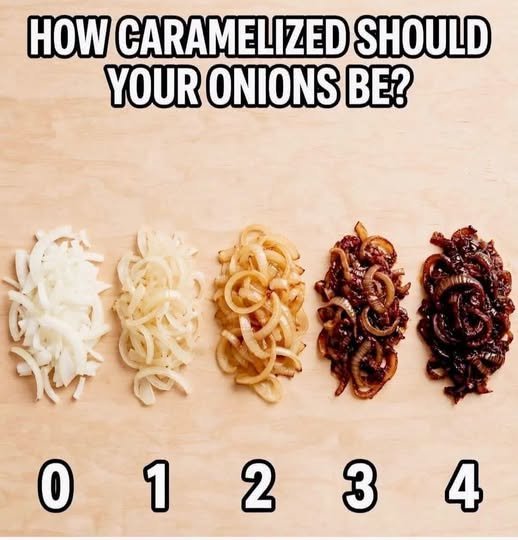
How Caramelized Should Your Onions Be? A Guide to Perfectly Sweet Onions
Usually, you do not need to add sugar.
Onions already contain natural sugars, and slow cooking allows those sugars to become concentrated and contribute to the characteristic sweetness.
Adding sugar can make onions sweet more quickly, but it changes the flavor and can increase the risk of burning.
If your goal is classic caramelized onions, patience is generally a better approach than relying on added sugar.
Do You Need Baking Soda?
Some recipes recommend adding a tiny amount of baking soda to accelerate browning and soften onions.
While it can speed the process, it also changes the onions’ texture and can make them break down too quickly. Excessive amounts can also produce an unpleasant alkaline flavor.
For traditional caramelized onions, it is generally unnecessary.
Butter, Oil, or Both?
Butter adds a rich, creamy flavor, while neutral oil has a higher smoke point and can help make prolonged cooking easier.
Using a combination of butter and oil is a popular approach.
The most important factor is not the exact fat you choose but maintaining appropriate heat and preventing the onions from burning.
How Do You Know When They’re Done?
Color is one clue, but texture and aroma are equally important.
Perfectly caramelized onions should be:
Very soft
Glossy
Deep golden to brown
Intensely aromatic
Sweet and savory
Easy to spread or gently pull apart
They should not taste bitter or strongly burnt.
Remember that the onions will continue cooking slightly from residual heat after you remove them from the pan.
Common Mistakes to Avoid
Using Too Much Heat
Fast browning is not the same as proper caramelization. Excessive heat can produce burnt edges and bitter flavors.
Crowding the Pan Too Much
A large quantity of onions releases significant moisture. An overcrowded pan can cause them to steam for a long time instead of browning efficiently.
Not Stirring Enough
You do not need to stir constantly, but ignoring the pan completely can allow the bottom layer to burn.
Stirring Too Often
Constant stirring can also slow browning by preventing the onions from maintaining enough contact with the hot pan.
A balanced approach works best.
Stopping Too Early
Soft, translucent onions may look finished, but they have not yet developed the deep flavor associated with true caramelization.
What Can You Make With Caramelized Onions?
Once you have a batch of deeply caramelized onions, the possibilities are almost endless.
They can be served with:
Burgers
Steak
Roast meats
Grilled cheese sandwiches
Omelets
Pasta
Pizza
Tarts
Mashed potatoes
Crostini
French onion soup
They can also be stirred into sauces, dips, or grain dishes.
Because their flavor is so concentrated, even a small spoonful can make a noticeable difference.
How Long Should You Cook Them?
There is no universal cooking time.
The final result depends on the quantity of onions, their water content, the size of the slices, the type of pan, the heat level, and your preferred degree of browning.
As a general guide:
5–10 minutes: soft and translucent 15–25 minutes: lightly golden and sweet 30–60 minutes: deeply golden and caramelized 60+ minutes: very dark, jammy, intensely concentrated
These are approximate ranges rather than strict rules. Use appearance and texture as your primary guides.
Final Thoughts
The perfect caramelized onion is not necessarily the darkest onion.
For most dishes, the ideal result is somewhere between deep golden and rich brown—soft, glossy, intensely aromatic, and naturally sweet without tasting burnt.
The secret is simple: use moderate heat, give the onions enough space, stir when necessary, and most importantly, be patient.
When you allow onions to slowly transform, their sharpness disappears and their natural sweetness becomes concentrated into one of the most versatile flavor-building ingredients in the kitchen.