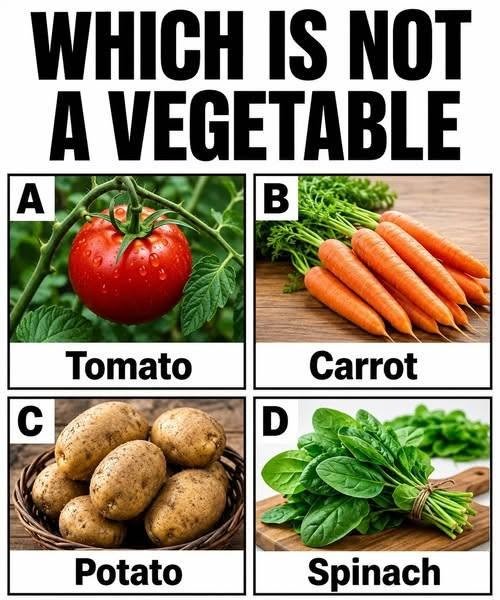
Which Is Not a Vegetable? The Surprising Truth About Tomatoes
Tomatoes are one of the most familiar foods in the world. They appear in salads, sauces, soups, sandwiches, pizzas, and countless traditional dishes. Yet there is a fascinating scientific fact hiding in plain sight: a tomato is botanically a fruit.
This seemingly simple distinction has caused confusion for generations. How can something that is treated like a vegetable in the kitchen actually be classified as a fruit by botanists?
The answer lies in the difference between botanical classification and culinary classification.
Botanically, a Tomato Is a Fruit
From a botanical perspective, a fruit is a structure that develops from the flower of a plant, usually after fertilization, and contains or is associated with seeds.
By this definition, tomatoes clearly qualify.
The tomato develops from the flower of the tomato plant and contains seeds. Botanically, it is classified as a type of berry.
That may sound surprising because the everyday meaning of “berry” is quite different. In botany, however, a berry is a specific type of fleshy fruit that develops from a single flower’s ovary and generally contains seeds within its fleshy interior.
Tomatoes fit this definition.
Why Do We Call Tomatoes Vegetables?
The confusion comes from the kitchen rather than the laboratory.
Culinary classifications are based largely on how foods are used, prepared, and experienced.
Tomatoes are generally used in savory dishes alongside foods such as onions, peppers, cucumbers, carrots, and leafy greens. They are rarely treated like traditional sweet fruits such as apples, oranges, or grapes.
For cooking purposes, calling tomatoes a vegetable makes perfect practical sense.
So both statements can be correct:
Botanically: tomato = fruit.
Culinarily: tomato = vegetable.
There is no real contradiction because the two systems are answering different questions.
What Makes a Fruit a Fruit?
The botanical definition is based on plant structure rather than flavor.
A fruit develops from the reproductive structures of a flowering plant and helps protect or distribute its seeds.
This means that several foods commonly considered vegetables are technically fruits.
Examples include:
Tomatoes
Cucumbers
Bell peppers
Eggplants
Zucchini
Pumpkins
Squash
All of these develop from flowers and contain seeds, placing them in botanical fruit categories.
Tomatoes Are Technically Berries
The botanical classification becomes even more interesting when we look at the specific type of fruit.
A tomato is botanically considered a berry.
Botanical berries are generally fleshy fruits that develop from a single ovary and contain seeds embedded within the fleshy interior.
This is why tomatoes belong to the same broad botanical category as certain fruits that might seem completely unrelated in everyday cooking.
The word “berry” therefore has a scientific meaning that is much broader than its common culinary use.
What About Other Foods Called Vegetables?
Tomatoes are not the only foods that challenge the way we think about vegetables.
Several familiar “vegetables” are botanically fruits.
Cucumbers
Cucumbers develop from flowers and contain seeds, making them botanical fruits.
Bell Peppers
Red, green, yellow, and other sweet peppers are also fruits because they develop from the flower and contain seeds.
Eggplants
Eggplants are another botanical fruit commonly prepared as a vegetable.
Zucchini
Zucchini is a type of squash and is botanically a fruit.
Pumpkins
Pumpkins are also fruits, despite their overwhelmingly savory culinary role in many dishes.
The distinction becomes especially interesting when we realize that the kitchen and botany simply use different classification systems.