To effectively clean silver, it helps to understand why it turns black in the first place. Silver is a relatively reactive metal, and when it is exposed to sulfur compounds present in the air, humidity, and even our own sweat, it undergoes a chemical reaction. This reaction creates silver sulfide (Ag₂S) on the surface of the metal, which appears as a dark, matte layer commonly referred to as tarnish . This process is accelerated by factors such as pollution, high humidity, and contact with certain foods (like eggs) or cosmetics .
Crucially, tarnish is a surface-level issue. Unlike rust on iron, which eats away at the metal, silver tarnish is a thin film that sits on top of the silver. This means the underlying metal is usually perfectly intact and can be revealed again with the right approach . While commercial polishes use abrasives to physically rub this layer away, they also remove small amounts of the silver itself over time. The methods described below are preferable because they often rely on chemical reactions that convert the tarnish back into silver, preserving your jewelry’s details and weight.
The Aluminum Foil and Baking Soda Method: A Chemical Reversal
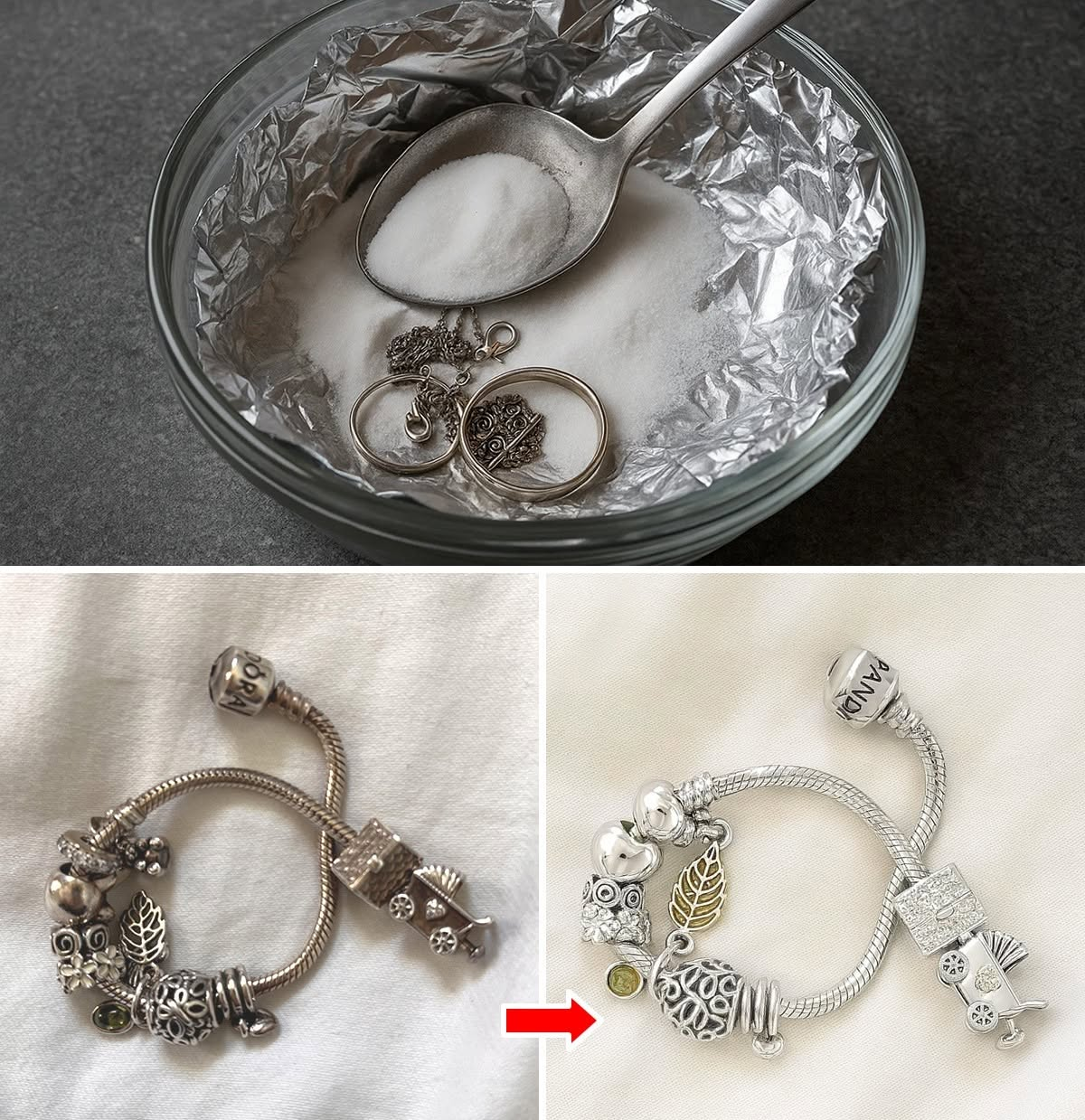
The most effective and popular home remedy for heavily tarnished silver is the aluminum foil method, often combined with baking soda and hot water. This technique is not just a hack; it is a well-documented electrochemical process. When you place tarnished silver in contact with aluminum foil in a conductive solution (created by baking soda and hot water), a small electrical current is generated. The aluminum, which has a higher affinity for sulfur than silver does, essentially pulls the sulfur away from the silver sulfide. The result is that the silver metal is restored, while the aluminum foil becomes dark and corroded .
This method is particularly praised for its ability to clean intricate details, such as the grooves in charm bracelets or the links of a chain, without the need for scrubbing . The solution also produces a faint smell of rotten eggs (hydrogen sulfide gas) during the process, which is a normal part of the reaction . It is important to note that this method works best on sterling silver (92.5% silver) and may be less effective on silver-plated items, as the underlying metal may not react the same way .
Step-by-Step Instructions for the Foil Bath
To perform this cleaning method safely, gather a glass or ceramic bowl, aluminum foil, baking soda, salt, and boiling water. First, line the bowl completely with the aluminum foil, ensuring the shiny side is facing upwards. Place your blackened silver jewelry onto the foil, making sure each piece makes direct contact with the metal. Next, sprinkle a generous amount of baking soda (about one to two tablespoons) and a pinch of salt over the jewelry. Then, slowly pour the boiling water into the bowl until the pieces are fully submerged. You will likely see the tarnish lift almost immediately, and you may notice a slight fizzing or a sulfurous odor. Allow the jewelry to soak for five to ten minutes, or up to twenty minutes for stubborn tarnish .
After soaking, use plastic tongs or a soft utensil to remove the jewelry from the bath. Rinse each piece thoroughly under cold running water to remove any residual baking soda solution. Finally, dry the jewelry completely with a soft, lint-free cloth or paper towel. For extra shine, you can gently buff the pieces with a microfiber polishing cloth. This method is incredibly effective for restoring the bright, metallic luster of silver without stripping away any of the precious metal.