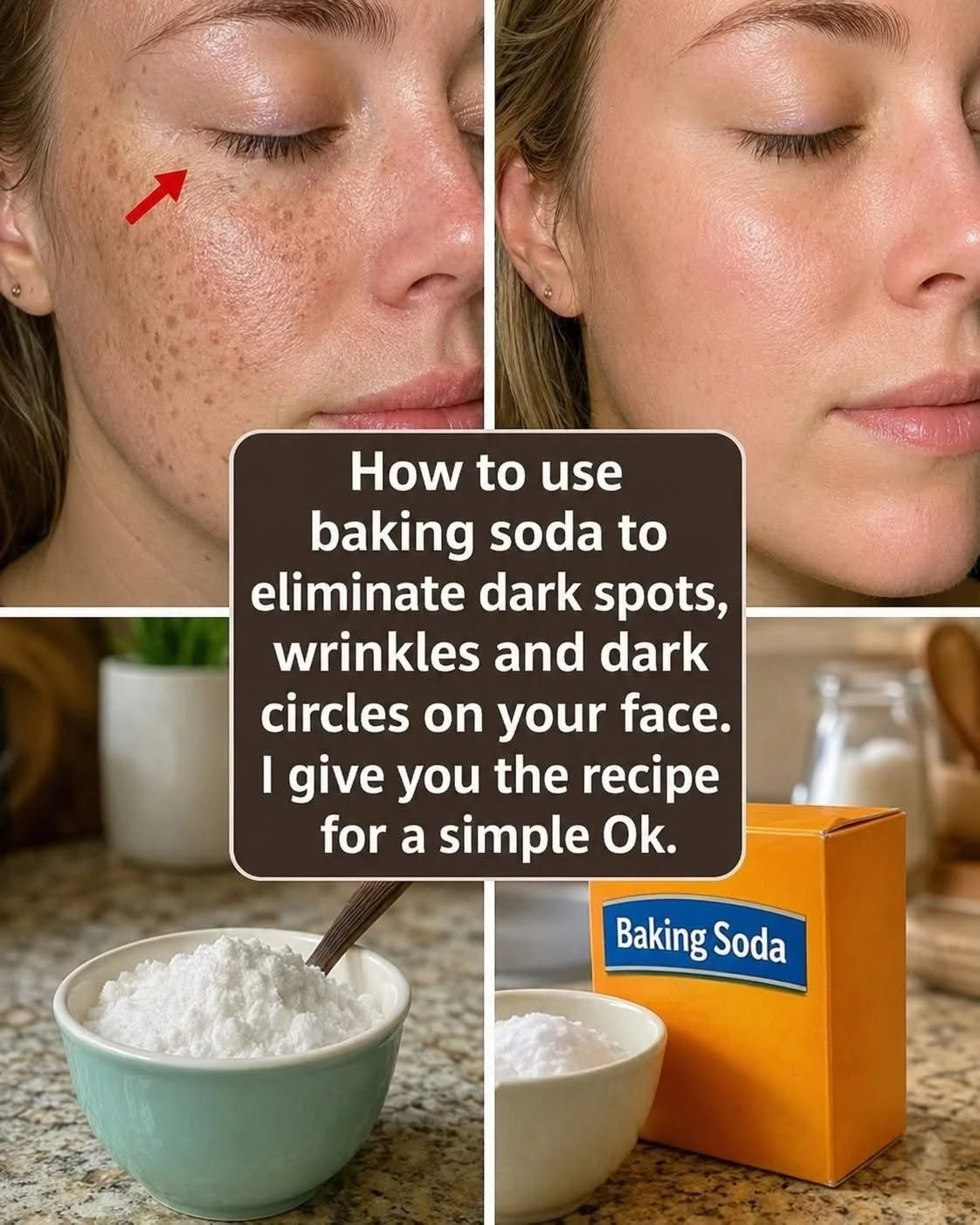
The image is compelling: a dramatic before-and-after of a woman’s face, with the left side showing prominent dark spots across the cheek and the right side displaying smooth, even-toned skin. The text promises that baking soda can eliminate dark spots, wrinkles, and dark circles, and offers a “simple” recipe. For anyone frustrated by skin concerns and reluctant to spend money on expensive treatments, the box of baking soda in the kitchen cabinet seems like a miracle waiting to happen. However, dermatologists and skin care experts have issued clear warnings: applying baking soda directly to the face does not solve these problems and can actually make skin worse by disrupting its protective barrier, causing irritation, dryness, and potentially triggering post-inflammatory hyperpigmentation. The core issue is chemistry. Healthy facial skin maintains a slightly acidic surface, with a pH of approximately 4.5 to 5.8, a condition known as the acid mantle. This acidity is essential for barrier function, moisture retention, and defense against harmful microorganisms. Baking soda (sodium bicarbonate) has a pH of around 8 to 9, making it alkaline. When applied directly to the skin, it neutralizes and disrupts the acid mantle, compromising the skin barrier and setting off a cascade of negative effects. This article examines the science of why baking soda is unsuitable for facial skin care, evaluates each of its claimed benefits against the evidence, and presents the proven alternatives that dermatologists actually recommend.