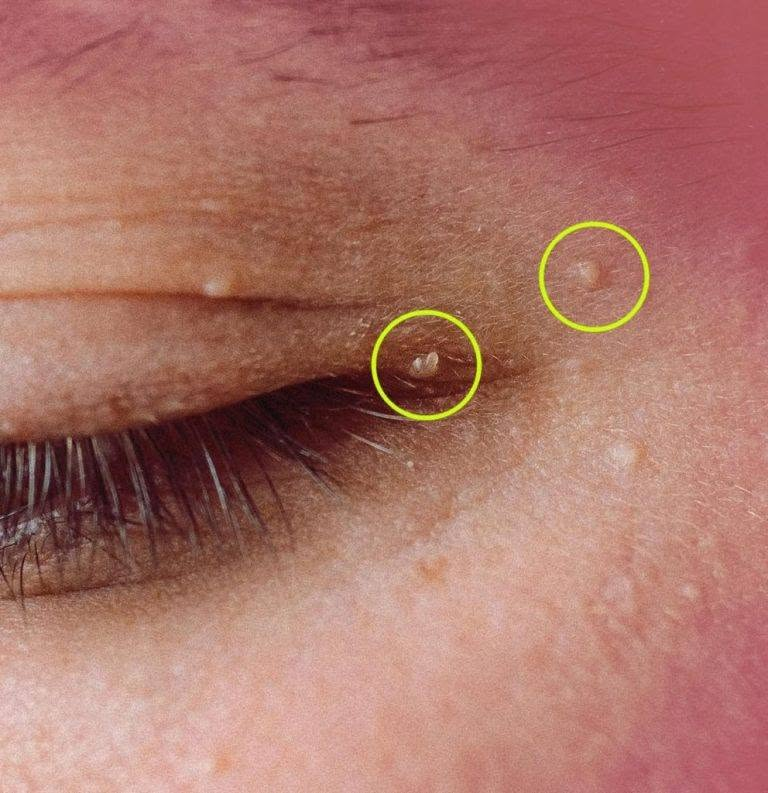
Milia are small, superficial cysts that form when keratin—a tough, protective protein found in the outer layer of the skin, as well as in hair and nails—becomes trapped beneath the skin’s surface. The normal skin renewal process involves old cells shedding and new cells rising to replace them. When this process is disrupted, dead skin cells become trapped in tiny pockets near the surface, and the keratin inside hardens into a small, white or yellowish pearl-like bump. These cysts are typically one to two millimeters in diameter, dome-shaped, and firm to the touch. They are most commonly found on the face, particularly around the eyes, eyelids, cheeks, and nose, but can appear anywhere on the body.
Primary vs. Secondary Milia
Dermatologists classify milia into two main categories. Primary milia occur spontaneously on otherwise healthy skin. They are extremely common in newborns, affecting up to half of all infants, and usually resolve on their own within a few weeks. In adults, primary milia can appear at any age and are more common in people with oily skin or those who have experienced sun damage, which thickens the outer layer of the skin and can impede normal cell shedding. Secondary milia, on the other hand, develop as a result of trauma to the skin. This can occur after burns, blistering rashes, abrasions, or cosmetic procedures such as laser resurfacing or dermabrasion. In these cases, the healing process can cause the skin to trap keratin, leading to the formation of milia. Prolonged use of heavy, occlusive skincare products, particularly around the eyes, may also contribute to their development by hindering the natural exfoliation process.
Why You Should Never Squeeze Milia
The Difference Between Milia and Acne
The most critical distinction between milia and acne is structural. A whitehead or blackhead (comedone) is a hair follicle or pore that has become clogged with sebum and dead skin cells. Crucially, it has an opening to the skin’s surface, which is why it can be extracted with pressure. Milia, however, are closed cysts with no pore opening. They are completely sealed beneath the epidermis. Squeezing a milium is like trying to pop a water balloon encased in plastic wrap—the pressure has nowhere to go. Instead of expelling the keratin, squeezing tears the surrounding tissue, causing inflammation, bruising, and potentially permanent scarring. In the delicate periorbital area, this can lead to more serious complications.
The Risks of DIY Extraction
Beyond the immediate pain and bleeding, attempting to extract milia at home carries significant risks. The skin around the eyes is the thinnest on the body, making it highly susceptible to trauma. Using unsterilized tools, such as needles or tweezers, introduces bacteria into the wound, which can lead to infections like cellulitis. Even with sterilized instruments, the angle and depth required to safely extract a milium are difficult to judge without professional training. Incomplete removal can leave behind a fragment of the cyst wall, causing the milium to grow back or develop into a larger, more inflamed lesion. Dermatologists repeatedly warn against DIY extraction for these reasons.