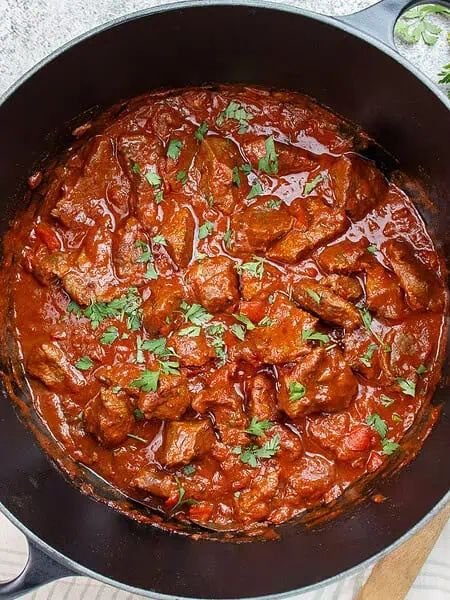
Hungarian Beef Pörkölt 🇭🇺: A Traditional Hungarian Beef Stew
1. Prepare the Beef
Cut the beef into evenly sized pieces.
Pat the meat dry with paper towels and season lightly with salt and pepper.
Beef chuck is particularly suitable because its connective tissue becomes tender during slow cooking.
2. Cook the Onions
Heat the lard or oil in a large heavy-bottomed pot over medium heat.
Add the chopped onions and cook slowly for 8–10 minutes, stirring frequently.
The onions should become soft and translucent with a lightly golden appearance. Avoid browning them too aggressively.
3. Add the Paprika
Remove the pot from the heat for a moment.
Add the sweet Hungarian paprika and, if desired, the hot paprika.
Stir thoroughly so the paprika coats the onions.
This step is important because paprika can become bitter if it burns in very hot fat.
4. Add the Beef
Return the pot to low or medium-low heat.
Add the beef and stir well until every piece is coated with the onion and paprika mixture.
Cook for several minutes, turning the meat occasionally.
5. Add the Vegetables and Seasonings
Add the minced garlic, chopped tomato, green pepper, and caraway seeds if using.
Stir everything together.
The tomato and pepper provide moisture as they cook down and help create the flavorful base of the sauce.
6. Add a Small Amount of Liquid
Pour in enough water or beef broth to prevent the mixture from sticking.
Pörkölt should not be submerged in liquid like a soup. The goal is to create a concentrated sauce.
Bring the mixture to a gentle simmer.
7. Slow-Cook the Beef
Cover the pot and cook over low heat for approximately 1½–2½ hours, depending on the cut and size of the beef pieces.
Stir occasionally.
If the liquid becomes too low before the beef is tender, add a small amount of water or broth.
The beef is ready when it is fork-tender and the sauce has become thick and deeply flavored.
8. Reduce the Sauce
Near the end of cooking, remove the lid if necessary and allow excess liquid to evaporate.
The finished Pörkölt should have a rich, concentrated sauce that clings to the meat.
Taste and adjust the salt and paprika as needed.
The Secret to Authentic Hungarian Pörkölt
Use Quality Hungarian Paprika
Paprika is central to the dish. Choose a good-quality Hungarian sweet paprika for the best traditional flavor.
Take Your Time With the Onions
The onions create much of the sauce’s body and natural sweetness. Cooking them slowly gives the dish greater depth.
Don’t Burn the Paprika
Paprika should be protected from excessive heat. Adding it after briefly removing the pot from the burner is a simple but important technique.
Add Liquid Gradually
Pörkölt should be thick and concentrated rather than watery. Add only enough liquid to allow the beef to cook gently.
Cook Until Tender
Good Pörkölt cannot be rushed. Low, slow cooking allows the connective tissue in the beef to break down and produces tender meat and a rich sauce.
What Is the Difference Between Pörkölt and Goulash?
These two dishes are often confused outside Hungary.
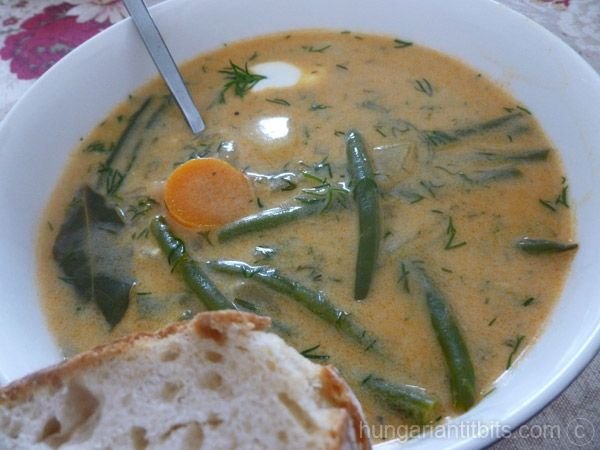
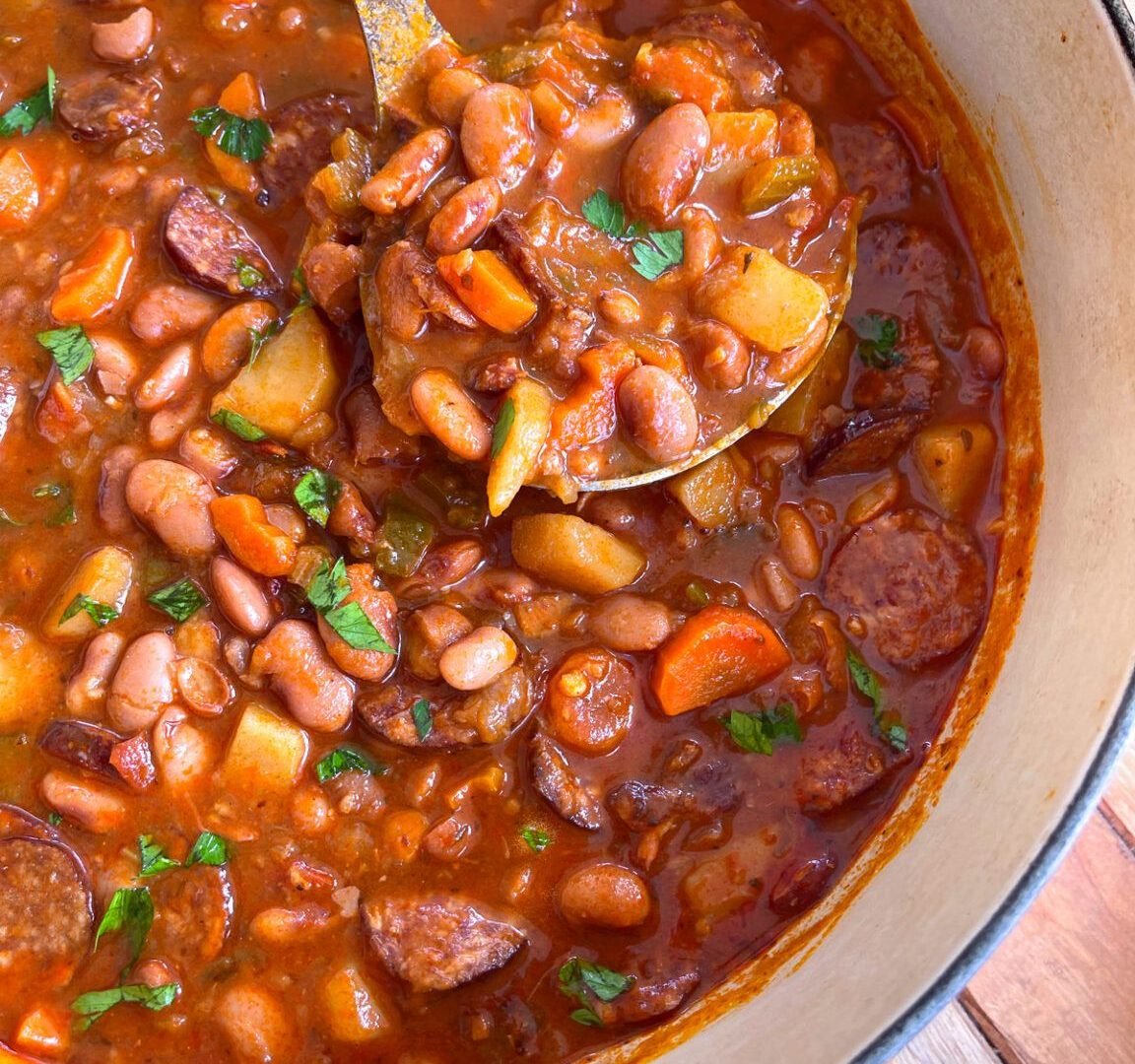
Hungarian Gulyás is traditionally a soup containing beef, paprika, potatoes, vegetables, and plenty of broth.
Pörkölt is a thicker meat dish with a concentrated onion-and-paprika sauce.
The distinction is particularly useful when recreating traditional Hungarian recipes because a dish labeled “Hungarian goulash” outside Hungary may actually resemble Pörkölt more closely than authentic Gulyás.
What to Serve With Beef Pörkölt
The classic accompaniment is nokedli, small Hungarian egg dumplings that are perfect for soaking up the rich sauce.
Other excellent options include:
Boiled potatoes
Buttered egg noodles
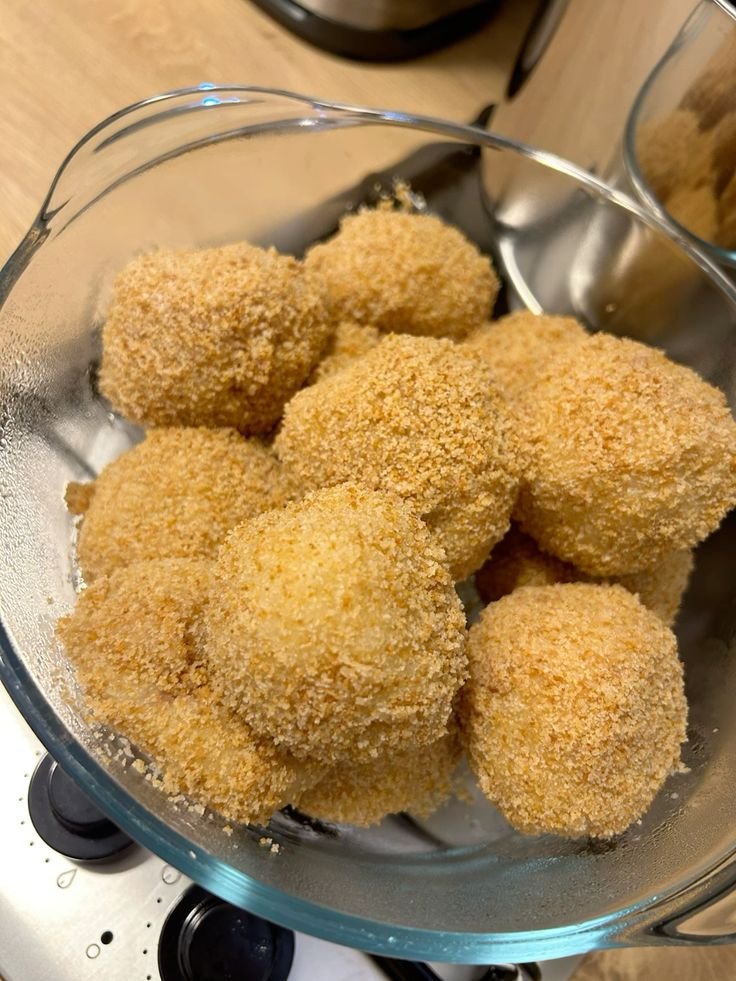
Hungarian dumplings
Rustic country bread
Rice
Pickled cucumbers
Hungarian cucumber salad
Pickled peppers
For a traditional presentation, spoon the tender beef and sauce generously over freshly prepared nokedli.
Can Beef Pörkölt Be Made Ahead?
Yes. Pörkölt is an excellent make-ahead dish.
After cooling, store it in an airtight container in the refrigerator for up to several days. The flavors often become even more developed after resting.
Reheat gently on the stovetop. If the sauce has become too thick, add a small splash of water or beef broth.
Pörkölt can also be frozen in suitable portions. Allow it to cool completely before freezing and thaw it gradually in the refrigerator before reheating.
Common Mistakes to Avoid
Using Too Much Water
Too much liquid can turn the dish into a soup. Pörkölt should have a thick, concentrated sauce.
Cooking at Excessively High Heat
High heat can burn the paprika and cause the sauce to develop a bitter flavor.
Using Very Lean Beef
Extremely lean beef can become dry during slow cooking. Beef chuck or another suitable stewing cut generally produces a more tender result.
Rushing the Cooking Process
The beef needs time to become tender. Keep the heat low and allow the sauce to develop gradually.
Adding Sour Cream Directly
Traditional Beef Pörkölt itself does not require sour cream. If you want a creamy variation, sour cream can be served alongside it or used in a related Hungarian dish such as paprikash.
Frequently Asked Questions
Is Hungarian Beef Pörkölt spicy?
Traditional Pörkölt is usually rich and paprika-forward rather than intensely spicy. Sweet Hungarian paprika is commonly used, while hot paprika can be added according to taste.
What type of beef is best?
Beef chuck is an excellent choice because it becomes tender and flavorful during slow cooking. Other cuts suitable for stewing can also be used.
Can I make Pörkölt without tomatoes?
Yes. Tomatoes and peppers are commonly used in modern and regional versions, but the essential character of Pörkölt comes from the onions, paprika, meat, and slow cooking.
What are the best dumplings to serve with Pörkölt?
Nokedli are a classic choice. Their soft texture and irregular shape make them especially good at holding the rich paprika sauce.
Can I use pork instead of beef?
Yes. Pork Pörkölt is another traditional Hungarian preparation. The cooking time may vary depending on the cut of pork.
Can Pörkölt be cooked in a slow cooker?
Yes, although preparing the onions and paprika on the stovetop first can help develop a deeper flavor before transferring everything to the slow cooker.
A Taste of Traditional Hungarian Home Cooking
Hungarian Beef Pörkölt represents the heart of traditional Hungarian comfort food. It does not depend on complicated ingredients or elaborate techniques. Instead, it relies on patience, quality paprika, tender beef, and a carefully developed onion base.
The result is a deeply flavorful dish that feels rustic, generous, and satisfying.
Whether served with homemade nokedli for a traditional Hungarian meal or with simple potatoes and bread for a casual family dinner, Beef Pörkölt brings authentic Hungarian flavor to the table.
Final Thoughts
Hungarian Beef Pörkölt 🇭🇺 is a classic dish worth making slowly and enjoying generously.
Tender beef simmered with onions, Hungarian paprika, garlic, tomatoes, and peppers produces a rich sauce that is comforting without being overly complicated.
Serve it with nokedli, potatoes, or rustic bread, add a few Hungarian pickles on the side, and you have a traditional meal that showcases the distinctive flavors of Hungarian cuisine.
Once you make it at home, it is easy to understand why Pörkölt has remained a cherished part of Hungarian cooking for generations.