The process is straightforward, but patience is important.
1. Prepare the Beef
Cut the beef into relatively large, even cubes. Pat the pieces dry before cooking.
Drying the meat helps it brown rather than simply steam in the pot.
2. Cook the Onions
Heat a heavy pot and add oil, lard, or another cooking fat traditionally used for the dish.
Add finely chopped onions and cook them slowly until soft and translucent. They should develop sweetness without becoming heavily browned.
3. Add the Paprika
Lower the heat before adding the paprika.
Stir it into the onions and immediately continue with the next ingredients or a small amount of liquid. Avoid scorching the paprika, as burnt paprika can quickly become bitter.
4. Add the Beef
Add the beef cubes and stir thoroughly so they become coated in the paprika and onion mixture.
Season with salt and pepper.
Tomato, green pepper, garlic, and caraway can then be added depending on the recipe.
5. Cook Slowly
Add a small amount of water or stock and cover the pot.
The beef should simmer gently rather than boil aggressively.
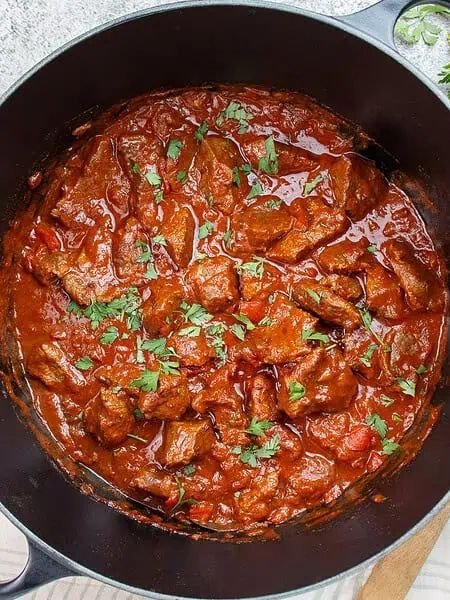
As the meat cooks, it releases its own juices and combines with the onions and paprika to create the characteristic pörkölt sauce.
Additional liquid can be added gradually when necessary, but Marhapörkölt generally benefits from a relatively concentrated cooking process.
6. Finish Until Tender
Continue simmering until the beef is completely tender.
Depending on the cut and size of the pieces, this can take roughly 1½ to 2½ hours, sometimes longer.
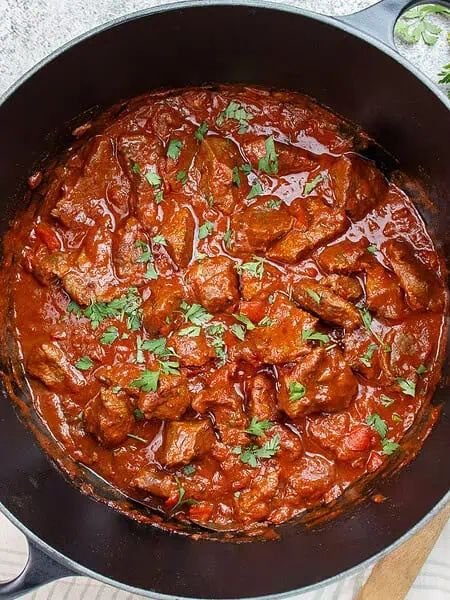
The finished beef should be tender enough to cut easily with a fork, while the sauce should be rich and concentrated.
What Does Marhapörkölt Taste Like?
Marhapörkölt has a deeply savory flavor with a distinctive paprika aroma.
The onions provide sweetness, while the slow-cooked beef contributes richness and umami. Hungarian paprika gives the dish its characteristic warmth and color.
Despite its rich appearance, the dish does not have to be extremely spicy. Traditional sweet paprika provides plenty of flavor without intense heat.
For those who enjoy spicy food, hot paprika or fresh chili peppers can be added.
The texture is equally important. Properly cooked beef should be tender and juicy rather than dry or stringy.
Marhapörkölt vs. Goulash
Hungarian beef stew is sometimes confused with goulash, but the two dishes are not identical.
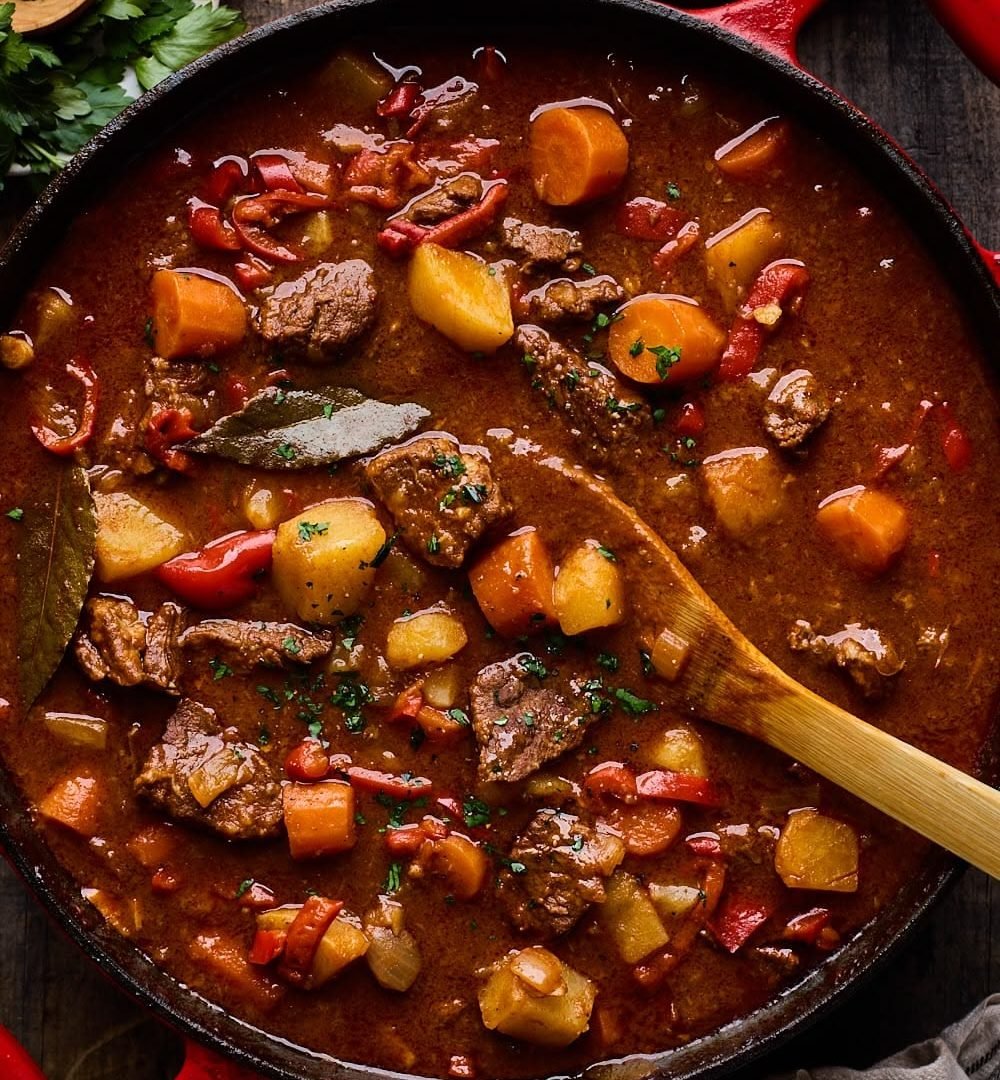
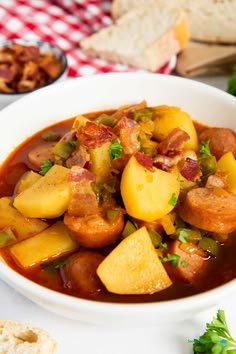
Hungarian goulash, or gulyás, is traditionally more soup-like and commonly includes potatoes and other vegetables.
Pörkölt is generally thicker and more concentrated, with meat and paprika playing the central roles.
Both belong to Hungary’s rich tradition of paprika-based cooking, but their textures and preparations are different.
What to Serve With Marhapörkölt
Marhapörkölt is particularly delicious with traditional Hungarian accompaniments.
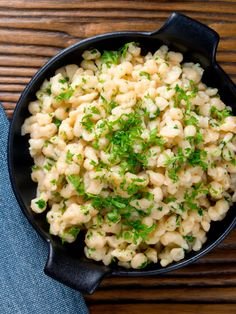
Nokedli
Soft Hungarian egg dumplings are one of the classic choices. Their light, tender texture works beautifully with the rich sauce.
Egg Noodles
Simple noodles provide an easy way to absorb the flavorful sauce.
Boiled Potatoes
Potatoes offer a neutral base that balances the intense beef and paprika flavors.
Pickles
Hungarian pickles, cucumber salad, or other acidic side dishes can provide a refreshing contrast to the richness of the stew.
Fresh Bread
A slice of crusty bread is also excellent for soaking up the remaining sauce.
Tips for Making Better Marhapörkölt
Use a suitable cut of beef. Chuck and other braising cuts generally perform better than very lean cuts.
Do not rush the onions. Their sweetness contributes significantly to the finished sauce.
Protect the paprika from burning. Excessive heat can make it bitter.
Keep the simmer gentle. Slow cooking helps break down connective tissue and produces tender meat.
Avoid flooding the pot with liquid. Pörkölt is meant to develop a concentrated sauce rather than become a thin soup.
Give it time to rest. Like many slow-cooked dishes, the flavors can become even more integrated after resting briefly before serving.
A Classic Taste of Hungarian Home Cooking
Marhapörkölt represents an important idea in Hungarian cooking: extraordinary flavor does not necessarily require a long list of ingredients.
Beef, onions, paprika, and patience form the foundation. The cooking technique does the rest.
The dish is particularly suited to family meals because it can be prepared in a large pot and served generously with dumplings, potatoes, noodles, and pickles. Its rich aroma fills the kitchen as the beef slowly becomes tender.
Final Thoughts
Hungarian Beef Stew, or Marhapörkölt, is a hearty dish built around simplicity, patience, and the unmistakable flavor of Hungarian paprika.
Tender beef slowly simmered with onions creates a rich and comforting meal that works beautifully with nokedli, potatoes, noodles, or fresh bread.
For anyone exploring Hungarian cuisine, Marhapörkölt is an excellent dish to try. It captures the warmth of traditional home cooking while demonstrating how a handful of carefully prepared ingredients can create something remarkably satisfying.