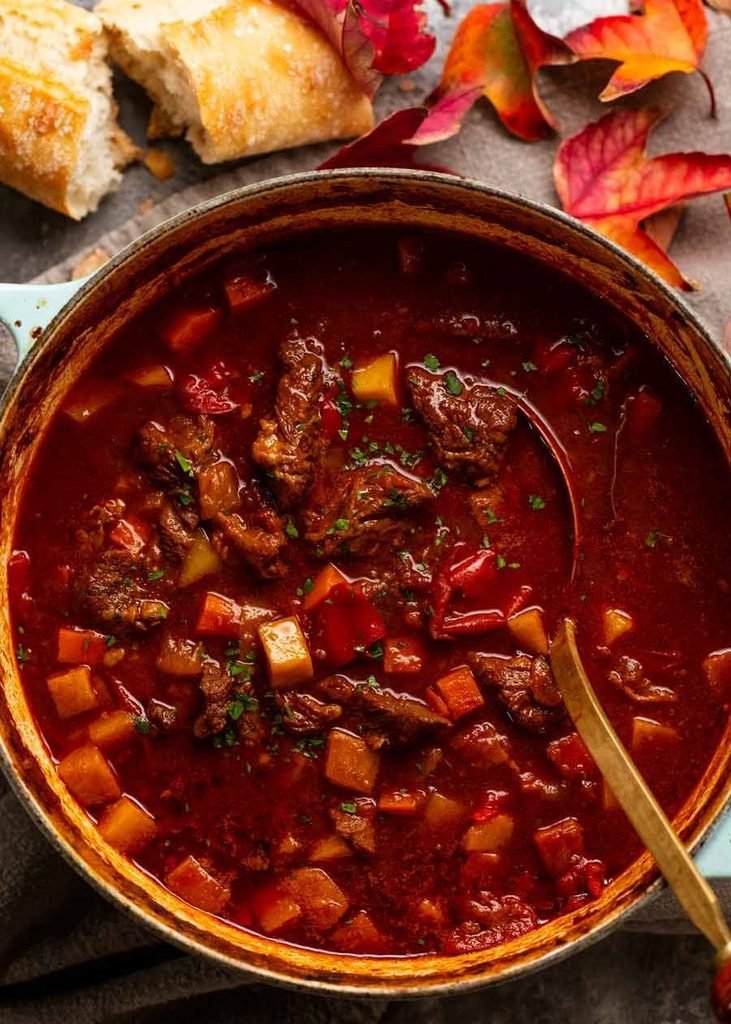
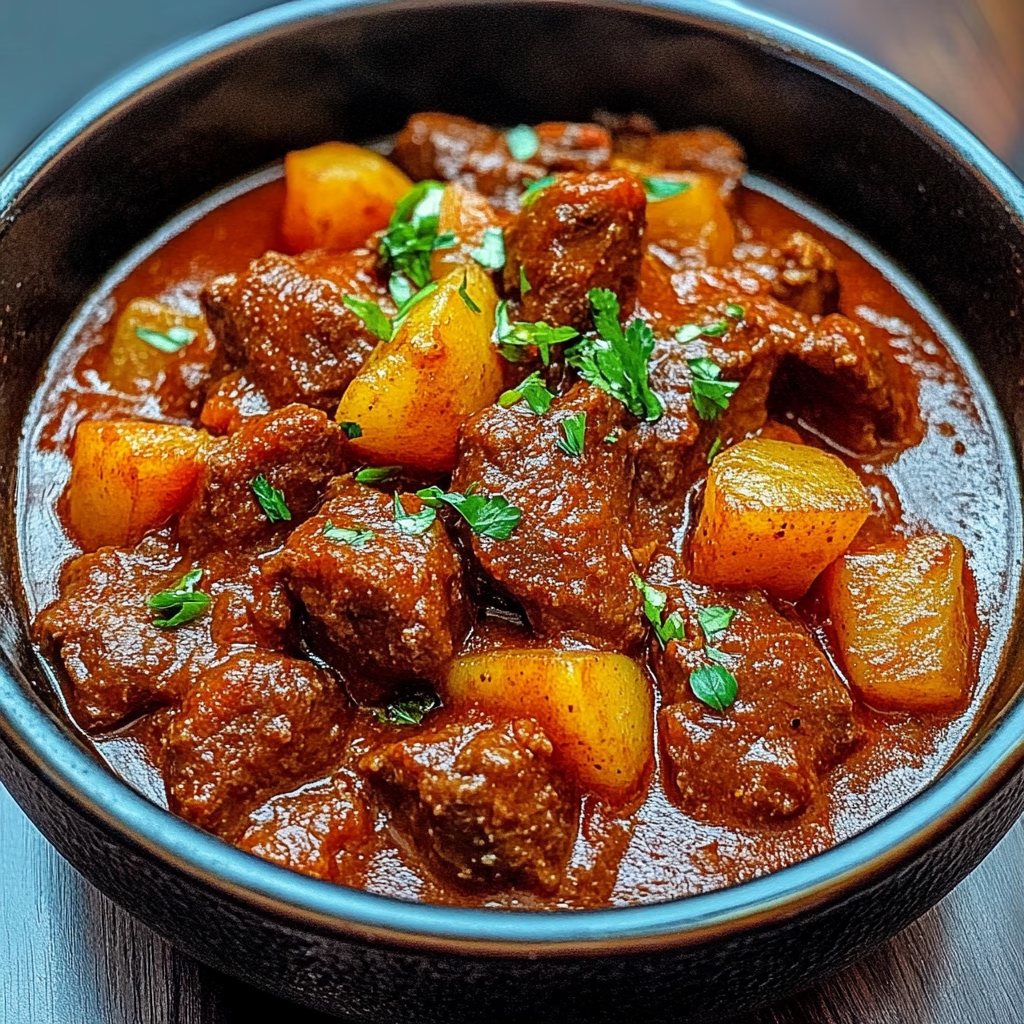
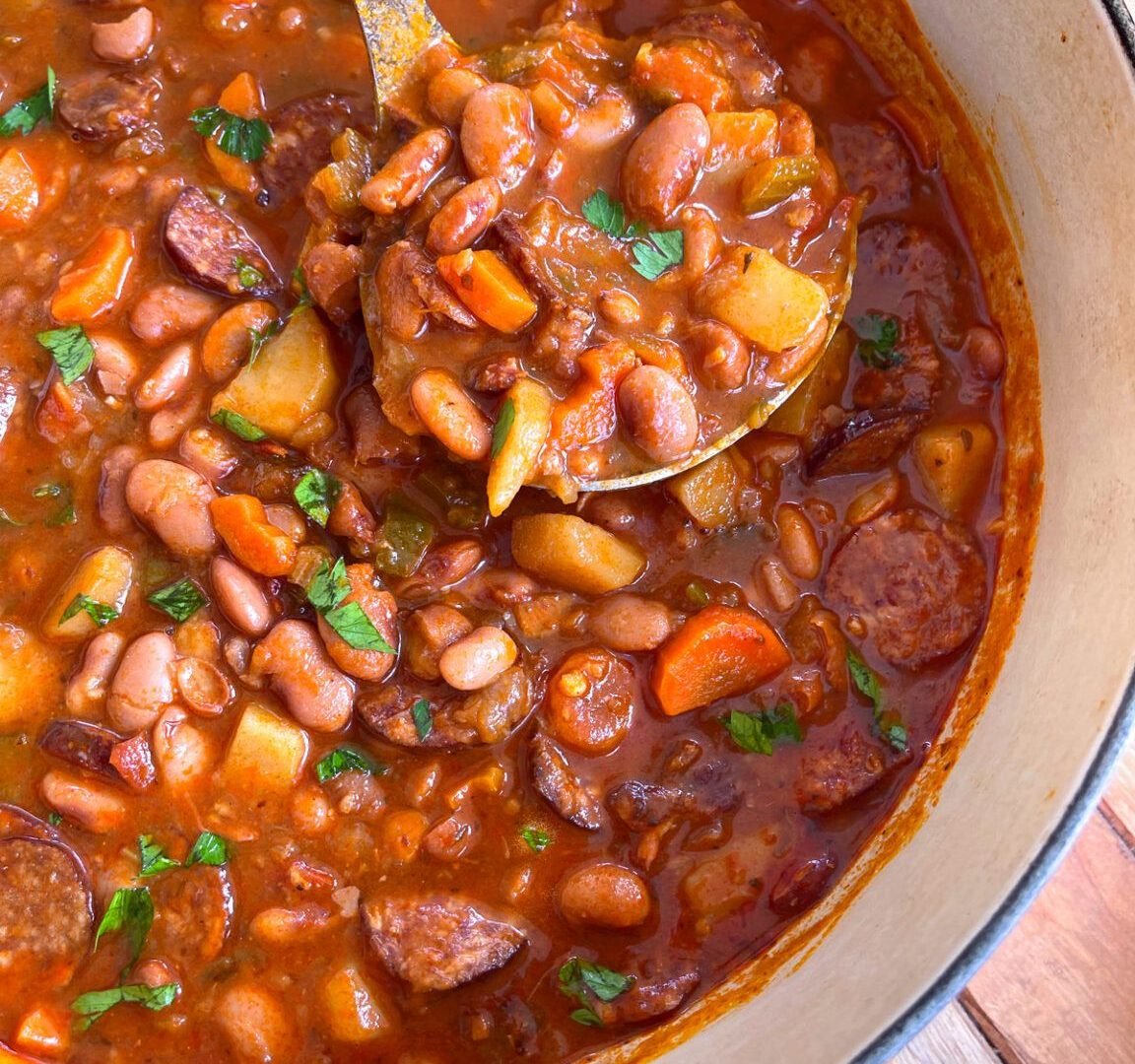
Few dishes represent traditional Hungarian cuisine as vividly as Goulash Soup, known in Hungarian as Gulyásleves. Rich with paprika, tender beef, onions, potatoes, and vegetables, this hearty soup combines the comforting qualities of a stew with the warmth and lighter consistency of a traditional soup.
Gulyásleves has deep roots in Hungarian culinary culture and is closely associated with the country’s historic gulyás, or herdsman, tradition. Today, it remains a beloved home-cooked meal and a familiar dish in Hungarian restaurants.
What Is Gulyásleves?
The Hungarian word gulyás refers to a herdsman, while leves means soup. The name therefore reflects the dish’s connection to traditional herdsmen’s cooking.
Unlike some modern interpretations of goulash that resemble thick stews, traditional Hungarian goulash soup is distinctly soupy, with plenty of flavorful broth surrounding pieces of meat and vegetables.
Its characteristic flavor comes from Hungarian paprika, which gives the broth its distinctive color, aroma, and earthy sweetness.
The Essential Ingredients
Although recipes vary between households and regions, the traditional ingredients commonly include:
Beef
Onions
Hungarian paprika
Potatoes
Carrots
Parsley root
Celery or celery root
Garlic
Caraway seeds
Salt and black pepper
Water or stock
Some versions also include tomatoes, green peppers, or small dumplings known as csipetke.
The beauty of Gulyásleves lies in how these straightforward ingredients develop a rich flavor through slow cooking.
Choosing the Beef
Beef is the traditional meat used in goulash soup.
Cuts with some connective tissue and marbling work particularly well because slow cooking gradually tenderizes the meat while adding richness to the broth.
Common choices include:
Beef chuck
Beef shoulder
Stewing beef
The meat is typically cut into bite-sized cubes so that it cooks evenly and is easy to eat with a spoon.
The Importance of Hungarian Paprika
Paprika is central to the identity of Gulyásleves.
Hungarian paprika is available in different varieties, ranging from sweet and mild to hotter and more intense. Sweet paprika is commonly used as the main seasoning, while hotter varieties can be added according to preference.
Paprika also gives the soup its characteristic deep reddish color.
One important technique is to avoid burning the paprika. Excessive heat can make it bitter, so it is often added after the onions have softened and the pot has been removed from direct high heat.