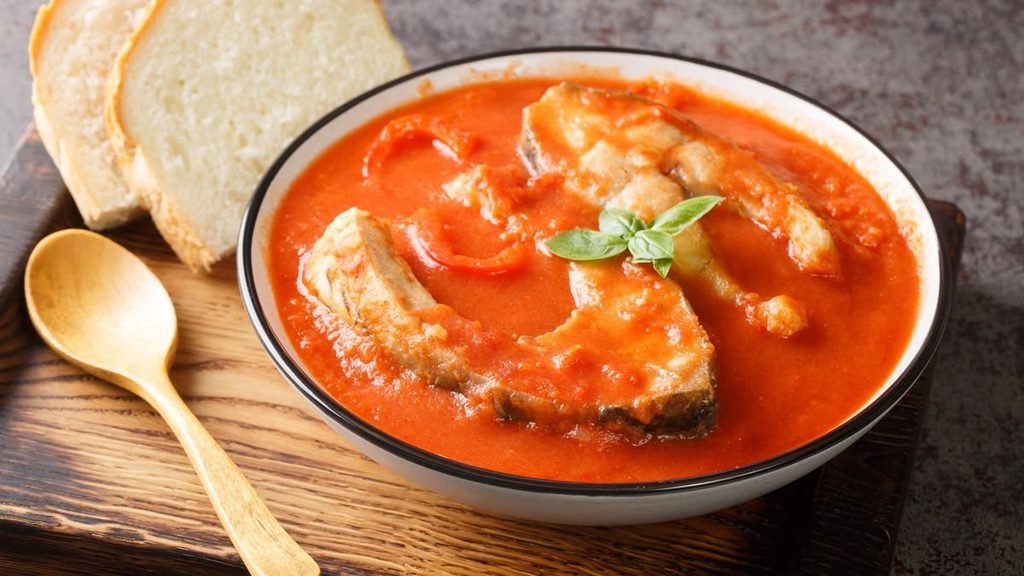
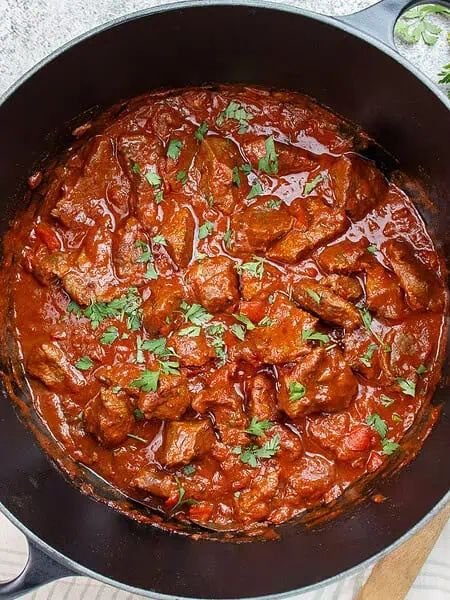
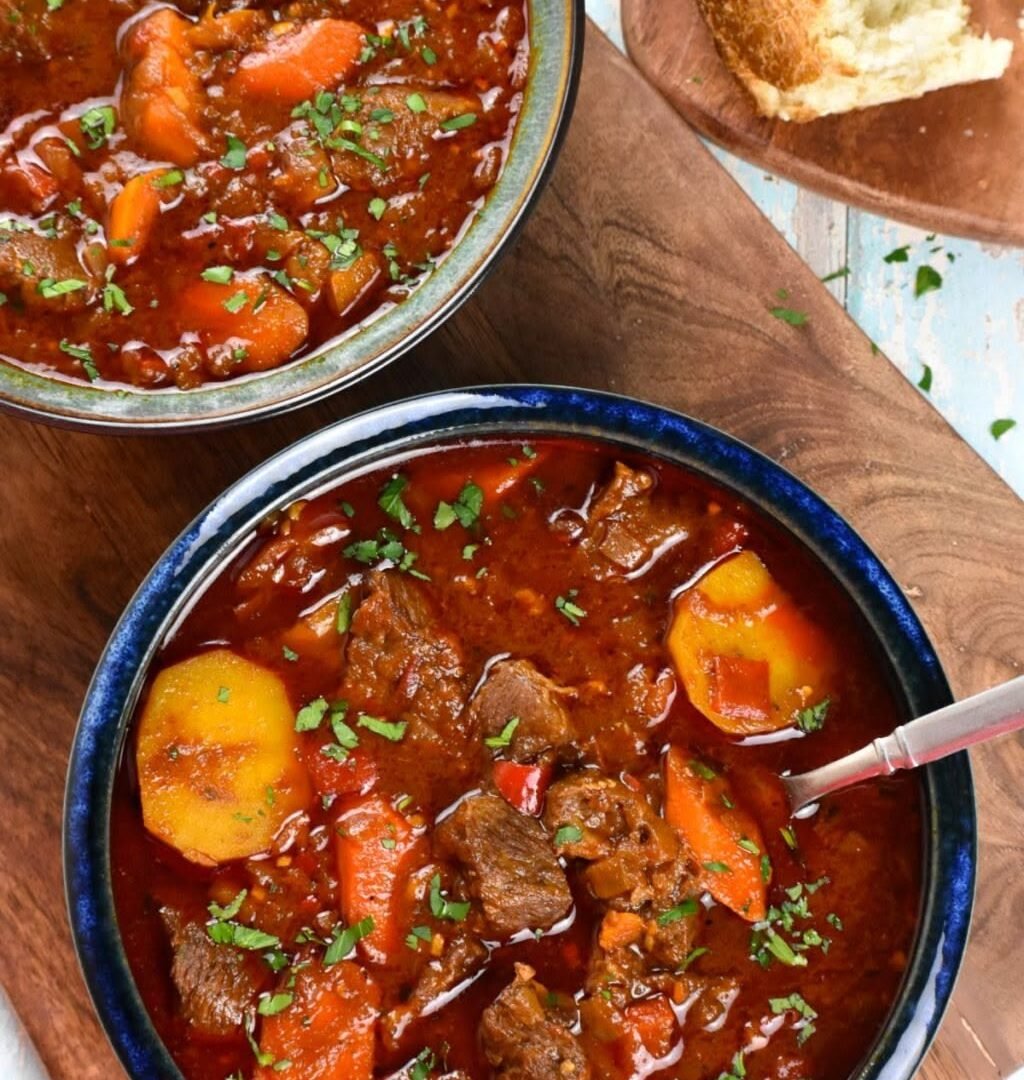
Few Hungarian dishes capture the bold character of the country’s cuisine quite like Halászlé, or Hungarian Fisherman’s Soup. Deeply red, intensely paprika-scented, and traditionally prepared with freshwater fish, this rustic soup is especially associated with the rivers and waterways of Hungary.
Unlike delicate fish soups that rely on subtle seasoning, Halászlé is known for its powerful flavor. Hungarian paprika plays a starring role, while freshwater fish provide the rich, savory foundation.
Different regions and families have their own methods, but the result is typically a warming, aromatic soup with a distinctive red color and plenty of character.
What Is Halászlé?
The Hungarian word halászlé can be translated as “fisherman’s soup.”
Traditional versions are made with freshwater fish, particularly carp, although other fish may also be used. Depending on the regional style, the soup may contain fish fillets, fish steaks, or a broth made from fish heads, bones, and trimmings.
The defining ingredients are simple:
Freshwater fish
Hungarian paprika
Onions
Water or fish stock
Salt
Sometimes tomatoes and peppers
Despite the modest ingredient list, the soup can have remarkable depth.
The Importance of Freshwater Fish
Carp is one of the most traditional fish associated with Halászlé.
Other freshwater species may be incorporated depending on regional tradition and availability. Some preparations use several types of fish to create a more complex broth.
The fish provides both flavor and substance, while fish bones and heads can contribute gelatin and richness when used to prepare the base.
Because the soup is relatively simple, the quality and freshness of the fish can make a significant difference.
Hungarian Paprika: The Defining Ingredient
Paprika is essential to Halászlé.
Hungarian paprika gives the soup its characteristic red color and contributes sweetness, warmth, and pepper flavor. The exact intensity depends on the paprika used.
Some versions are relatively mild, while others are distinctly hot.
One important technique is avoiding excessive direct heat when adding paprika. If paprika burns, it can become bitter and lose some of the qualities that make it so distinctive.
The Role of Onions
Onions provide the aromatic foundation of the soup.
They are generally cooked with the fish and paprika or incorporated into the broth-building process. As they soften, they contribute sweetness and body.
Some traditional methods use finely chopped onions, while others rely on onions breaking down naturally during cooking.
The goal is to create a rich base without overwhelming the fish itself.
Regional Styles of Halászlé
Hungarian Fisherman’s Soup is not one completely standardized recipe.
Two regional traditions are particularly well known.
Szeged-Style Halászlé
The Szeged tradition is associated with the Tisza River region.
This style often emphasizes a rich, paprika-heavy broth and may involve preparing a concentrated fish base before adding fish portions.
Baja-Style Halászlé
Baja, associated with the Danube, has its own distinctive tradition.
Baja-style Halászlé is commonly served with pasta, particularly thin homemade noodles, which makes it especially substantial.
The differences between regional styles demonstrate how strongly Hungarian cooking reflects local ingredients, geography, and culinary traditions.