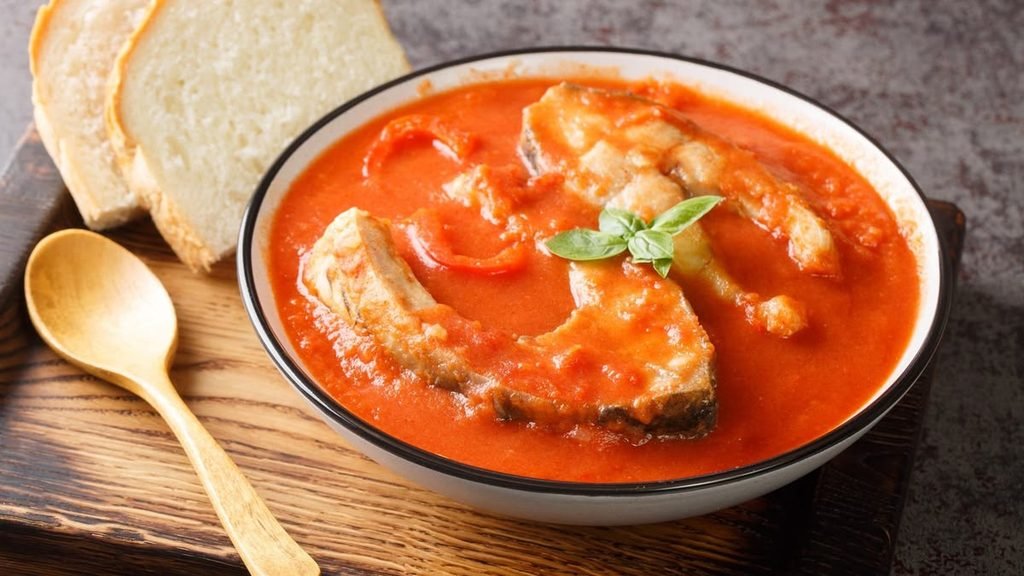
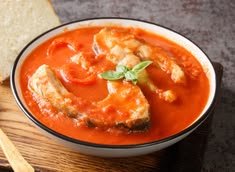
The exact process varies, but a traditional preparation generally begins with fish and onions.
Fish heads, bones, trimmings, and sometimes smaller fish are cooked with onions and water to create a flavorful base.
Paprika is then incorporated, producing the characteristic deep red color.
The mixture may be cooked and strained or processed depending on the regional method. Larger pieces of fish are then added and cooked until tender.
The final soup should be flavorful and aromatic without cooking the fish so aggressively that it falls apart unnecessarily.
Why the Soup Is Often Spicy
Hungarian cuisine has a strong relationship with paprika, and Halászlé is one of the clearest examples.
Hot paprika or fresh hot peppers may be added to create noticeable heat.
However, not every version is extremely spicy.
The level of heat depends on the cook, the regional style, and the particular paprika or peppers used.
For a milder version, sweet paprika can dominate while a small amount of hot paprika is added gradually.
How to Serve Halászlé
Halászlé is generally served piping hot in bowls.
Large pieces of fish are often placed directly into each serving along with plenty of the intensely flavored broth.
Depending on the regional tradition, it may be accompanied by bread or noodles.
A small amount of fresh hot pepper can be served on the side for diners who want additional heat.
The soup is best enjoyed immediately after preparation while the fish is tender and the broth is hot and aromatic.
Tips for Making Better Fisherman’s Soup
Use fresh fish whenever possible. The quality of the fish strongly affects the final flavor.
Choose good paprika. Paprika is one of the central flavors, so quality matters.
Don’t burn the paprika. Excessive heat can create bitterness.
Don’t overcook the fish. Add larger fish portions at the appropriate stage so they remain tender.
Season gradually. Fish and paprika vary in intensity, so taste as you cook.
Respect the regional style. If you’re making a specific version such as Baja-style or Szeged-style Halászlé, follow the techniques associated with that tradition.
A Dish Connected to Hungary’s Rivers
Halászlé has a strong cultural association with Hungary’s rivers, particularly the Danube and Tisza.
Its name and rustic character reflect a culinary tradition built around freshwater fish and straightforward outdoor cooking.
Over time, the dish became much more than a practical fish soup. It developed into a celebrated part of Hungarian cuisine and is often prepared for family gatherings, holidays, festivals, and communal meals.
Halászlé and Hungarian Food Culture
Hungarian cuisine is often recognized internationally for its generous use of paprika, and Halászlé demonstrates how powerful that ingredient can be when combined with a few carefully chosen foods.
There is no need for a long ingredient list.
Fish provides the foundation, onions build the aromatic base, and paprika gives the soup its unmistakable identity.
The regional variations also show how traditional recipes evolve without losing their essential character.
Final Thoughts
Hungarian Fisherman’s Soup, or Halászlé, is a bold and deeply flavorful expression of Hungary’s freshwater cooking traditions.
With fish, onions, paprika, and a few simple ingredients, it creates a soup that is both rustic and distinctive. Whether prepared in the style of Szeged, Baja, or a particular family tradition, the dish reflects the importance of freshwater fishing and paprika in Hungarian culinary culture.
Served hot with tender fish and its intensely colored broth, Halászlé is more than just a soup—it’s a taste of Hungary’s riverside culinary heritage.