Combine warm—not hot—water or milk with a small amount of sugar and yeast.
Allow it to sit for several minutes until the yeast becomes active.
2. Make the Dough
Place the flour and salt in a large bowl. Add the yeast mixture and gradually incorporate the liquid.
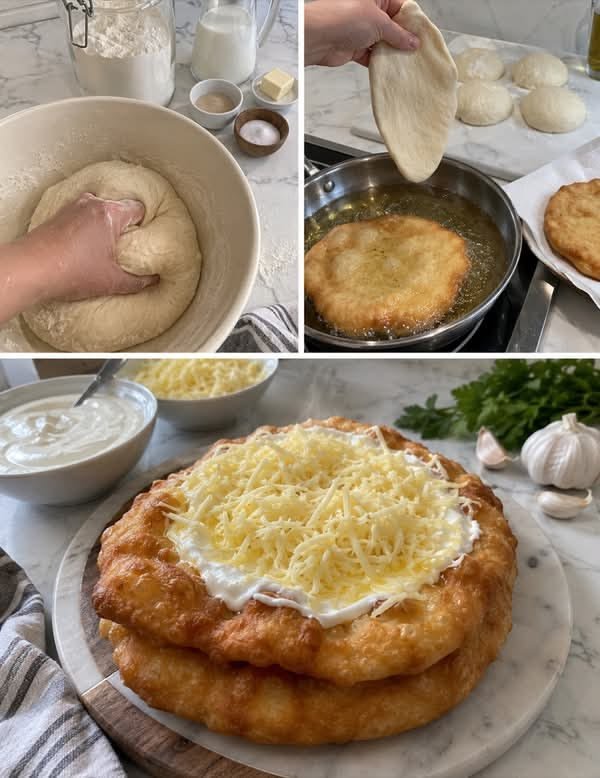
Knead until the dough becomes soft and elastic.
The dough should remain slightly tacky rather than becoming excessively firm.
3. Let the Dough Rise
Cover the bowl and allow the dough to rise in a warm place.
As the yeast works, the dough should become noticeably larger and lighter.
This fermentation stage is important because it helps create the airy interior characteristic of good lángos.
4. Divide and Shape
Once the dough has risen, divide it into individual portions.
Lightly oil your hands and gently stretch each portion into a round or oval shape.
The center can be slightly thinner than the edges, although the exact shape does not need to be perfect.
5. Fry the Lángos
Heat oil in a deep, heavy pan.
Carefully place each piece of dough into the hot oil and fry until golden and crisp on both sides.
The dough should puff as it cooks, creating a light interior beneath the crisp exterior.
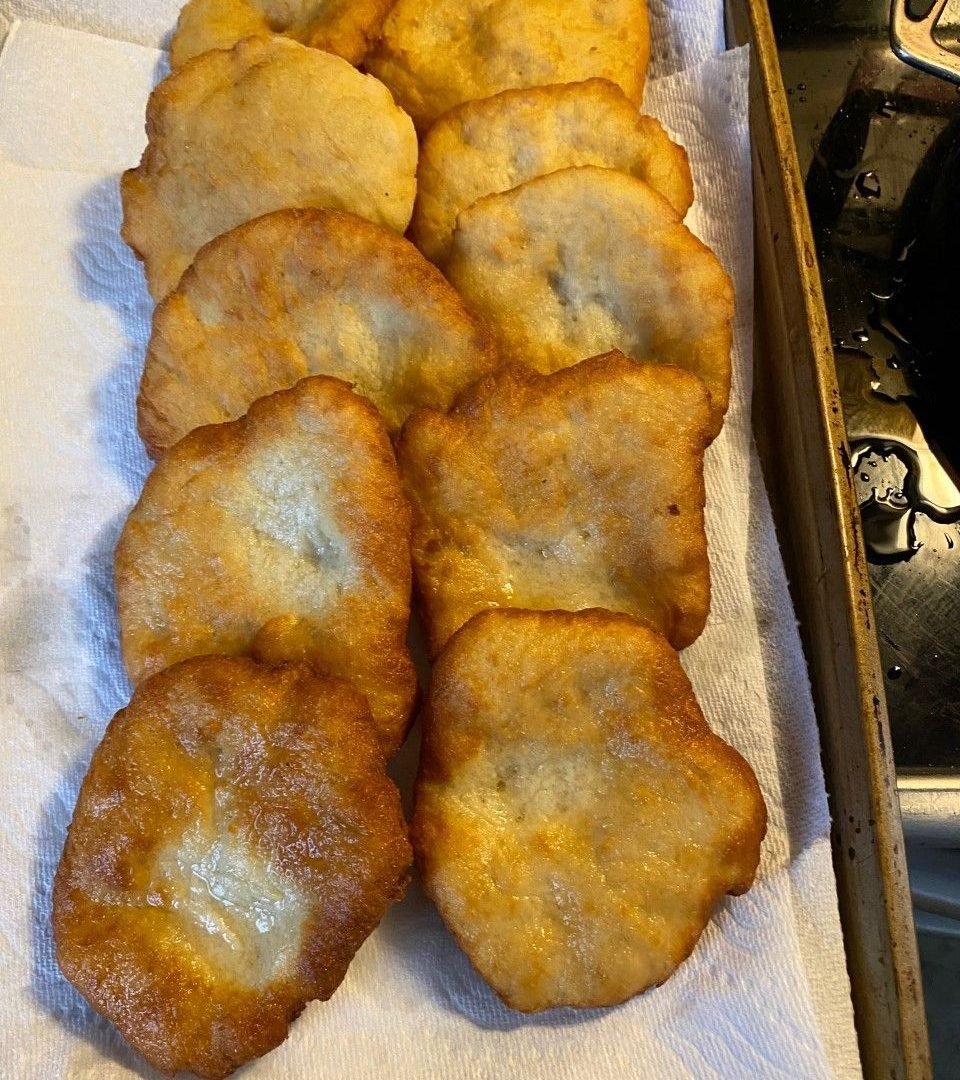
Once finished, transfer the lángos to a plate lined with paper towels to absorb excess oil.
Adding the Toppings
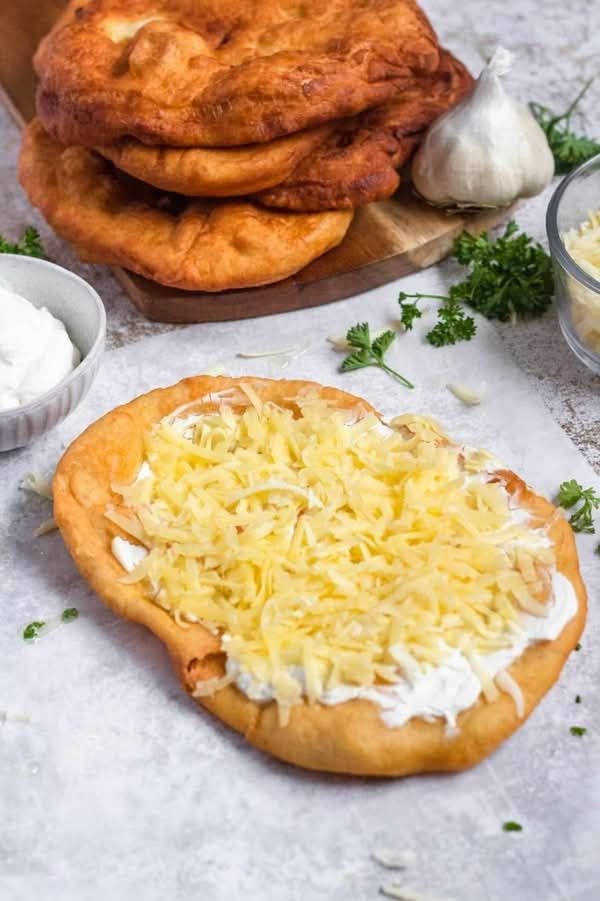
The best time to add the toppings is while the lángos is still warm.
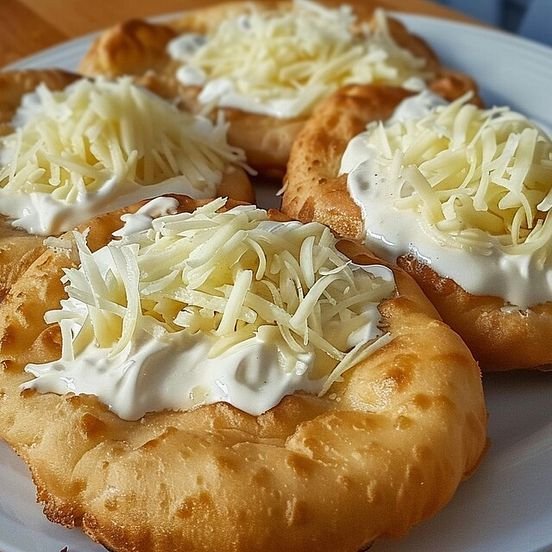
Start with a generous layer of sour cream.
Then sprinkle grated cheese over the top.
For an especially traditional garlic flavor, brush the fried bread with garlic water or lightly rub it with a cut garlic clove before adding the sour cream.
The combination of hot bread, cool tangy sour cream, and melting cheese is what makes this version so satisfying.
What Does Lángos Taste Like?
Lángos has a flavor profile that is simple but highly addictive.
The fried dough provides a rich, slightly salty base. Sour cream contributes tanginess and creaminess, while cheese adds a savory and mildly nutty flavor.
The texture is equally important.
The exterior should have a delicate crispness, while the inside remains soft and airy. When the toppings are added, the contrast becomes even more pronounced.
It is indulgent, filling, and distinctly comforting.
Popular Lángos Variations
Although sour cream and cheese is one of the best-known combinations, Hungarian lángos comes in many forms.
Garlic Lángos
A simple version flavored with fresh garlic or garlic-infused water.
Plain Lángos
Served without toppings, allowing the fried bread itself to take center stage.
Sour Cream and Cheese
The classic combination of tejföl and grated cheese.
Ham and Cheese
Some modern versions add sliced ham beneath the cheese.
Sausage Lángos
Sliced sausage can be used as a hearty topping.
Sweet Lángos
Less common than savory versions, sweet variations can be served with ingredients such as sugar, jam, or other sweet toppings.
Modern food stalls may also create creative versions featuring vegetables, meats, or different cheeses.
Tips for Making Better Lángos at Home
Keep the Dough Soft
A dough that is too firm can produce heavy lángos. A soft, slightly sticky dough generally gives a lighter result.
Do Not Overcrowd the Pan
Frying too many pieces at once can lower the oil temperature and prevent proper browning.
Use the Correct Oil Temperature
The oil should be hot enough to cook the dough quickly and evenly without burning the outside before the center is cooked.
Stretch the Dough Carefully
Using lightly oiled hands makes the dough easier to stretch without tearing it.
Serve Immediately
Lángos is at its best when freshly fried. The contrast between the crisp exterior and soft interior is most noticeable while it is hot.
Lángos in Hungarian Food Culture
Lángos is closely associated with casual Hungarian eating. It can be found at outdoor markets, festivals, fairs, food stands, and other informal settings.
For many people, it is more than simply fried dough. It is connected with memories of summer outings, public markets, holidays, and relaxed meals shared with family and friends.
Its popularity also reflects a broader tradition of Hungarian cooking: transforming inexpensive, basic ingredients into something deeply satisfying.
How to Serve Lángos
Lángos is best served fresh and hot.
A generous spoonful of sour cream and plenty of grated cheese are the classic choices. Garlic adds another layer of flavor, while a simple salad or pickled vegetables can provide freshness alongside the richness of the fried bread.
Because lángos is quite filling, it can easily serve as a complete meal rather than merely a side dish.
Final Thoughts
Hungarian Lángos with sour cream and cheese is a perfect example of how simple ingredients can create an exceptionally memorable dish.
The combination of crispy fried dough, soft interior, tangy sour cream, savory cheese, and optional garlic creates a balance of textures and flavors that has made lángos a lasting favorite in Hungarian cuisine.
Whether enjoyed from a Hungarian market stall or prepared at home, lángos is best eaten fresh, generously topped, and shared with people who appreciate hearty, comforting food.