Cut them into large, evenly sized pieces and place them in a pot of salted water.
Bring to a boil and cook until completely tender.
Drain the potatoes thoroughly.
This step is important because excess water can make the dough sticky and difficult to work with.
While the potatoes are still warm, mash them until smooth.
Do not add milk or cream as you would for mashed potatoes.
Allow the mashed potatoes to cool until they’re warm rather than hot.
Step 2: Make the Potato Dough
Place the mashed potatoes in a large bowl.
Add the egg and salt.
Gradually add the flour, mixing gently until a soft dough forms.
You may not need the entire amount of flour. Add enough to create a dough that is soft and workable without becoming extremely sticky.
Turn the dough onto a lightly floured surface and knead it briefly until smooth.
Important Tip
Don’t overwork the dough.
Too much kneading or too much flour can make the dumplings heavy and chewy rather than tender.
Step 3: Prepare the Plums
Wash and dry the plums.
Cut each plum along its natural seam and remove the pit.
You don’t necessarily need to cut the plum completely in half if you can remove the pit while keeping the fruit relatively intact.
Mix the sugar and cinnamon together in a small bowl.
Place a little cinnamon sugar inside each plum.
If your plums are particularly sweet, use less sugar.
If they’re tart, a little extra cinnamon sugar can create a beautiful contrast.
Step 4: Roll Out the Dough
Divide the potato dough into equal portions.
Roll each portion into a ball.
Flatten one piece into a small circle using your hands or a lightly floured rolling pin.
Place one prepared plum in the center.
The dough should be large enough to completely surround the fruit.
Step 5: Wrap the Plum
Carefully pull the edges of the dough upward around the plum.
Pinch the seams together firmly.
Roll the filled dough gently between your palms to create a smooth ball.
Make sure there are no open seams, otherwise the dumpling can break apart while boiling.
Repeat with the remaining dough and plums.
Step 6: Prepare the Breadcrumbs
While you’re shaping the dumplings, prepare the buttery breadcrumb coating.
Melt the butter in a large skillet over medium heat.
Add the breadcrumbs.
Stir continuously until they become golden brown and fragrant.
Be careful not to burn them.
Remove the pan from the heat and stir in the sugar and cinnamon.
Set aside.
The finished breadcrumbs should have a beautiful toasted, buttery aroma.
Step 7: Boil the Dumplings
Bring a large pot of lightly salted water to a gentle boil.
Carefully lower several dumplings into the water.
Don’t overcrowd the pot.
The dumplings will initially sink.
As they cook, they will gradually rise toward the surface.
Once they float, allow them to cook for approximately 3–5 additional minutes, depending on their size.
Remove one carefully and test it if you’re unsure.
Step 8: Coat the Dumplings
Remove the cooked dumplings with a slotted spoon.
Allow excess water to drain.
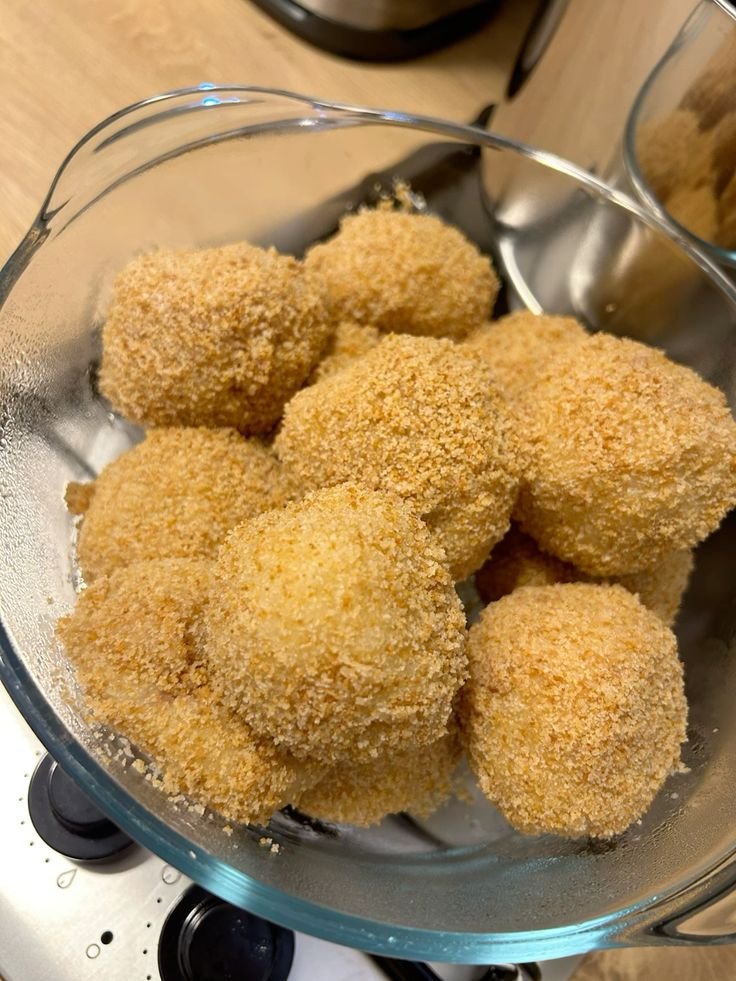
Immediately place them into the skillet containing the toasted breadcrumbs.
Gently roll each dumpling until completely coated.
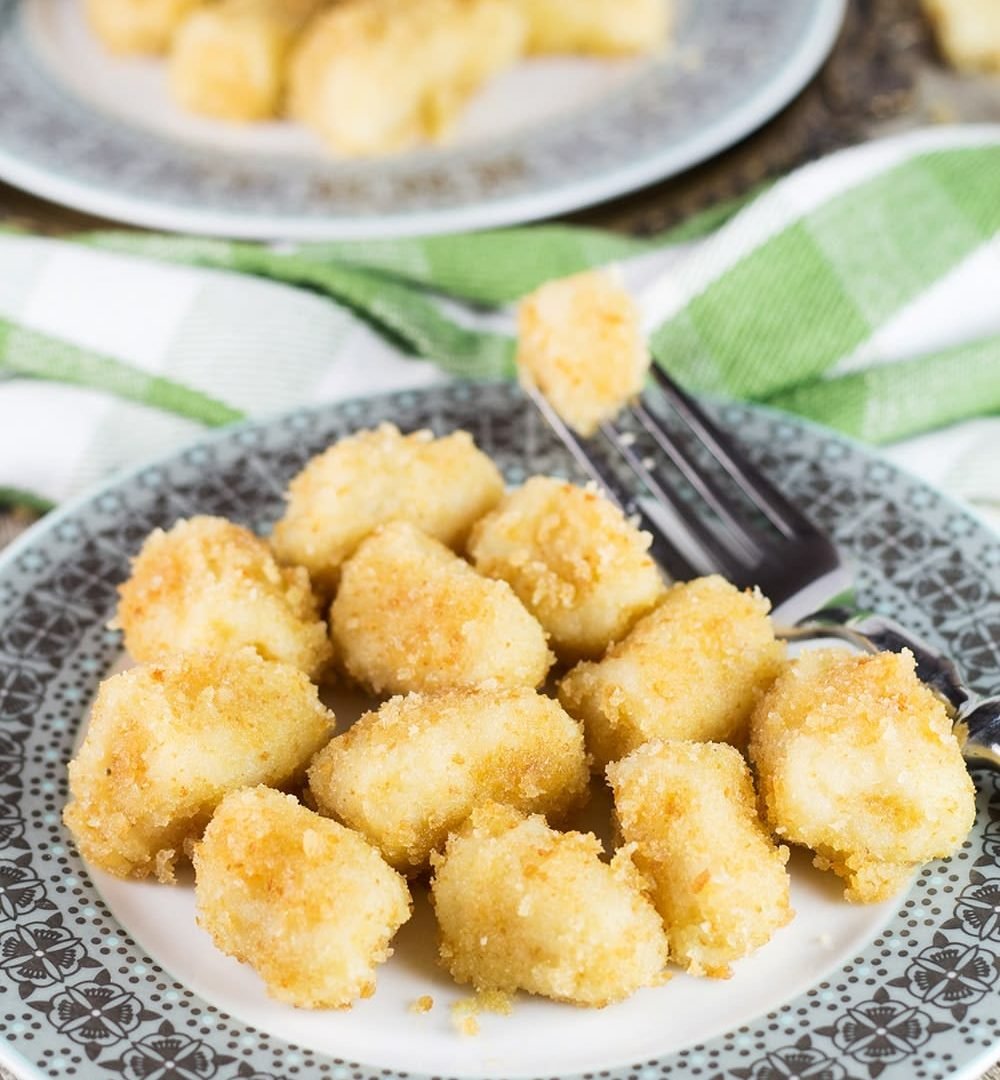
The buttery breadcrumbs should stick beautifully to the soft exterior.
Step 9: Serve
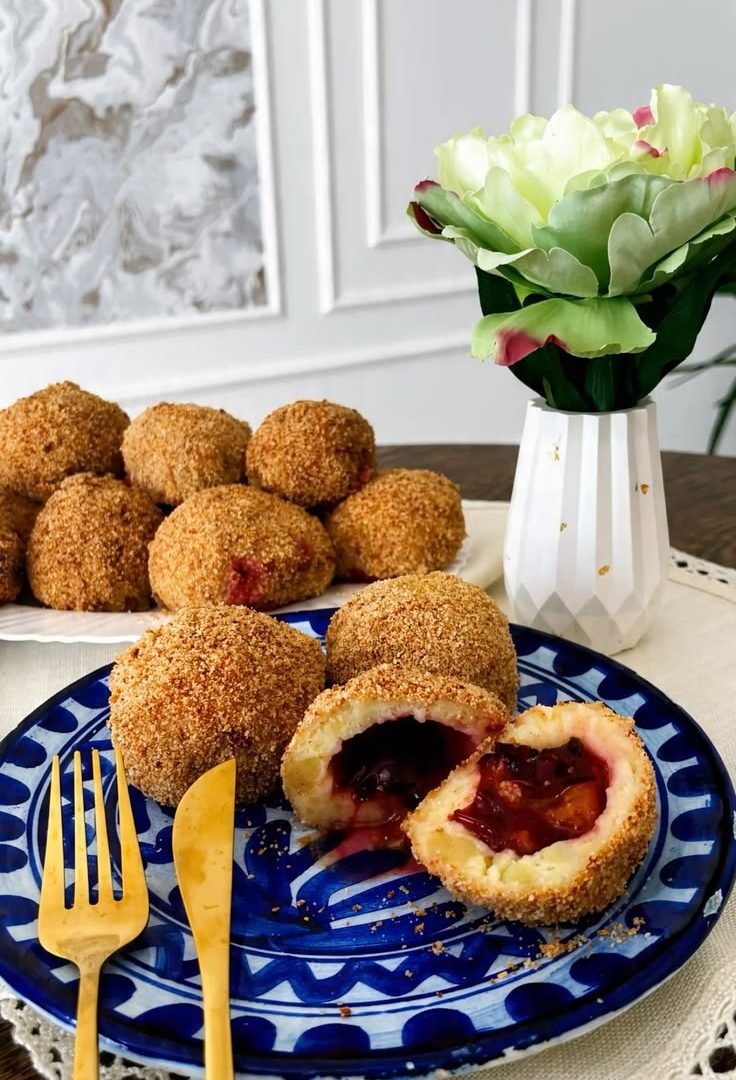
Transfer the finished plum dumplings to a serving plate.
Sprinkle with additional cinnamon sugar or powdered sugar if desired.
Serve warm.
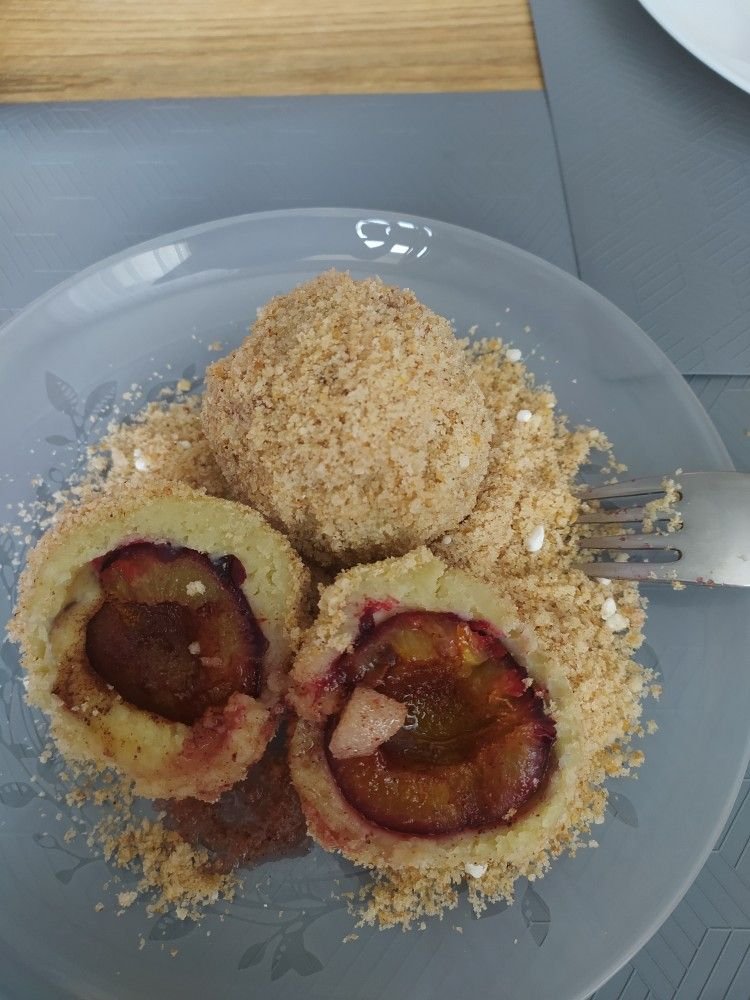
When you cut into one, the cooked plum should be soft and juicy, surrounded by tender potato dough.
The Secret to Great Hungarian Plum Dumplings
The most important part of this recipe is the potato dough.
If the dough is too wet, you’ll be tempted to add lots of flour.
That can make the dumplings tough.
Instead, start with potatoes that aren’t excessively watery and drain them thoroughly after boiling.
Some traditional cooks even cook the potatoes with their skins on and peel them afterward to help prevent them from absorbing too much water.
Choosing the Right Plums
Small, ripe but still firm plums work beautifully.
They should have enough sweetness to taste delicious after cooking but enough acidity to balance the buttery breadcrumbs.
If the plums are extremely large, the dumplings can become difficult to shape and may require thicker dough.
European plum varieties are particularly suitable because their shape makes them easy to wrap.
Can You Use Frozen Plums?
Yes, but fresh plums generally provide the best texture.
If using frozen plums, thaw them thoroughly and drain excess liquid before wrapping them in the dough.
Excess moisture can make the dough difficult to seal.
Can You Make Szilvás Gombóc Ahead?
Yes.
You can prepare the dumplings and keep them refrigerated for a short period before cooking.
You can also freeze uncooked dumplings.
Arrange them in a single layer so they don’t stick together, freeze until firm, and then transfer them to a freezer-safe container.
Cook them from frozen or partially thawed according to the method you’re using, allowing extra cooking time as necessary.
A Delicious Variation: Apricot Dumplings
The same basic potato dough can be used to make apricot dumplings.
Simply replace the plums with small fresh apricots and adjust the sugar according to their sweetness.
The result is another wonderful Central European fruit dumpling.
Frequently Asked Questions
Why did my dumplings fall apart?
The dough may not have been sealed properly, or the water may have been boiling too aggressively. Keep the water at a gentle boil and make sure every dumpling is completely sealed.
Why is my dough too sticky?
The potatoes may contain too much moisture. Add flour gradually, but avoid adding excessive amounts because this can make the dumplings heavy.
Can I use breadcrumbs without butter?
You can, but butter gives the toasted breadcrumbs their characteristic richness and flavor.
Do Hungarian plum dumplings contain sugar?
Sugar is commonly used with the plums and in the breadcrumb coating, but the amount can be adjusted according to the sweetness of the fruit.
Are Szilvás Gombóc a dessert?
They can be served as a dessert, but traditionally they’re also enjoyed as a sweet main dish or substantial home-style meal.
How to Serve Them Like a Hungarian Home Cook
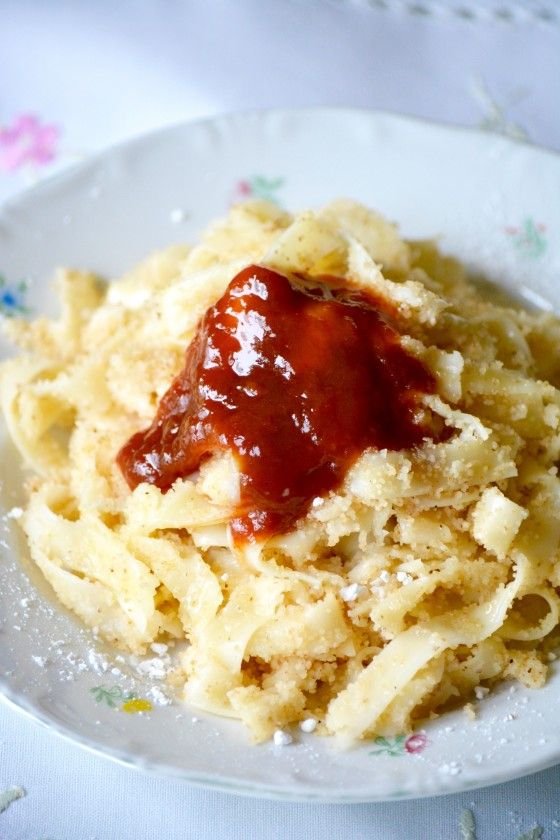
For the classic experience, serve the dumplings warm with plenty of toasted breadcrumbs.
Add:
Cinnamon sugar
Powdered sugar
A little melted butter
Sour cream, if desired
A cup of coffee or tea alongside them makes a lovely afternoon treat.
🇭🇺 Why This Recipe Is So Special
Szilvás Gombóc is a wonderful example of traditional Hungarian cooking because it turns simple, inexpensive ingredients into something incredibly satisfying.
Potatoes become a delicate dough.
Fresh plums become a warm, fragrant filling.
Breadcrumbs become golden and buttery.
And cinnamon brings everything together.
It’s humble food—but the flavor feels special.
Final Thoughts
Hungarian Plum Dumplings, or Szilvás Gombóc, are pure comfort food.
The tender potato dough, juicy cinnamon-sweetened plum, and crisp buttery breadcrumbs create a combination that’s difficult to resist.
Take your time when preparing the dough, seal each dumpling carefully, and keep the water at a gentle boil.
Then serve them warm, generously coated in cinnamon breadcrumbs.
🇭🇺 One bite of these traditional Hungarian plum dumplings is enough to understand why this simple recipe has remained a treasured favorite in Hungarian kitchens for generations.