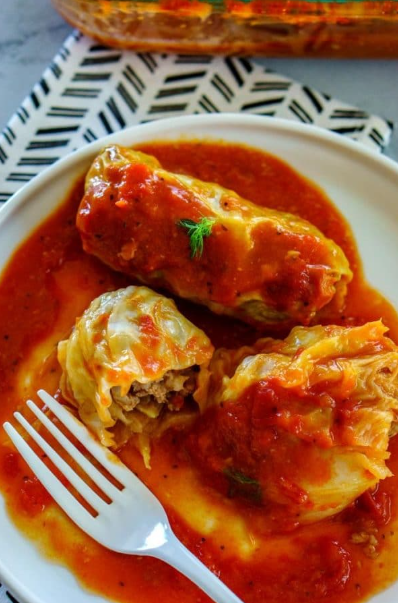
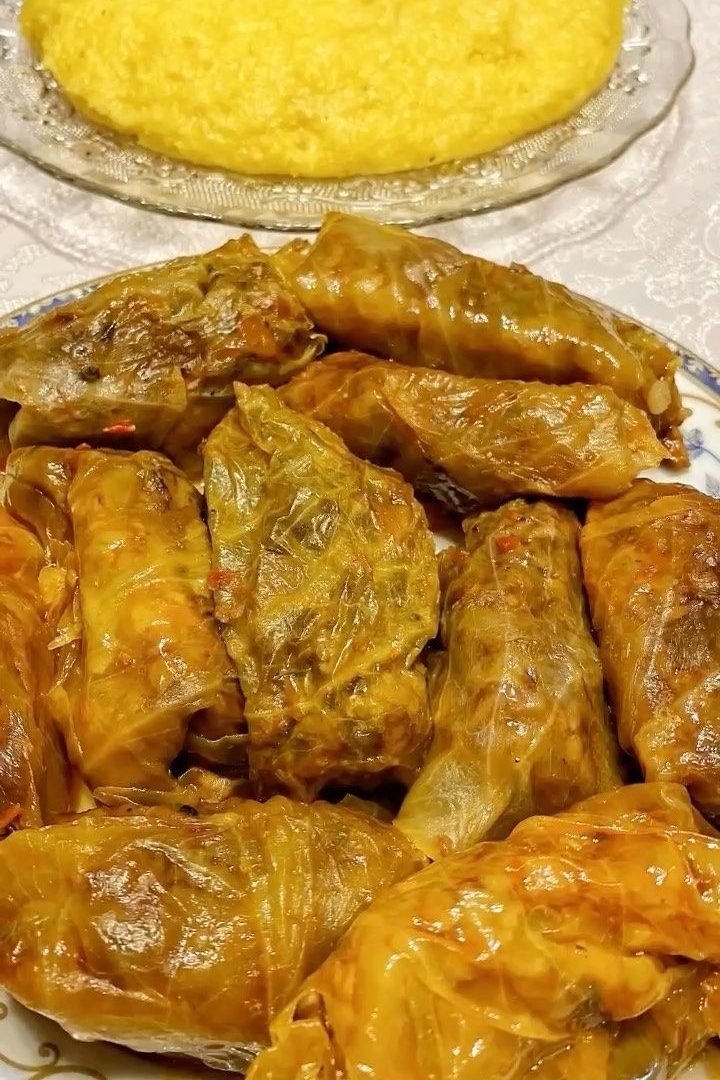
Hungarian Stuffed Cabbage Rolls 🇭🇺 — Traditional Töltött Káposzta
Step 1: Prepare the Cabbage
Bring a large pot of salted water to a boil.
Remove any damaged outer leaves from the cabbage.
Using a sharp knife, carefully cut around the core at the bottom of the cabbage.
Place the whole cabbage into the boiling water.
As the outer leaves soften, carefully remove them with tongs and place them on a large plate.
Continue until you have enough large, flexible leaves for your rolls.
Don’t worry if some leaves tear. The smaller or damaged pieces can be chopped and used between the cabbage rolls.
A Helpful Tip
The leaves should be soft enough to roll but not completely falling apart.
If the thick central rib is difficult to bend, carefully shave down the thickest portion with a knife.
Step 2: Prepare the Filling
Place the ground pork in a large mixing bowl.
Add:
Uncooked rice
Chopped onion
Garlic
Hungarian paprika
Salt
Black pepper
Marjoram
Egg
Water or broth
Mix everything thoroughly until the ingredients are evenly distributed.
The rice will cook inside the cabbage rolls, absorbing the juices and flavors from the meat and sauce.
Important Tip
Don’t overwork the meat mixture. Mix just until everything is combined.
Step 3: Fill the Cabbage Leaves
Lay one cabbage leaf flat on your work surface.
Place approximately 2–3 tablespoons of filling near the lower portion of the leaf.
Fold the bottom of the cabbage over the filling.
Fold the sides inward.
Then roll it tightly toward the top.
You want the cabbage roll to be secure but not packed extremely tightly, because the rice will expand as it cooks.
Continue with the remaining leaves and filling.
Step 4: Prepare the Paprika Sauce
Heat the oil or lard in a large heavy-bottomed pot over medium heat.
Add the chopped onion and cook until soft and translucent.
Add the garlic and cook for another 30 seconds.
Remove the pot from the heat briefly.
Stir in the Hungarian paprika.
This step is important because paprika can become bitter if it burns.
Immediately add the crushed tomatoes, tomato paste, and broth.
Season with salt and pepper.
If you like, add a little sugar to balance the acidity of the tomatoes.
Return the pot to the stove and bring the sauce to a gentle simmer.
Step 5: Build the Cabbage Dish
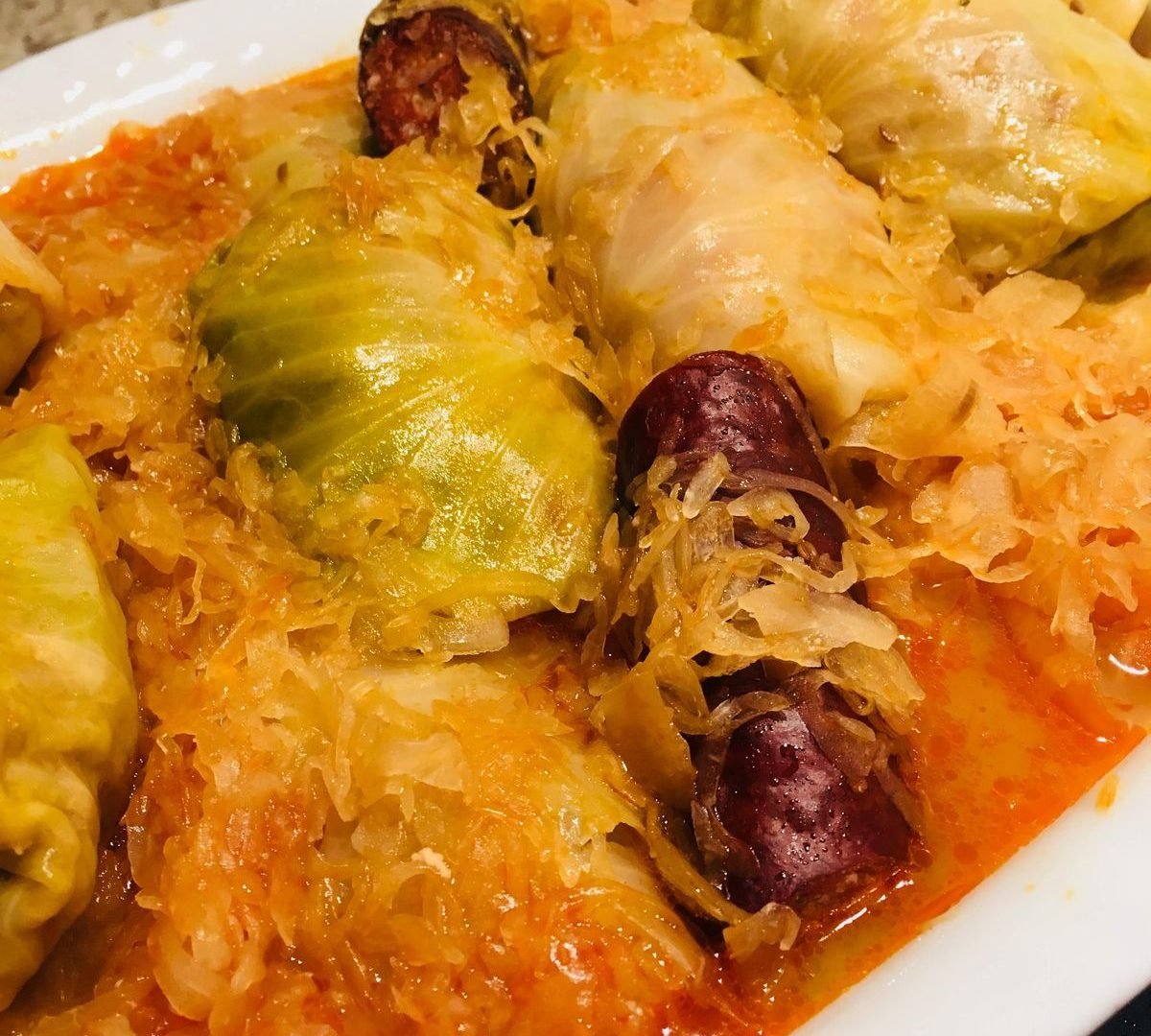
If using sauerkraut, spread a layer across the bottom of a large heavy pot.
You can also use chopped leftover cabbage leaves.
Arrange the stuffed cabbage rolls tightly over the cabbage.
If you’re using smoked sausage or smoked pork, place pieces between the rolls.
Add another layer of chopped cabbage or sauerkraut on top.
Pour the tomato-paprika sauce over everything.
The liquid should come roughly halfway to two-thirds of the way up the cabbage rolls.
Step 6: Slow Cook
Cover the pot with a lid.
Reduce the heat to low and allow the cabbage rolls to simmer gently for approximately 1½ to 2 hours.
The exact cooking time depends on the size of the rolls and the type of cabbage.
The dish is ready when:
The cabbage is very tender.
The pork filling is fully cooked.
The rice is tender.
The sauce has become rich and flavorful.
Avoid stirring aggressively because the cabbage rolls can break apart.
Instead, gently shake the pot occasionally if necessary.
Step 7: Let It Rest
Once the cabbage rolls are finished, turn off the heat and allow them to rest for approximately 15–20 minutes.
This gives the flavors time to settle and makes the rolls easier to serve without falling apart.
And there’s another advantage:
Töltött káposzta often tastes even better the next day.
The cabbage, pork, paprika, and sauce have more time to develop together.
The Traditional Sour Cream Finish
One of the most delicious ways to serve Hungarian stuffed cabbage is with a generous spoonful of sour cream.
Place two or three cabbage rolls in a bowl.
Spoon plenty of paprika-tomato sauce over them.
Add a dollop of sour cream on top.
The cool, tangy cream contrasts beautifully with the rich, savory sauce.
A sprinkle of fresh parsley or dill can add a little freshness.
What to Serve With Hungarian Stuffed Cabbage
Töltött káposzta is already a complete meal, but traditional accompaniments can make it even more satisfying.
Try serving it with:
Crusty Bread
Perfect for soaking up the rich paprika sauce.
Sour Cream
Almost essential for many Hungarian-style preparations.
Pickles
Pickled cucumbers or peppers provide acidity that cuts through the richness.
Fresh Bread and Peppers
A simple combination that works beautifully with the savory cabbage and pork.
Should You Use Fresh Cabbage or Sauerkraut?
Both approaches can produce wonderful results.
Fresh Cabbage
Fresh cabbage produces a milder, sweeter flavor.
It’s a good choice if you want a gentler family-style version.
Fermented Cabbage
Sauerkraut or fermented cabbage leaves give the dish a stronger, tangier character.
The acidity creates a wonderful contrast with the fatty pork filling.
Some Hungarian family recipes use both stuffed cabbage rolls and sauerkraut in the same pot.
Why Hungarian Paprika Matters
Paprika is one of the defining ingredients of Hungarian cuisine.
For this recipe, Hungarian sweet paprika is ideal.
It provides:
Deep red color
Sweet pepper flavor
Earthy aroma
Gentle warmth
For a spicier version, a small amount of Hungarian hot paprika can be added.
Avoid burning the paprika. Adding it to very hot oil can quickly make it bitter and ruin the flavor of the sauce.
Choosing the Meat
Ground pork is traditional and works particularly well because its natural fat keeps the filling moist.
You can also use a mixture of:
Pork and beef
Pork and veal
Pork with a little smoked meat
However, very lean meat can produce a drier filling.
For the most traditional character, pork with some natural fat is an excellent choice.
Can You Add Smoked Sausage?
Absolutely.
Hungarian smoked sausage, or kolbász, can be sliced and added between the cabbage rolls.
As it cooks, it releases smoky, paprika-rich flavors into the sauce.
Smoked bacon or pork can also be used in some traditional-style preparations.
Just remember that smoked meats can already be quite salty, so adjust the added salt accordingly.
Make-Ahead Instructions
Hungarian stuffed cabbage is an excellent make-ahead dish.
Prepare and cook the entire recipe.
Allow it to cool appropriately and refrigerate it.
When you’re ready to serve, reheat it gently in a covered pot until the center of the rolls is thoroughly hot.
In fact, many people find that the flavor improves after a night in the refrigerator.
Freezing Hungarian Stuffed Cabbage
You can also freeze stuffed cabbage rolls.
For best results, allow the cooked dish to cool properly before freezing.
Place the rolls in airtight freezer-safe containers with plenty of sauce.
Freeze individual portions if you want an easy meal later.
Thaw safely in the refrigerator and reheat thoroughly.
Frequently Asked Questions
What is Hungarian stuffed cabbage called?
It’s called Töltött Káposzta, which literally translates to “stuffed cabbage.”
What meat is traditionally used?
Ground pork is one of the most traditional choices, although regional and family recipes vary.
Does the rice need to be cooked first?
Not necessarily. In this recipe, uncooked rice goes directly into the filling and cooks as the cabbage rolls simmer.
Why did my cabbage rolls fall apart?
They may have been rolled too loosely, overfilled, or cooked too aggressively. Keep the rolls secure without making them excessively tight, and simmer gently.
Can I use sauerkraut?
Yes. Sauerkraut adds a delicious tangy flavor and is commonly used in Hungarian-style stuffed cabbage preparations.
Can I make them without tomatoes?
Yes. Hungarian stuffed cabbage has many regional variations. Some preparations use different combinations of paprika, sauerkraut, broth, and sour cream rather than a strongly tomato-based sauce.
Why is sour cream served with it?
Its creamy acidity balances the richness of the pork, paprika, and cabbage.
🇭🇺 A Complete Hungarian Family Dinner
For a beautiful traditional-inspired table, serve:
For dessert, finish with something classic such as Palacsinta, Gerbeaud cake, or Dobos Torta.
Final Thoughts
Hungarian Töltött Káposzta is the definition of comforting home cooking.
Tender cabbage leaves surround a savory pork-and-rice filling, while paprika, garlic, onions, tomatoes, and slow cooking create a sauce that’s rich enough to make every bite memorable.
It’s not a dish that needs to be rushed. The magic comes from slow simmering and allowing the flavors to come together.
Make a generous pot, add a spoonful of sour cream, serve it with rustic bread and pickles, and bring it straight to the table.
🇭🇺 This is the kind of Hungarian recipe that doesn’t just fill the kitchen with incredible aromas—it creates the feeling of sitting down to a meal made for family.