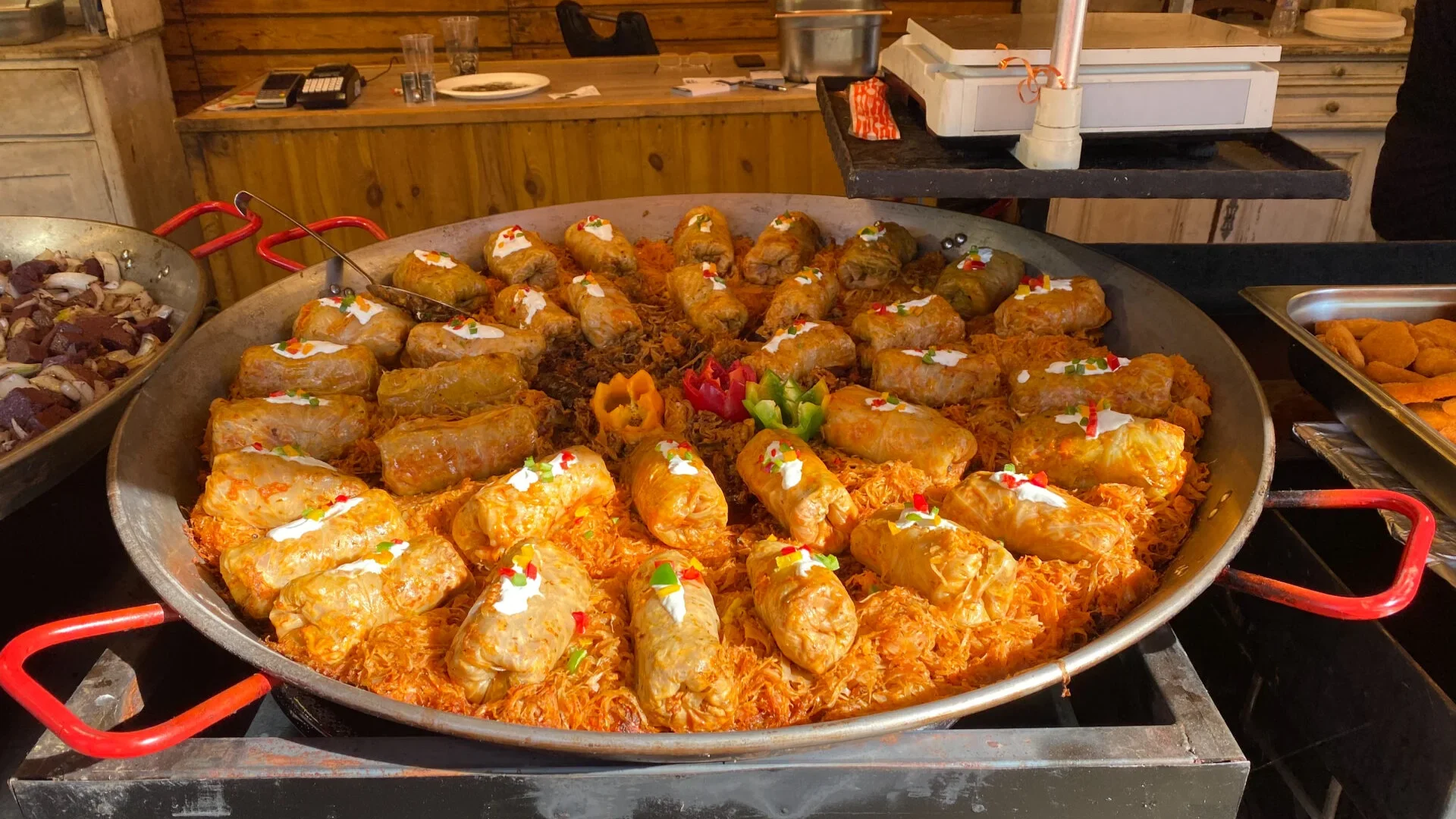
Place a portion of filling near the base of a cabbage leaf.
Fold the sides inward and roll the leaf firmly but gently around the filling.
The roll should be secure enough to hold its shape while cooking, but it should not be packed excessively tight.
As the rice cooks and expands, the filling naturally becomes more compact.
Building the Pot
One of the most important parts of Töltött Káposzta is how the ingredients are layered.
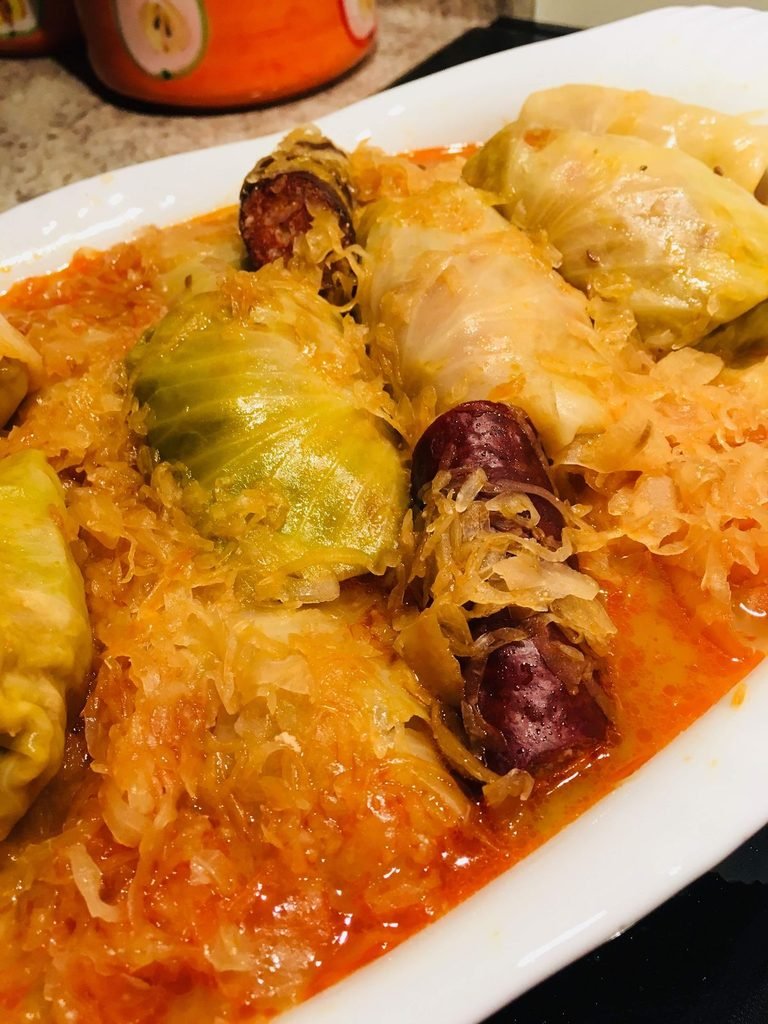
A layer of sauerkraut can be placed at the bottom of a heavy pot. The stuffed cabbage rolls are then arranged closely together, with additional sauerkraut placed around and between them.
Smoked meat or sausage can be added at this stage.
The rolls are then covered with more sauerkraut and enough liquid to allow them to cook gently.
Paprika and other seasonings can be incorporated into the cooking liquid depending on the recipe.
Slow Cooking Is the Key
Töltött Káposzta is not a dish that benefits from rushing.
The pot is brought gently to a simmer and then cooked slowly until the cabbage is tender and the meat and rice are completely cooked.
The cooking liquid becomes increasingly flavorful as it absorbs juices from the meat, cabbage, sauerkraut, and smoked ingredients.
The exact cooking time varies according to the size of the rolls and the recipe, but slow simmering for around 1½ to 2½ hours is common.
The finished cabbage should be tender without completely falling apart.
What Does Hungarian Stuffed Cabbage Taste Like?
Töltött Káposzta combines several contrasting flavors.
The cabbage becomes soft and savory, while the sauerkraut contributes acidity and a gentle fermented tang. The meat filling provides richness, and paprika adds warmth and depth.
If smoked pork or sausage is included, the dish takes on an even deeper flavor.
Sour cream adds another dimension. Its cool, creamy texture works particularly well against the warm, savory cabbage and tangy sauerkraut.
Regional and Family Variations
There is no single universal recipe for Hungarian stuffed cabbage.
Some families prefer larger rolls, while others make smaller portions.
The meat may be pork, beef, or a combination. Some versions contain more rice, while others emphasize the meat.
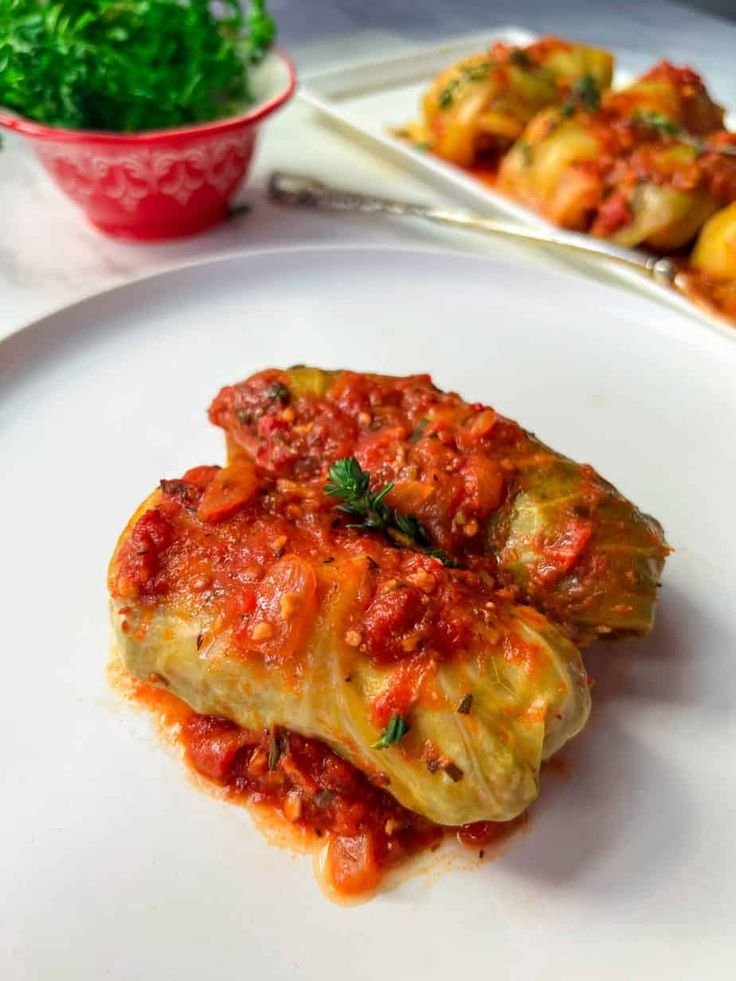
Tomato or tomato paste may appear in certain recipes, while other preparations keep the sauce relatively simple.
Some cooks add smoked pork, sausage, bacon, or other cured meats to the pot.
The level of paprika and acidity can also vary.
This flexibility is part of what makes the dish so strongly associated with home cooking. Families often have their own preferred method passed down through generations.
How to Serve Töltött Káposzta
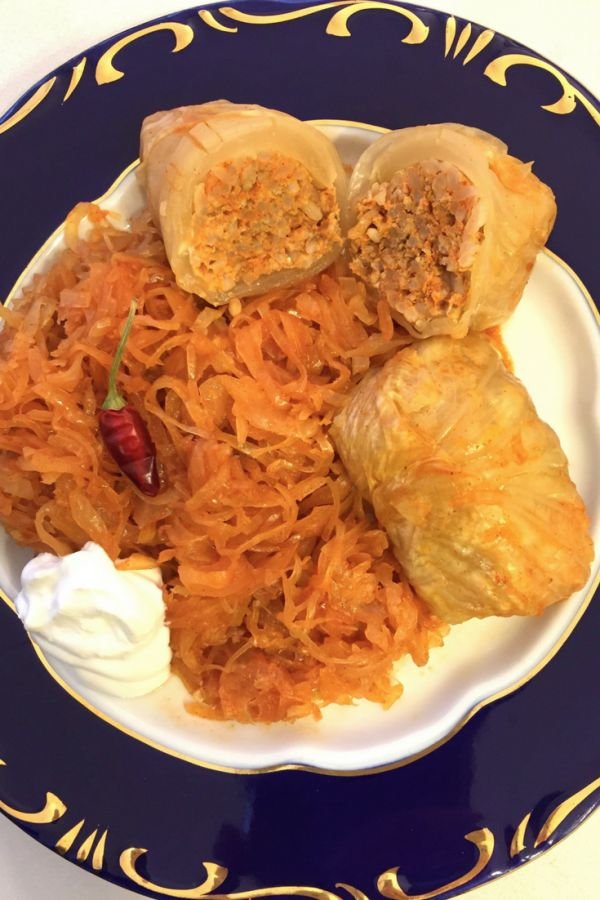
Hungarian stuffed cabbage is traditionally served hot, often with generous spoonfuls of sauerkraut from the cooking pot.
A dollop of sour cream is a classic finishing touch.
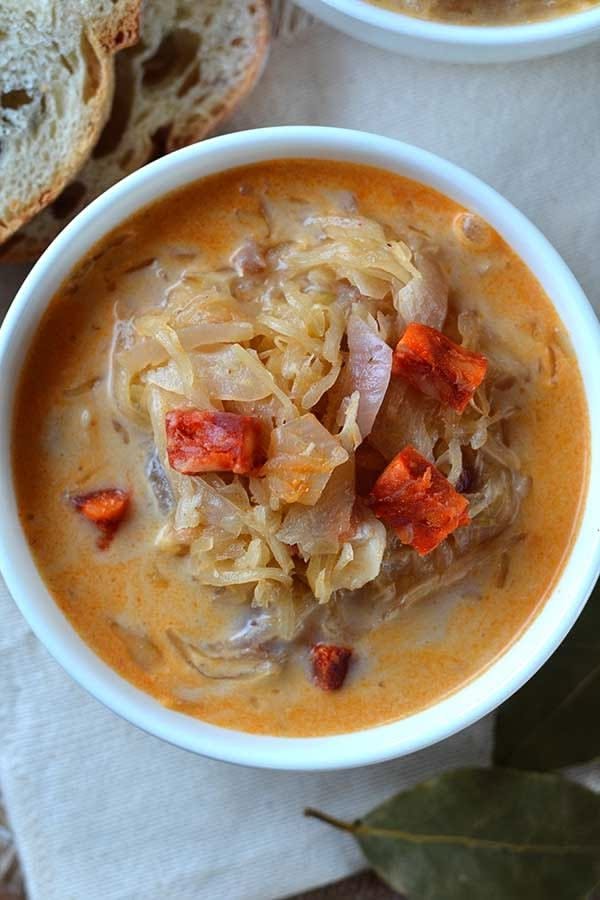
Fresh bread is also an excellent accompaniment because it can be used to soak up the flavorful cooking juices.
Some people prefer additional paprika sprinkled over the top for extra color and flavor.
Because the dish is substantial, it usually needs little else on the plate.
Tips for Making Perfect Stuffed Cabbage Rolls
Do not overfill the leaves. Rice expands as it cooks, so leave enough room inside each roll.
Keep the rolls snug. Arranging them close together helps them maintain their shape.
Cook slowly. A gentle simmer produces tender cabbage and allows the flavors to develop.
Taste the sauerkraut first. If it is extremely sour or salty, it can be adjusted before being added to the pot.
Use a heavy pot. Even heat distribution helps prevent the bottom layer from scorching during the long cooking process.
Let the dish rest. Allowing the cabbage rolls to sit for a short time after cooking can make them easier to serve and gives the flavors additional time to settle.
A Dish for Family Gatherings
Töltött Káposzta is particularly well suited to large gatherings because it can be prepared in a substantial pot and often tastes just as satisfying when reheated.
In Hungarian homes, stuffed cabbage is commonly associated with festive meals and special occasions, although it can also be enjoyed as a hearty everyday dish.
Its generous nature makes it an ideal example of traditional comfort food: inexpensive ingredients are transformed through careful preparation and slow cooking into something deeply satisfying.
Why Töltött Káposzta Remains So Popular
The appeal of Hungarian stuffed cabbage comes from its combination of texture, flavor, and tradition.
There is the softness of the cabbage, the hearty meat-and-rice filling, the tang of sauerkraut, and the richness of the cooking juices. Add a spoonful of sour cream, and every component comes together beautifully.
It is also a dish that rewards patience. The longer, slower cooking process gives the ingredients time to blend, creating a depth of flavor that is difficult to achieve with rushed preparation.
Final Thoughts
Hungarian Stuffed Cabbage Rolls, or Töltött Káposzta, are a classic example of comforting Central European home cooking.
Tender cabbage leaves wrapped around a savory meat and rice filling, slowly cooked with sauerkraut and paprika, create a meal that is hearty, flavorful, and deeply satisfying.
Served with sour cream and fresh bread, Töltött Káposzta is more than just a traditional Hungarian recipe. It is the kind of dish that brings people around the table and demonstrates how simple ingredients, thoughtful preparation, and plenty of time can create an unforgettable meal.