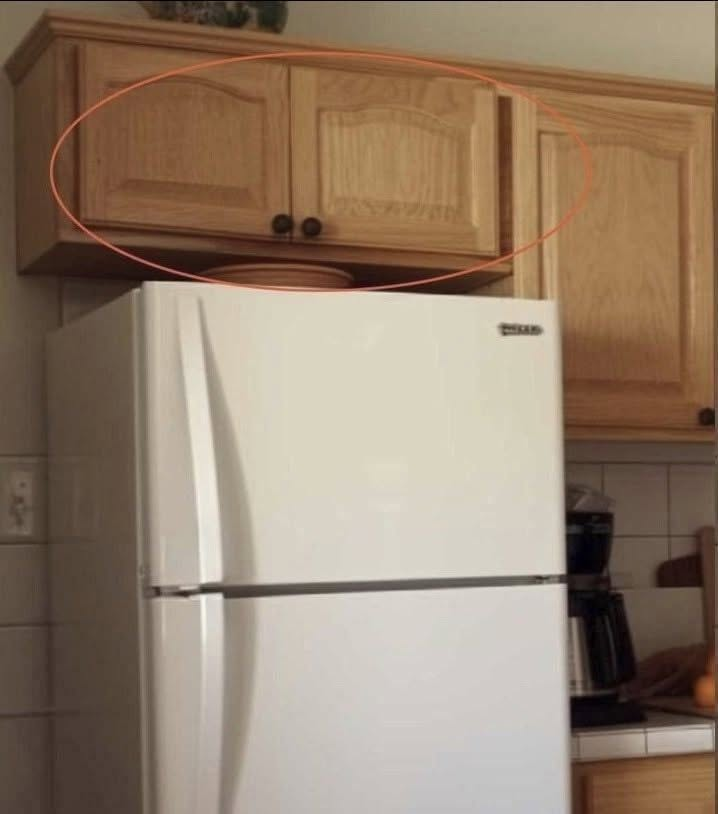
The best strategy for the above-fridge cabinet is to treat it as a long-term pantry or specialty storage zone. The guiding principle is simple: store items you need infrequently and that are not sensitive to minor temperature variations. Here is a breakdown of what works and what doesn’t.
Items that work well:
Baking supplies: Flour, sugar, and baking powder in sealed, stackable containers.
Rarely used appliances: The waffle maker, the pressure cooker, or the fondue set.
Paper goods: Bulk napkins, paper plates, and extra paper towels.
Holiday or seasonal items: Specialty serving dishes or cookie cutters used once a year.
Bulk dry goods: Extra bags of rice, pasta, or cereal, kept in airtight bins.
Items to avoid:
Oils and wine: Heat and temperature fluctuations degrade these quickly.
Medications: Most medications require stable room temperatures; the fluctuations here are not ideal.
Canned goods with high acidity: Over long periods, heat can degrade the lining of the can.
Everyday dishes: The hassle of reaching for a plate every day will quickly lead to frustration.
Organization Strategies for a Shallow Space
To overcome the depth issue, use organizers that allow you to pull the entire contents forward. Lazy Susans (turntables) are excellent for this cabinet, as they let you spin to reach items in the back without climbing. Clear, stackable bins are also ideal; you can group like items together (e.g., a “baking bin” or a “paper goods bin”) and pull the whole bin down when needed. If you are short on space, consider installing an under-cabinet hook or a small shelf insert to maximize the vertical height. Finally, avoid the urge to overfill. Leave some breathing room so that when you do open the cabinet, you are not faced with an avalanche of forgotten items.
Conclusion
The cupboard above the refrigerator is not pointless; it is simply misunderstood. It is a specialized storage space that requires a specific strategy. By accepting its limitations—height, depth, and warmth—and working with them rather than against them, you can turn this awkward void into a valuable extension of your pantry. Use it for bulk items, seasonal appliances, and infrequently used goods, and always store food in airtight containers to prevent pests. With the right organizers and a realistic expectation of what belongs there, this overlooked corner of the kitchen can finally earn its keep.
Frequently Asked Questions
1. Is it safe to store food in the cabinet above the fridge? Yes, for most non-perishable dry goods. The heat from a modern refrigerator is not sufficient to spoil sealed items like flour, sugar, or pasta. However, use airtight containers to prevent pests, which are attracted to the warmth .
2. Why is the cabinet above the fridge so shallow? These cabinets are typically shallow to allow for the depth of the refrigerator and to prevent the cabinet doors from protruding too far into the kitchen walkway. It is a design compromise to maximize space without obstructing movement.
3. Can I store wine or oil in the above-fridge cabinet? It is not recommended. Both wine and cooking oils are sensitive to heat and temperature fluctuations, which can degrade their quality and flavor over time. Store them in a cool, dark place instead.
4. What is the best way to organize a deep, high cabinet? Use Lazy Susans or pull-out bins to bring items from the back to the front. Clear, stackable containers grouped by category make it easier to retrieve what you need without climbing or digging.
5. Can I store medications in this cabinet? No. Most medications require stable room temperatures. The temperature fluctuations caused by the refrigerator’s compressor can degrade medication efficacy over time.
6. How do I prevent bugs in the cabinet above my fridge? Store all dry goods in glass or heavy-duty plastic airtight containers. Wipe down the shelves regularly to remove crumbs, and avoid leaving open bags of flour or cereal in the cabinet.
7. What if my cabinet feels too hot? If the cabinet feels excessively warm, check for a gap between the fridge and the cabinet. You can install a small vent or simply leave some space at the back to allow for airflow. If the heat is extreme, it may indicate a problem with your refrigerator’s ventilation.
8. Is it worth renovating to change this cabinet? Unless you are doing a major kitchen remodel, it is usually not worth the expense to alter this cabinet. With the right organization tools, it can function perfectly well for long-term storage.