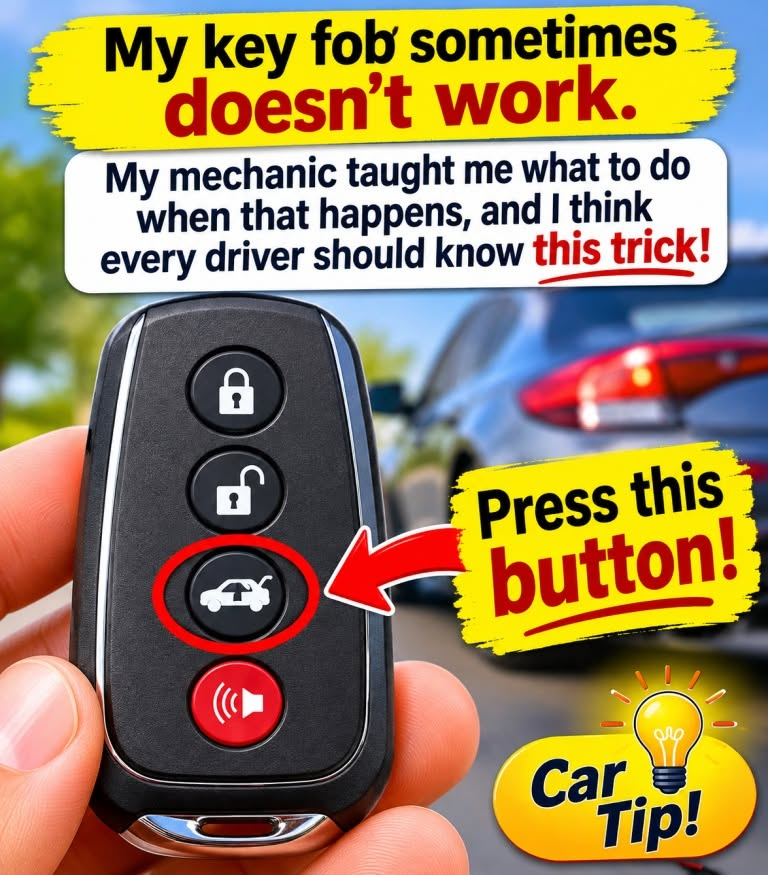
The claim that pressing the trunk button will fix a broken key fob is misleading, but the button itself can be a valuable diagnostic indicator. In many vehicles, the trunk release is not a simple single-press command. Depending on the make and model, it may require a long press (holding the button for one to three seconds) or a double-tap within a short timeframe to prevent accidental opening. If the trunk button appears unresponsive while the lock and unlock buttons work, the issue is likely not a dead fob battery but rather an incorrect button sequence or a specific fault in the trunk’s electronic release system. This distinction is crucial: a fob that locks and unlocks but fails to open the trunk is still communicating with the vehicle, which means the battery has enough charge to transmit a signal. The problem may lie in the vehicle’s liftgate settings, a valet lockout switch in the glove compartment, or a mechanical fault with the trunk latch itself.
The Real Emergency: When Nothing Works
The genuine emergency scenario occurs when no button on the fob produces any response. In this case, the trunk button is irrelevant; the entire remote has likely lost power or synchronization. The most common culprit is a depleted coin-cell battery, which typically lasts three to four years. A weak battery may first manifest as reduced range—you have to stand closer to the car for the fob to work—before failing entirely. If the battery is fresh, the issue could be radio frequency interference from nearby sources such as cell towers, Wi-Fi routers, or large metal structures. Moving the vehicle to a different location or holding the fob against your chin (a trick that uses the body as a crude antenna) can occasionally provide enough signal boost to unlock the door. However, these are temporary workarounds, not solutions.
The Hidden Mechanical Key: Your First Line of Defense
Accessing the Analog Backup
Every electronic key fob contains a secret that manufacturers have included for exactly this situation: a mechanical key hidden within the housing. This is the most important “trick” any driver can learn. To access it, look for a small release button, a sliding latch, or a notch on the side or back of the fob. Pressing or sliding this mechanism allows you to pull out a slim metal key. This key is your guaranteed entry into the vehicle when all electronics fail. In many modern cars, the exterior door lock cylinder is concealed behind a small plastic cover on the driver’s side door handle. By inserting the key into a slot at the bottom of the cover and gently prying, you can remove the cover and reveal the keyhole, allowing you to unlock the door manually.
The Passive RFID Chip and Backup Starting
Once inside, the challenge shifts to starting the car, particularly with push-button ignition systems. Even with a dead battery, the key fob contains a passive RFID chip that does not require battery power to be read by the vehicle. The most common method to start the car is to hold the dead fob directly against the start/stop button while pressing the brake pedal. Some vehicles have a designated backup slot—often in the center console, armrest, or a specific pocket on the dashboard—where the fob must be placed for the car to recognize it. This design ensures that a dead battery in the fob does not leave you stranded, provided you know where to place it. Consulting your owner’s manual for the exact location of this backup slot is essential, as it varies significantly between manufacturers.