5 Critical Health Signals of a Mini-Stroke in Seniors That Shouldn’t Be Ignored
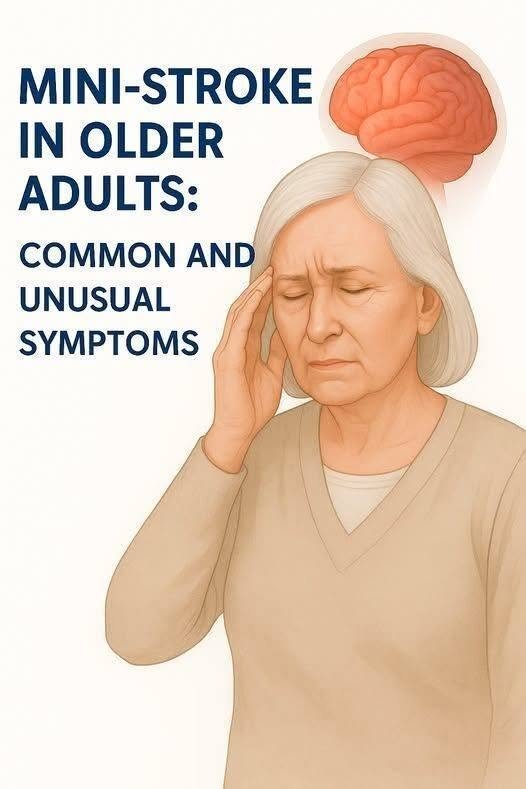
A sudden and unusually severe headache can also occur with stroke or other serious neurological conditions.
The American Stroke Association lists a severe headache with no known cause among potential stroke warning symptoms.
A severe headache alone does not establish that someone has experienced a TIA. However, a sudden severe headache—especially when accompanied by neurological symptoms such as weakness, confusion, vision problems, or difficulty speaking—requires urgent medical attention.
Remember B.E. F.A.S.T.
A useful way to remember several major stroke warning signs is B.E. F.A.S.T.:
B — Balance: Sudden loss of balance or coordination.
E — Eyes: Sudden vision changes.
F — Face: One side of the face becomes weak or droops.
A — Arms: Sudden weakness or numbness, particularly in one arm.
S — Speech: Speech becomes slurred, difficult, or confusing.
T — Time: Call emergency medical services immediately.
The American Stroke Association recommends using B.E. F.A.S.T. to recognize stroke symptoms and emphasizes that stroke is an emergency.
Symptoms That Disappear Still Matter
One of the biggest dangers of a TIA is that the symptoms may disappear.
A person may suddenly develop weakness or speech difficulty, recover a short time later, and assume everything is fine.
That assumption can be dangerous.
A TIA is a warning that the brain experienced a temporary interruption of blood flow. Medical evaluation is necessary to determine whether the episode was actually a TIA, a stroke, or another condition—and to investigate the possible cause.
Why Seniors Need to Take These Symptoms Seriously
The risk of TIA and stroke increases with age. Other important risk factors include high blood pressure, diabetes, heart disease, atrial fibrillation, smoking, and high cholesterol.
However, having risk factors is not required for a stroke or TIA to occur. Anyone experiencing sudden stroke-like symptoms needs urgent evaluation.
What Should You Do?
If an older adult suddenly develops facial drooping, arm weakness, speech difficulty, vision loss, severe unexplained headache, or sudden balance problems, do not wait to see whether the symptoms disappear.
Call your local emergency medical service immediately and note the time the symptoms began. Even if the symptoms completely resolve, the person still needs urgent medical assessment.
Do not attempt to diagnose a TIA at home. Other medical conditions can produce similar symptoms, and determining the cause requires professional evaluation.
Final Thoughts
A “mini-stroke” should never be considered a minor health event.
Sudden weakness or numbness, speech problems, vision changes, balance difficulties, and severe unexplained headache can all be warning signs of a stroke or TIA. Recognizing them quickly and seeking emergency care—even when the symptoms disappear—can provide an opportunity for doctors to identify the cause and reduce the risk of a future stroke.
For seniors, families, and caregivers, knowing B.E. F.A.S.T. is a simple but potentially lifesaving skill.
This article is for general educational purposes and does not replace professional medical advice, diagnosis, or emergency care. If stroke or TIA symptoms are occurring now, contact your local emergency medical service immediately.