Found This Strange Insect on Your Wall? Here’s What It Might Be
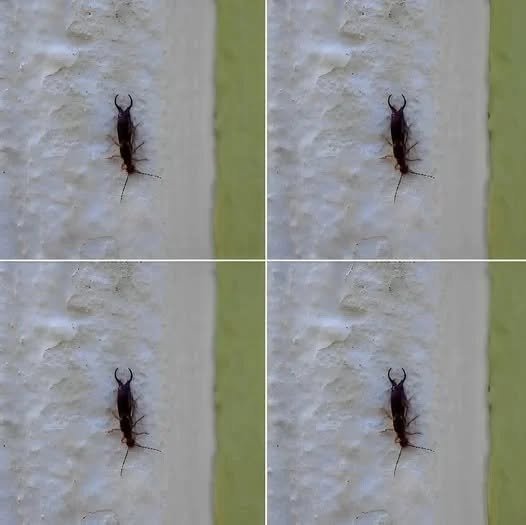
At first glance, this tiny insect can look surprisingly intimidating. Its dark body, long antennae, and especially the pair of curved pincers at the end of its abdomen make it easy to wonder what exactly you’re looking at.
The insect shown in the image is an earwig, a common insect recognized by its distinctive rear pincers, called cerci. These unusual-looking structures are one of the easiest ways to identify an earwig.
What Is an Earwig?
Earwigs are small insects belonging to the order Dermaptera. They are generally elongated and flattened, with short wings in some species and a characteristic pair of forceps-like appendages at the back.
The insect in the photograph appears consistent with an earwig, although identifying the exact species from a single photograph can be difficult.
Despite their unusual appearance, earwigs are generally secretive insects that prefer dark, damp places and are most active at night.
Why Do Earwigs Have Pincers?
The most noticeable feature of an earwig is its pair of curved pincers.
These structures serve several purposes, including:
Defense against potential predators
Helping with interactions between individuals
Assisting with handling food in some circumstances
Playing a role in mating behavior
The shape of the pincers can also vary between species and between males and females.
Do Earwigs Fly?
Some earwig species have wings, although they aren’t particularly known for being strong fliers.
Many species spend most of their time walking or hiding beneath objects rather than flying around homes. Their flattened bodies allow them to squeeze into narrow spaces where they can remain sheltered during the day.
Why Do Earwigs Enter Houses?
If you’ve discovered an earwig indoors, it may have entered while searching for a suitable sheltered environment.
Earwigs tend to favor cool, dark, and damp areas, particularly when outdoor conditions are dry or when temperatures change.
They may occasionally be found around:
Bathrooms
Basements
Garages
Kitchens
Window frames
Doorways
Potted plants
Areas near gardens
Finding one indoors does not necessarily mean there is a large infestation.