Found This Strange Insect on Your Wall? Here’s What It Might Be
What Do Earwigs Eat?
Earwigs are generally omnivorous, meaning they can consume both plant and animal material.
Depending on the species and available food, they may feed on:
Decaying plant material
Leaves
Flowers
Fruits
Small insects
Other small organisms
Organic debris
This makes earwigs part of the natural process of breaking down organic material in outdoor environments.
Are Earwigs Dangerous?
Despite their intimidating appearance, earwigs are not generally considered dangerous insects to people.
Their pincers can look threatening, but they are primarily used for defense and interactions with other earwigs. An earwig may pinch if it is handled or trapped, but it does not have a venomous stinger.
The old belief that earwigs deliberately crawl into people’s ears is also a widespread myth. Their name has contributed to this misconception, but earwigs are not known for intentionally seeking out human ears.
Why Are They Called Earwigs?
The unusual name has been associated with old European folklore and the shape of the insect’s rear appendages.
The English name “earwig” is traditionally connected with the belief that these insects entered people’s ears while they slept. There is no good evidence that this is a normal behavior.
Like many common insect names, the popular name has survived long after the original folklore became separated from the insect’s actual biology.
How to Keep Earwigs Away From Your Home
If earwigs are appearing regularly indoors, reducing the conditions that attract them can help.
Reduce Moisture
Fix leaking pipes, faucets, or areas where water accumulates. Improving ventilation in damp spaces can also make the environment less attractive.
Seal Entry Points
Check gaps around doors, windows, pipes, and other openings where insects can enter.
Move Garden Debris Away From the House
Stacks of leaves, wood, mulch, and other organic material close to exterior walls can provide shelter for earwigs.
Check Plants Before Bringing Them Indoors
Potted plants can occasionally provide hiding places for small insects. Inspect them carefully before moving them inside.
Are Earwigs Helpful?
Although they can occasionally damage young plants or flowers, earwigs also have a place in the ecosystem.
They can consume decaying organic matter and, depending on the species, may prey on small insects and other organisms. In outdoor environments, they are simply one part of the larger community of insects and decomposers.
Frequently Asked Questions
What is the insect in the picture?
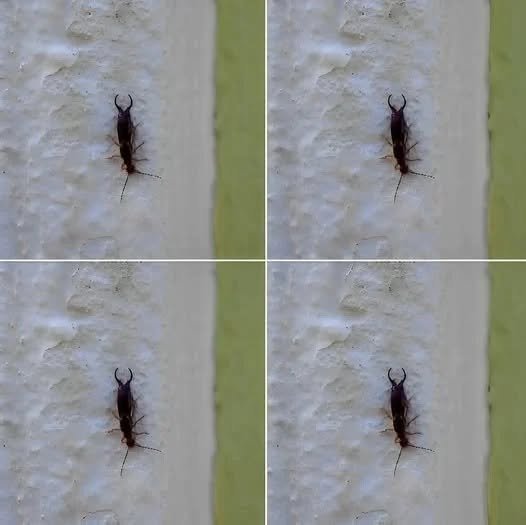
The insect appears to be an earwig, recognizable by its elongated body, antennae, and forceps-like appendages at the rear.
Can an earwig bite?
Earwigs do not have a typical biting mechanism like many other insects. They can use their pincers defensively and may pinch when handled.
Should I be worried if I find one inside?
Usually, finding a single earwig indoors isn’t a reason for alarm. If you repeatedly find large numbers, it may be worth checking for excess moisture, cracks, and outdoor shelter areas around the building.
Do earwigs damage homes?
Earwigs are not known for structurally damaging buildings in the way that termites or some wood-boring insects can. Their presence indoors is generally associated with shelter and environmental conditions rather than structural damage.
Final Thoughts
The strange-looking insect in this photograph is a good reminder that some of the most intimidating creatures around our homes are actually quite ordinary.
With its unmistakable pincer-like cerci, the earwig has one of the most recognizable silhouettes among small insects. While its appearance may initially make it look frightening, understanding its behavior and role in the environment makes this unusual little insect much less mysterious.
So if you spot one crawling across a wall at night, take a closer look—you may simply have encountered one of nature’s most oddly designed insects.