How to Tell Cilantro and Flat-Leaf Parsley Apart at the Grocery Store
If you’re shopping somewhere that allows you to sample herbs, or if you’ve already brought them home, taste provides an unmistakable distinction.
Cilantro has a bright, distinctive flavor that can range from citrusy and fresh to strongly herbal. It is particularly common in Mexican, Indian, Middle Eastern, Southeast Asian, and Latin American cuisines.
Flat-leaf parsley has a fresher, milder flavor with subtle peppery and grassy notes. It is widely used in Mediterranean, Middle Eastern, and European cooking.
Check the Label
When purchasing packaged herbs, the simplest solution is often the label.
Look for names such as “cilantro,” “fresh coriander,” or “coriander leaves” for cilantro. In the United States, the leafy herb is generally called cilantro, while the seeds are commonly called coriander.
For parsley, labels may specify “flat-leaf parsley,” “Italian parsley,” or simply “parsley.”
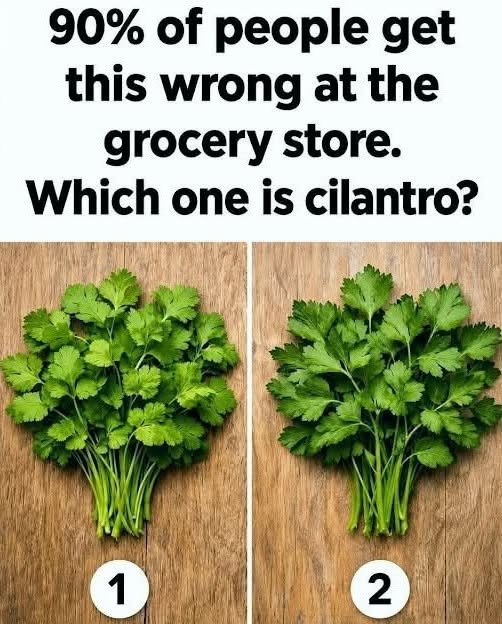
If you’re buying loose bunches at a farmers’ market or grocery store, visual identification becomes more important.
Common Culinary Uses
Knowing the difference matters because the herbs have distinct culinary roles.
Cilantro
Cilantro is commonly used in:
Salsa and guacamole
Tacos and Mexican dishes
Curries and chutneys
Vietnamese and Thai dishes
Fresh salads
Soups and noodle dishes
Middle Eastern recipes
It is often added near the end of cooking or used fresh as a garnish to preserve its bright flavor.
Flat-Leaf Parsley
Flat-leaf parsley is frequently used in:
Pasta dishes
Mediterranean salads
Soups and stews
Sauces and marinades
Tabouleh
Gremolata
Roasted vegetables
Meat and fish dishes
Its relatively mild flavor makes it versatile enough to use in larger quantities.
Can You Substitute One for the Other?
Technically, you can substitute cilantro and flat-leaf parsley in some recipes, but the result will taste noticeably different.
If a recipe specifically calls for cilantro, parsley will not provide the same citrusy, distinctive character. Likewise, replacing parsley with cilantro can dramatically alter a dish that depends on parsley’s more subtle flavor.
If you’re preparing a recipe where the herb is a major component, such as tabouleh, salsa, or fresh chutney, using the correct herb is particularly important.
A Simple Grocery Store Trick
When you’re standing in the produce section and can’t decide which bunch you’re looking at, remember three things:
Leaves. Smell. Label.
Look for cilantro’s softer, rounded leaves, check for its distinctive aroma, and confirm the label whenever possible. Flat-leaf parsley generally has more sharply defined leaves and a milder, grassy scent.
With a little practice, you’ll be able to distinguish the two almost instantly.
Final Thoughts
Cilantro and flat-leaf parsley may look similar at first, but their differences become obvious once you know what to look for.
Cilantro is generally more delicate in appearance and has a much more distinctive aroma and flavor, while flat-leaf parsley tends to have more defined leaves and a milder, grassy character.
The next time you’re shopping for fresh herbs, take a closer look before placing a bunch in your cart. A few seconds of careful observation can make the difference between the right herb and a very different dinner.