How to Tell Cilantro and Flat-Leaf Parsley Apart at the Grocery Store
Cilantro and flat-leaf parsley are two of the most commonly used fresh herbs in the kitchen, but their similar appearance can make them surprisingly easy to confuse at the grocery store.
Both have bright green leaves, slender stems, and a fresh aroma, yet they have very different flavors and culinary uses. Knowing how to distinguish them can save you from bringing home the wrong herb and accidentally changing the flavor of your recipe.
Fortunately, a few simple clues make identifying them much easier.
Look at the Leaves
The leaves are usually the easiest place to start.
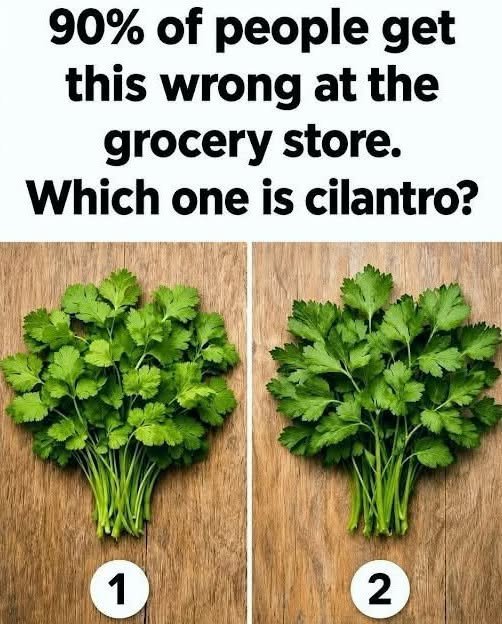
Cilantro, also called fresh coriander, tends to have delicate, rounded leaves with irregular, softly lobed edges. The leaves often look slightly more delicate and less structured than parsley.
Flat-leaf parsley, also known as Italian parsley, generally has darker, flatter, and more pointed leaves. Its leaf edges are typically more sharply divided, giving the herb a somewhat more defined appearance.
Although individual bunches can vary, comparing several stems side by side usually makes the difference easier to see.
Examine the Stems
The stems can also provide a useful clue.
Cilantro generally has relatively slender, tender stems, particularly toward the upper part of the bunch. Many cooks use both the leaves and tender stems because they contain plenty of flavor.
Flat-leaf parsley usually has somewhat sturdier stems. The stems can be used in cooking, although many recipes focus primarily on the leaves.
If you’re still uncertain, the stems can help confirm what you’re looking at.
Use Your Nose
When appearance isn’t enough, smell the herbs.
Cilantro has a distinctive, fresh aroma that many people describe as citrusy, herbal, or slightly peppery. For some people, however, cilantro has a very different smell and taste due to genetic differences in how certain aroma compounds are perceived.
Flat-leaf parsley has a milder, cleaner, and more grassy scent. Its aroma is generally less intense than cilantro’s.
A quick smell is often one of the fastest ways to tell the two apart.