In a large bowl, whisk together the eggs and salt.
Add the flour and begin mixing while gradually adding the water.
The dough should be thick, sticky, and slightly elastic. It should not be as firm as pasta dough.
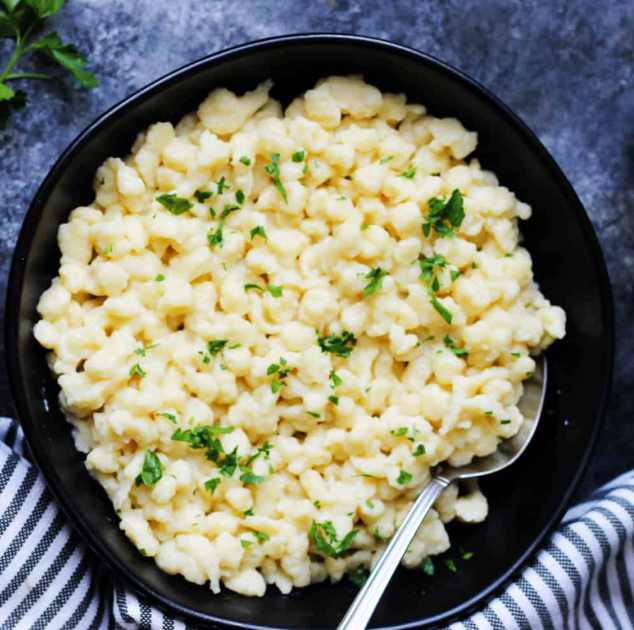
Don’t worry if it looks somewhat uneven—that rustic texture is exactly what you’re looking for.
2. Bring Water to a Boil
Bring a large pot of generously salted water to a rolling boil.
Reduce the heat slightly so the water maintains a steady boil without becoming too violent.
3. Form the Nokedli
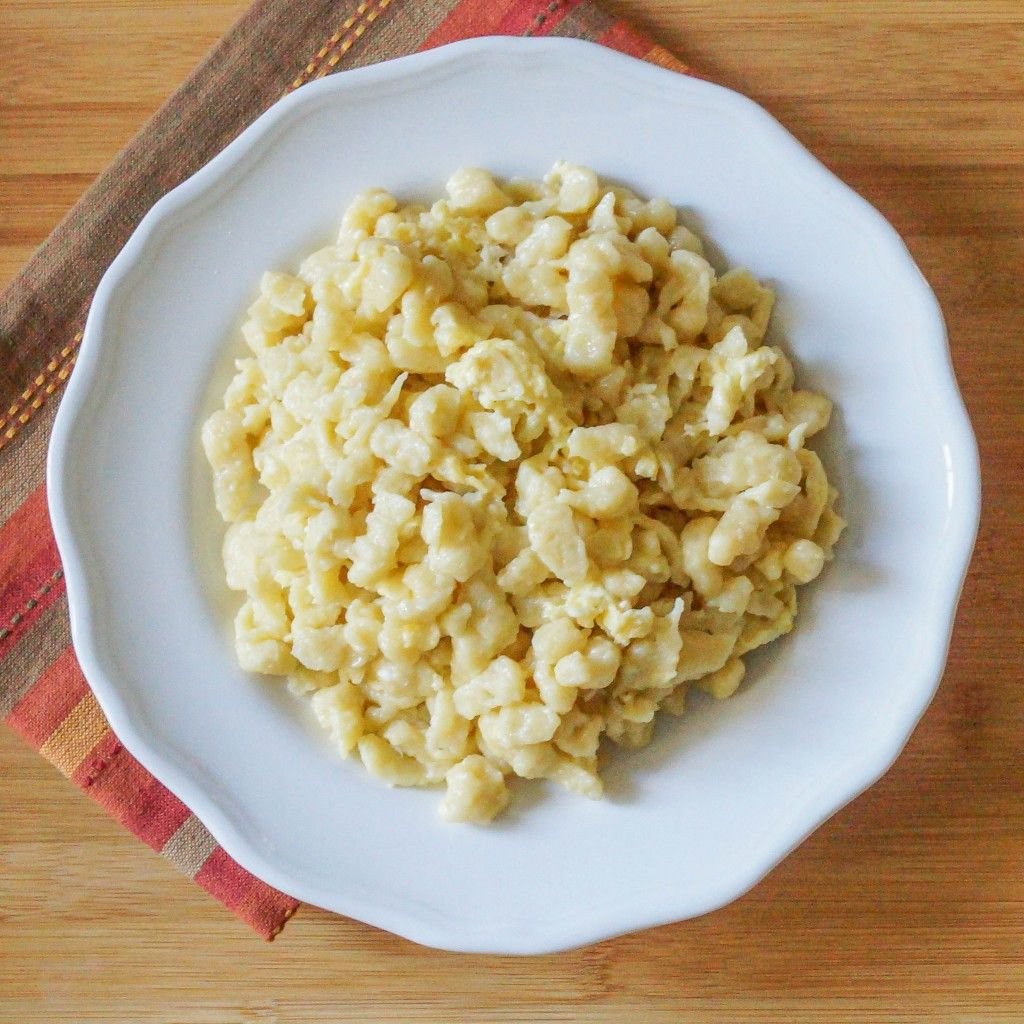
Traditionally, the dough is pushed through a nokedli/spätzle maker directly into the boiling water.
If you don’t have one, use a large-holed colander or a sturdy grater positioned over the pot.
Work in batches rather than adding all the dough at once.
4. Cook the Dumplings
Once the dumplings rise to the surface, allow them to cook for another 1–2 minutes.
Taste one to make sure it is cooked through.
Avoid overcooking, as nokedli should remain tender and soft.
5. Drain and Toss
Remove the dumplings with a slotted spoon or drain them in a colander.
Toss immediately with a little butter or oil to prevent them from sticking together.
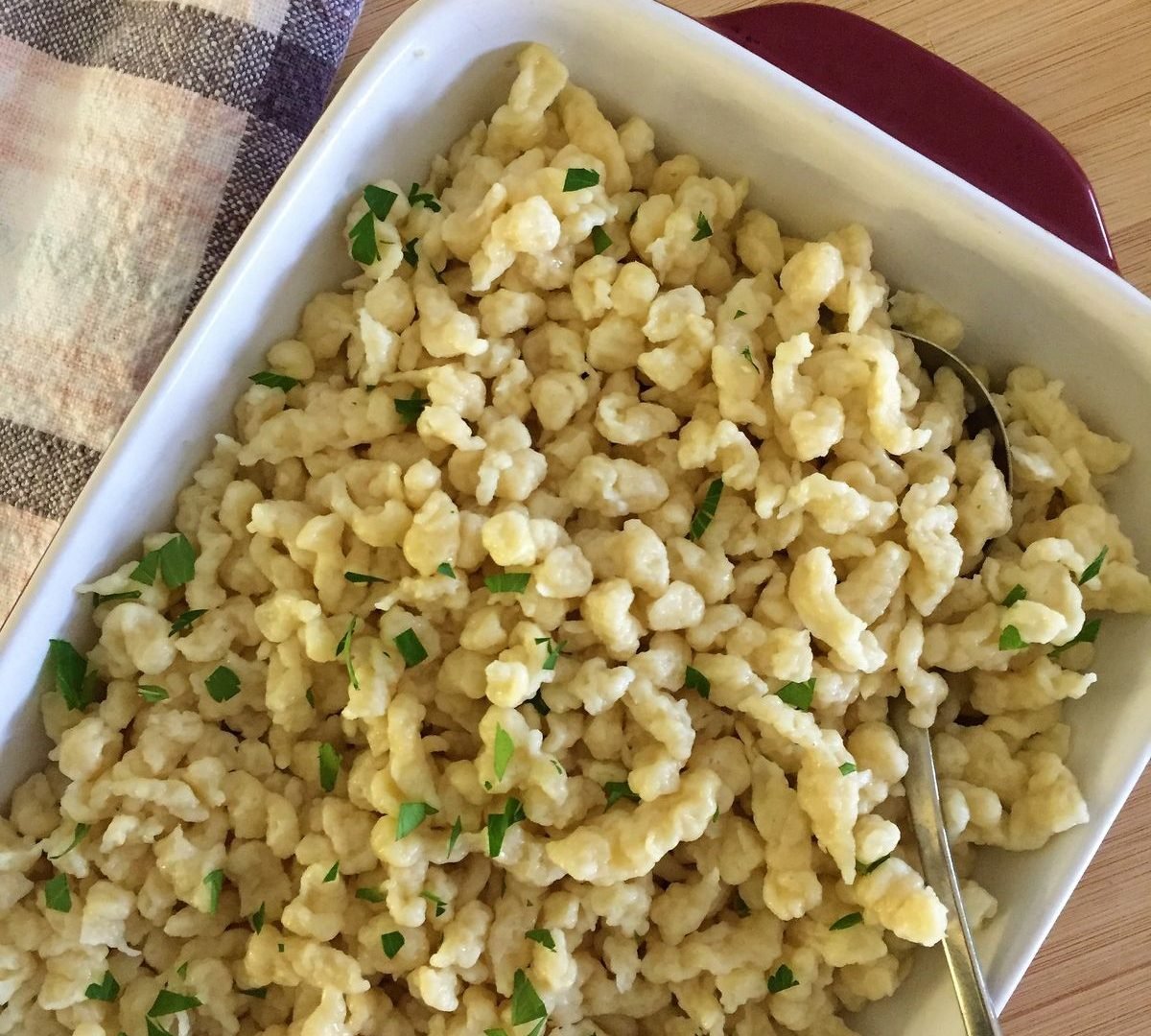
For extra freshness, sprinkle with chopped parsley.
What Makes Good Nokedli?
The secret is the consistency of the dough.
It should be soft and sticky enough to pass easily through the holes of a dumpling maker. If the dough is too stiff, the dumplings will become heavy and dense.
If it’s too thin, the dumplings may become very small and lose their characteristic rustic shape.
Add the water gradually—you can always add more, but it’s difficult to correct dough that has become too wet.
How to Serve Hungarian Nokedli
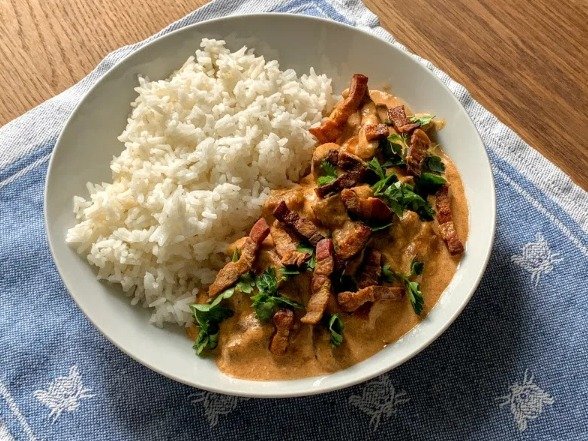
Nokedli is particularly delicious with rich Hungarian sauces and stews.
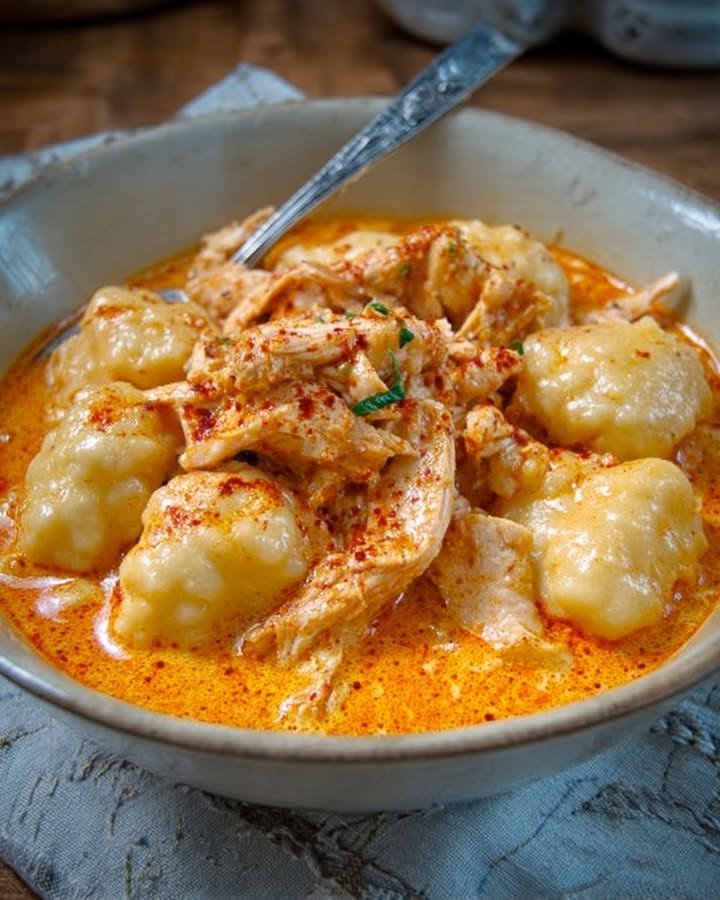
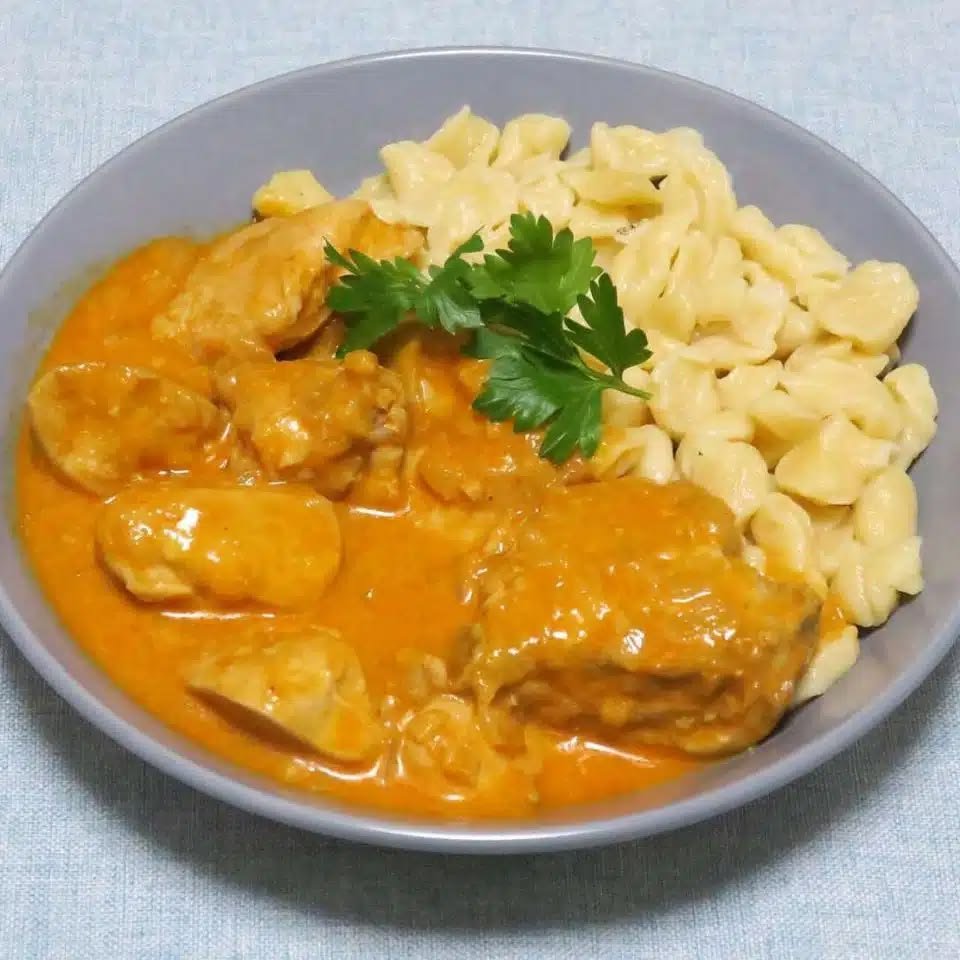
Chicken Paprikash
Perhaps the most classic pairing is paprikás csirke, where the soft dumplings soak up the creamy paprika sauce beautifully.
Hungarian Beef Stew
Serve nokedli alongside marhapörkölt for a hearty traditional meal.
Mushroom Paprikash
The dumplings also work wonderfully with creamy mushroom and paprika sauces.
With Eggs
For a simple meal, toss freshly cooked nokedli with butter and scrambled eggs.
Tips for Perfect Nokedli
Use room-temperature eggs. They mix more easily into the dough.
Don’t overmix. Mix just until the ingredients are combined and the dough becomes smooth enough to work with.
Salt the cooking water. It seasons the dumplings from the inside.
Cook in batches. Crowding the pot can lower the water temperature and cause the dumplings to stick.
Serve immediately. Nokedli is at its best when freshly cooked and tender.
Can Nokedli Be Made Ahead?
Yes. Cooked nokedli can be refrigerated for a couple of days.
When ready to serve, gently reheat them in a skillet with butter or a little sauce. A splash of water can help prevent them from drying out.
They can also be frozen after cooking. Spread them out to cool before freezing so they don’t form one large clump.
Frequently Asked Questions
Are Nokedli and Spaetzle the same?
They are closely related types of small, irregular boiled dumplings. Nokedli is the Hungarian version and is particularly associated with Hungarian cuisine.
Why are my dumplings hard?
The dough may have been too dry, or the dumplings may have been overcooked. Add water gradually when preparing the dough and cook only until tender.
Can I make Nokedli without a dumpling maker?
Absolutely. A large-holed colander, coarse grater, or even a knife-and-board method can work. The shapes don’t need to be perfectly uniform.
Can I add herbs?
Yes. Parsley, chives, or other fresh herbs can be added to the dough or sprinkled over the finished dumplings.
Final Thoughts
Hungarian Nokedli proves that some of the best comfort foods come from the simplest ingredients. These tender, rustic egg dumplings are quick to make, incredibly versatile, and perfect for soaking up rich Hungarian sauces.
Serve them alongside Chicken Paprikash, Beef Stew, or Mushroom Paprikash, and you have a comforting Hungarian meal that feels straight from a family kitchen. 🇭🇺🍽️