Begin by placing the flour in a large bowl and adding the eggs and salt. Gradually add water while mixing.
The dough should become thick, sticky, and somewhat elastic. It should not resemble a firm dough that can easily be rolled out.
One of the most important details is avoiding overmixing. The dough only needs to come together into a workable consistency.
2. Bring Water to a Boil
Fill a large pot with salted water and bring it to a strong boil.
Because the dumplings cook quickly, it is important to have the water ready before shaping the dough.
3. Form the Dumplings
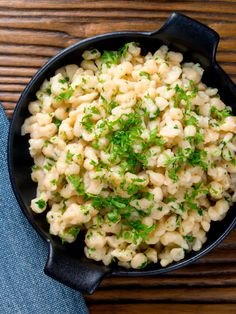
Traditionally, nokedli can be made using a nokedli maker, a perforated tool that sits over the pot. Small portions of dough are pushed through the holes directly into the boiling water.
Without a dedicated tool, the dough can also be scraped from a cutting board or other suitable surface into the water using a knife or spoon.
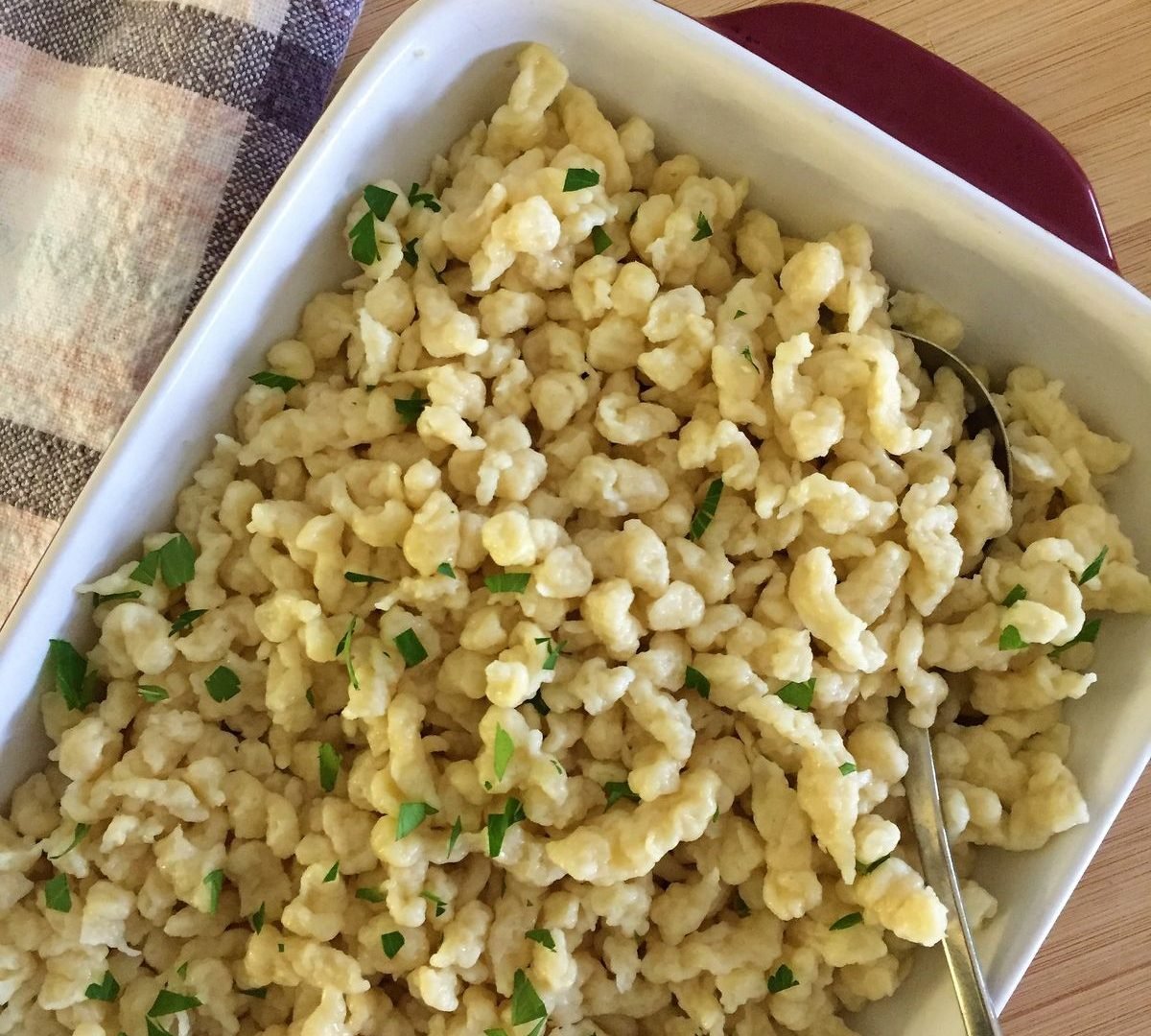
The dumplings do not need to be perfectly shaped. Their irregular appearance is traditional.
4. Cook Until Done
The small pieces of dough cook quickly.
As they cook, they generally rise toward the surface. Once tender and cooked through, they can be removed with a slotted spoon and transferred to a bowl.
For larger batches, cooking the dumplings in portions helps prevent them from sticking together or overcrowding the pot.
5. Finish and Serve
After draining, nokedli can be lightly tossed with butter or oil.
It can then be served immediately, preferably alongside a dish with plenty of sauce.
What Does Nokedli Taste Like?
On its own, nokedli has a mild, slightly eggy flavor. Its real strength, however, is its texture and ability to absorb sauces.
The dumplings are:
Soft
Tender
Slightly chewy
Irregular in shape
Excellent at holding rich sauces
This makes them particularly effective with paprika-based Hungarian dishes.
A spoonful of creamy sauce combined with several pieces of warm nokedli creates the kind of simple, satisfying combination associated with traditional home cooking.
Nokedli and Chicken Paprikash
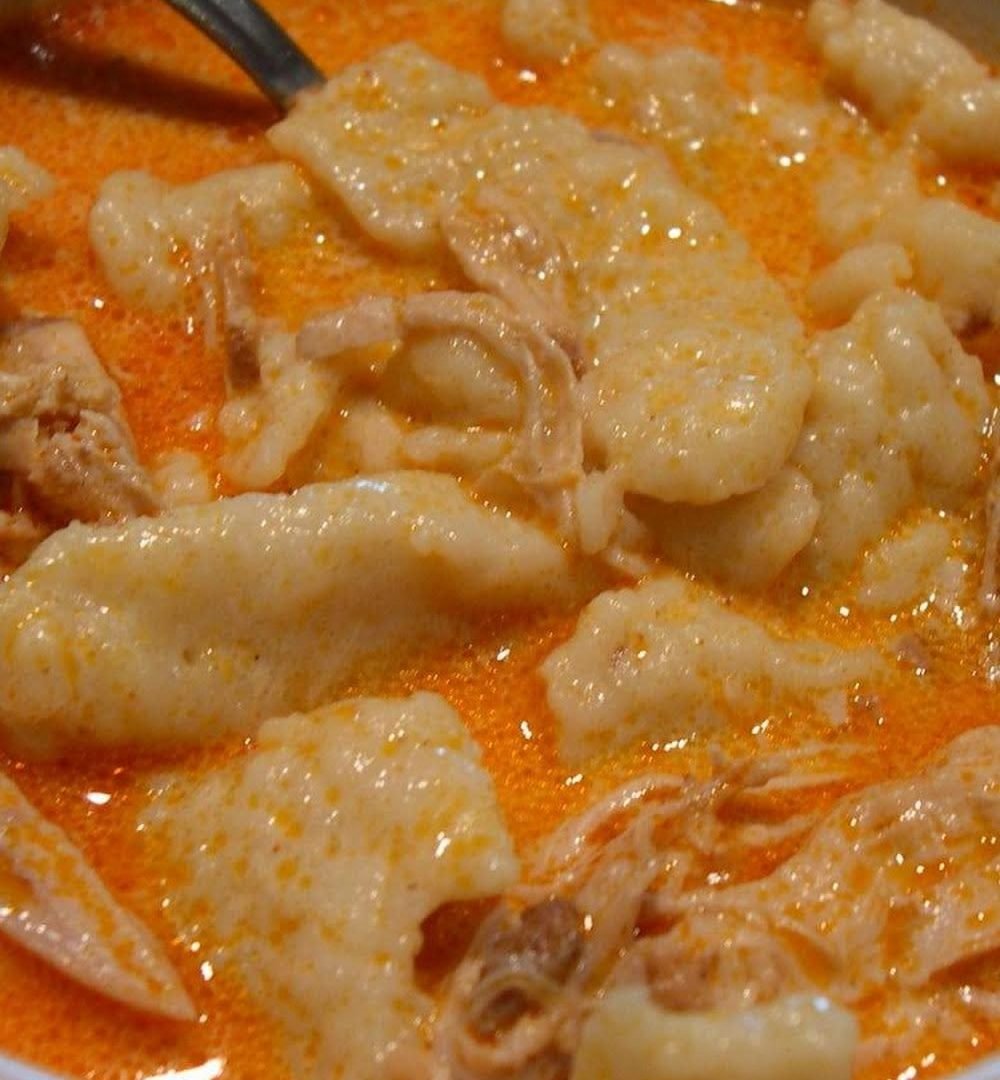
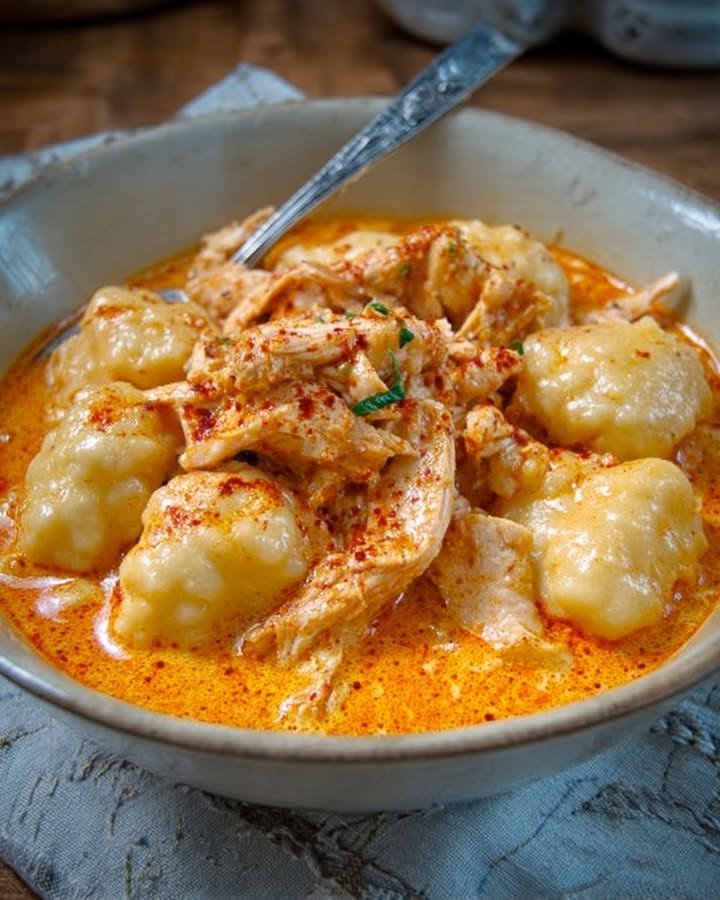
One of the most famous pairings is chicken paprikash with nokedli.
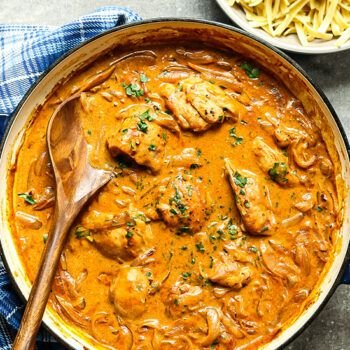
Chicken paprikash is prepared with chicken cooked in a rich sauce featuring paprika, onions, and often sour cream. The sauce is creamy, savory, and deeply flavored.
Nokedli provides the perfect contrast.
Rather than competing with the paprika sauce, the dumplings act almost like a sponge, catching the sauce and carrying it from the plate to the bite.
For many people, this combination represents classic Hungarian comfort food.
Other Ways to Serve Nokedli
Although chicken paprikash is a particularly well-known pairing, nokedli is versatile enough to accompany many other meals.
It can be served with:
Hungarian beef stews
Pork paprikash
Mushroom paprikash
Goulash-style dishes
Creamy meat sauces
Roasted meats with gravy
Vegetable stews
It can also be incorporated into other preparations rather than simply being served as a side dish.
Traditional Variations
There is no single universal nokedli recipe. Hungarian households may differ in the amount of flour, egg, or water they use.
Some versions are particularly soft, while others are slightly firmer and more substantial.
The size can also vary. Smaller dumplings cook rapidly and have a delicate texture, while larger pieces create a more rustic and filling side dish.
Regional and family traditions often influence the preferred consistency and method of preparation.
Tips for Perfect Nokedli
Keep the Dough Soft
Nokedli dough should be soft and sticky. Adding too much flour can result in dense dumplings.
Do Not Overwork the Dough
Mix just enough to combine the ingredients. Excessive mixing can affect the final texture.
Use Plenty of Boiling Water
The dumplings need enough space to cook properly without sticking together.
Work in Batches
If preparing a large quantity, cooking the dough in several batches can make the process easier.
Serve Immediately
Nokedli is particularly delicious when freshly cooked and warm. If it needs to sit for a while, lightly tossing it with butter or oil can help prevent sticking.
Nokedli vs. Other Dumplings
Nokedli is sometimes compared with German spätzle, and the two do share similarities. Both are irregular, soft dumplings made from a simple flour-and-egg dough and cooked in boiling water.
The preparation methods and recipes, however, vary between culinary traditions.
Nokedli is firmly associated with Hungarian cuisine and is especially prominent alongside paprika-rich dishes and stews.
A Simple Dish With Deep Culinary Roots
Nokedli demonstrates an important characteristic of traditional Hungarian cooking: impressive flavor does not require complicated ingredients.
Flour, eggs, water, and salt can become a satisfying accompaniment to some of Hungary’s most flavorful dishes.
Its rustic appearance also reflects the character of home cooking. The dumplings do not need to be identical. In fact, their uneven shapes are part of what makes them feel handmade.
Final Thoughts
Hungarian Nokedli is a humble but exceptionally versatile dish. Its soft texture, mild flavor, and ability to absorb sauces make it an ideal companion to rich Hungarian meals.
Whether served with chicken paprikash, beef stew, mushroom sauce, or another hearty dish, freshly prepared nokedli brings warmth and comfort to the table.
Simple ingredients, traditional preparation, and a wonderfully homemade texture are what make these Hungarian egg dumplings a lasting favorite in kitchens across Hungary.