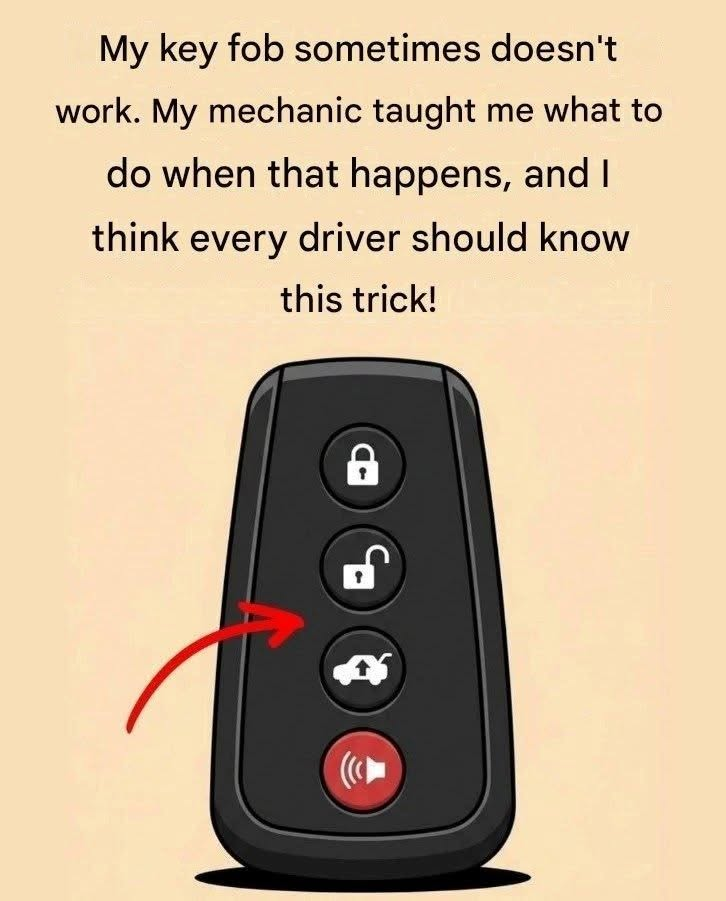
Starting the Car with a Dead Fob: The Backup Reader
Getting into the car is only half the battle. If you have a push-button start, a dead fob battery means the car will not detect the key in your pocket or purse. However, almost every push-button start vehicle has a built-in backup system that allows you to start the engine even with a completely dead fob.
The most common method is to hold the key fob directly against the start button itself and press it. The vehicle contains a passive, unpowered RFID chip inside the fob that can be read by the car’s immobilizer system when it is in very close proximity, even without battery power . The exact placement matters: some cars require the fob to physically touch the button, while others have a marked sensor area nearby.
If holding the fob to the button does not work, check your owner’s manual for the location of the backup reader. Common locations include inside the center console, in a dedicated slot in the cup holder area, or in a small compartment in the glovebox . Some vehicles, particularly certain models from Mercedes-Benz and Chrysler, have a removable cap on the start button that reveals a traditional keyhole underneath . Once the fob is in the correct position, press the brake pedal and push the start button as you normally would.
Diagnosing Intermittent Failures
If your fob works most of the time but fails occasionally, the problem is likely not a dead battery. Intermittent failures are almost always caused by environmental interference. The National Highway Traffic Safety Administration notes that aftermarket LED light installations, both inside and outside the vehicle, can affect remote keyless entry signal consistency .
To diagnose the issue, pay attention to where the failures occur. If the fob consistently fails in one specific location—your driveway, a particular parking garage, or a spot near a certain building—interference is almost certainly the cause. Moving the vehicle a short distance away from the interference source should restore normal function. If the problem follows you everywhere, the fob battery or the vehicle’s receiver module may be failing .
Preventive Maintenance: Avoiding the Lockout
The best trick is the one you never need to use. Recognizing the warning signs of a failing key fob battery allows you to replace it proactively, before it leaves you stranded. The most reliable indicator is reduced range: if you used to unlock your car from thirty feet away and now need to be within five feet, the battery is weakening . Other signs include needing to press buttons multiple times, delayed responses, and dashboard warnings such as “Key Battery Low” .
Replacing the battery is a simple DIY task that takes only a few minutes. Most fobs can be opened by prying along the seam with a small flathead screwdriver or coin. Once open, note the battery’s orientation, remove the old battery, and install a new one of the same size (typically CR2032 or CR2025) . Keeping a spare battery in your glovebox is a small investment that can prevent a significant inconvenience.
Conclusion
The tricks for dealing with a malfunctioning key fob are not secrets reserved for mechanics. They are built-in features that automakers have designed to ensure drivers are never truly stranded by a dead battery or a moment of signal interference. The mechanical key hidden inside the fob gets you into the car, the backup reader near the start button gets you on the road, and the body antenna trick can extend your range when interference is the problem. Understanding these systems transforms a potentially panic-inducing situation into a manageable inconvenience.
The broader lesson is one of preparedness. Take five minutes to locate the mechanical key release on your fob and identify the backup reader location in your vehicle before you need them. Check your owner’s manual. Keep a spare coin-cell battery in the glovebox. These small acts of preparation are the real secrets that every driver should know. When your key fob fails—and eventually, it will—you will be ready to respond calmly and effectively, rather than staring at your car in frustration and wondering what to do next.
Frequently Asked Questions
1. Why does holding the key fob to my head make it work better? Your body, which is mostly water, can act as a dielectric resonator that amplifies the radio waves emitted by the fob. Holding the fob near your head effectively turns your body into a larger antenna, extending the signal range. This is a real physics phenomenon, not a myth .
2. Where is the hidden mechanical key in my fob? Most fobs have a small release button or sliding tab on the side or back. Pressing or sliding it allows you to pull out a traditional metal key blade. Check your owner’s manual for the specific method for your vehicle .
3. How do I start my push-button car with a dead fob battery? Hold the key fob directly against the start button and press it. The passive RFID chip inside the fob does not require battery power to be read by the car’s immobilizer system. If that does not work, look for a dedicated backup reader slot in the center console or cup holder area .
4. Why does my key fob only fail in certain locations? Radio frequency interference from other devices—Wi-Fi routers, signal boosters, high-voltage power lines, or large LED screens—can overwhelm the fob’s weak signal. If the fob works elsewhere but fails consistently in one spot, interference is the likely cause .
5. What type of battery does my key fob use? Most key fobs use a CR2032 or CR2025 coin-cell battery. The correct size is usually printed on the old battery or listed in your owner’s manual. Using the wrong size can damage the contacts .
6. Will the car alarm go off if I use the mechanical key to unlock the door? It might. The car’s security system may interpret the manual unlock as a potential break-in because it did not receive the electronic signal from the fob. Once you are inside and the car recognizes the fob, the alarm will silence .
7. How often should I replace my key fob battery? Most fob batteries last between two and five years, depending on usage. Replace the battery when you notice reduced range, intermittent operation, or a dashboard warning. Keeping a spare battery in your glovebox is a good preventive measure .
8. What if my key fob stops working while I am driving? The car will not shut off immediately if the fob battery dies or the fob is removed from the vehicle. You will likely see a warning light on the dashboard, but the engine will continue running. However, once you turn the car off, you may not be able to restart it without the fob .