People With This Blood Type Are More Likely to Live to 100 Years Old—What Does the Science Say?
Could your blood type have something to do with how long you live?
It is an intriguing question, especially because researchers have studied whether the ABO blood-group system is associated with diseases that can influence health and lifespan.
Some studies have found differences in blood-type distribution among people who live to 100 or beyond. One frequently cited Japanese study, for example, found that blood type B was more common among 269 centenarians than among a much larger comparison group. However, other studies have failed to find the same association.
So, is there really a blood type that makes someone more likely to reach 100?
The answer is not that simple.
The Blood Types Researchers Study
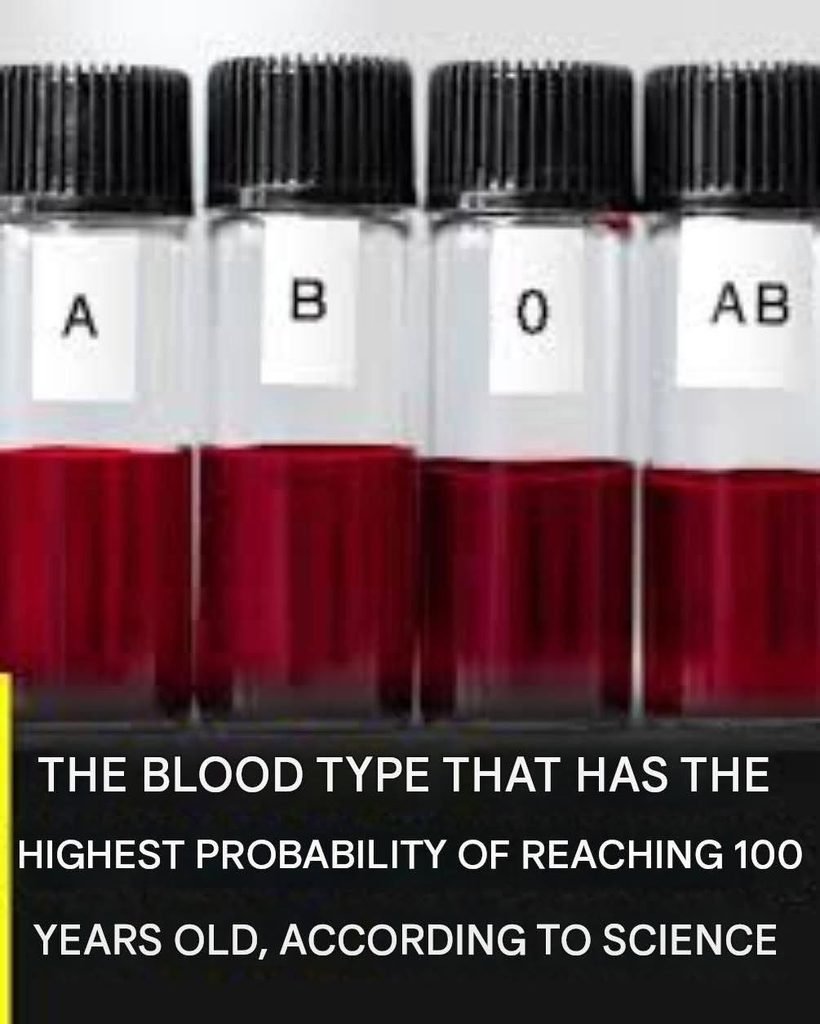
The ABO blood-group system divides people into four main types:
A
B
AB
O
These blood types are determined by genetic differences in the ABO gene.
Blood type is important in medicine because ABO differences are associated with susceptibility to certain diseases. Large genetic studies have found associations between ABO blood groups and several cardiovascular and thromboembolic outcomes.
But an association with particular diseases is not the same thing as proof that a specific blood type determines how long someone will live.
Why Did Blood Type B Get Attention?
One of the most frequently discussed findings came from a study of Japanese centenarians.
Researchers compared the ABO blood groups of 269 people aged 100 or older with more than 7,000 regionally matched controls. Blood type B occurred in 29.4% of the centenarians compared with 21.9% of the controls.
The researchers concluded that blood type B might be associated with exceptional longevity and called for further investigation.
That result generated an appealing headline:
“People with blood type B may live longer.”
But a single study cannot establish that blood type B causes exceptional longevity.
Other Research Tells a Different Story
Subsequent research has produced conflicting findings.
A study of centenarians from Western Sicily found no significant difference in ABO blood-group distribution that would support an association with longevity.
Even more importantly, a large Chinese study examined 2,201 centenarians and 2,330 middle-aged controls. Researchers found no statistically significant differences in the distribution of blood types A, B, O, or AB between the two groups.
The authors concluded that ABO blood groups and related genetic variants were not associated with longevity in that population.
A 2025 study comparing adults aged 85 and older with younger controls likewise found no significant difference in ABO blood-group frequencies that would establish blood type as a major determinant of longevity.
Why Can Blood Type Be Linked to Health Without Determining Lifespan?