The combination of pork and pineapple is not a modern invention, nor is it confined to a single culinary tradition. In Polynesian cuisine, pork cooked with tropical fruit—most famously in dishes like kalua pig and the Hawaiian plate lunch staple of ham and pineapple—has existed for centuries, where the sweetness of the fruit balances the richness of the meat. In the American South, the pairing appears in glazed hams studded with pineapple rings, a holiday centerpiece that has been a fixture of Southern tables for generations. In the Philippines, pork belly is often braised with pineapple juice and brown sugar to create a sticky, sweet-savory sauce. The common thread across these traditions is a practical one: pineapple contains enzymes and acids that help tenderize meat and cut through its fat, while the fruit’s natural sugars caramelize under heat to create a glossy, flavorful glaze. The pairing is not just about flavor contrast; it is about a chemical and culinary synergy that has been recognized and used for centuries.
Why Pineapple and Pork Work So Well
The success of this pairing is not accidental; it is rooted in the biochemical properties of both ingredients. Pineapple contains bromelain, a mixture of proteolytic enzymes that break down protein molecules. When pineapple comes into contact with pork, the bromelain begins to break down the meat’s protein structure, contributing to a more tender texture. At the same time, pineapple is rich in both citric and malic acids, which help balance the pH of the meat and can enhance water retention, keeping the pork chops moist during cooking. The fruit’s sugars—sucrose, fructose, and glucose—caramelize at high heat, creating a flavorful, golden-brown glaze that coats the meat. The combination of acid, enzyme, and sugar is a natural tenderizer and flavor enhancer, which is why the pairing works so well even in a recipe with minimal ingredients. The pork, for its part, is a rich, slightly sweet meat that can absorb and complement the fruit’s brightness without being overwhelmed by it.
The Three-Ingredient Formula
The beauty of this recipe lies in its simplicity. At its core, it requires just three ingredients: thick-cut pork chops, a can of pineapple rings (preferably in juice, not syrup), and a sweetener or sauce that brings the flavors together. A common and highly effective formula uses brown sugar and soy sauce alongside the pineapple, creating a sweet-salty glaze that is deeply savory and perfectly balanced. Some variations use a packet of onion soup mix, barbecue sauce, or a simple mixture of brown sugar and butter, but the essential structure remains the same: the pork chops are placed in a baking dish, the pineapple rings are placed on top, and the sauce is poured over everything. The dish is then baked until the pork is cooked through and the sauce has thickened and caramelized. The result is a meal that requires almost no active cooking time, making it ideal for busy weeknights when time and energy are limited.
The Role of the Pineapple Ring: More Than a Garnish
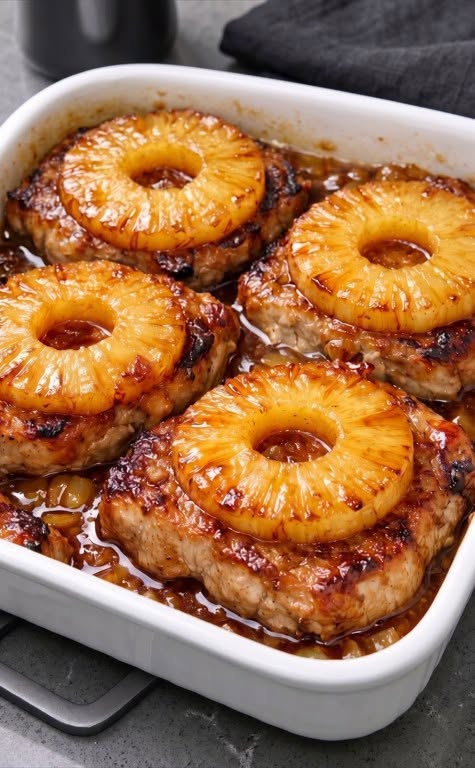
The pineapple ring resting on top of each pork chop is not merely decorative. It serves several practical functions during cooking. First, it acts as a baste, slowly releasing its juices as it heats, which trickles down onto the pork and helps keep it moist. Second, the ring adds a layer of insulation, protecting the surface of the chop from direct, intense heat and preventing it from drying out or burning before the interior is fully cooked. Third, as the pineapple caramelizes, it contributes to the pan sauce, infusing it with its distinctive sweet-tart flavor. When the dish comes out of the oven, the rings are soft, golden, and slightly charred at the edges, and they are meant to be eaten along with the pork. The visual appeal of the ring on top of the chop is an added bonus, but the ingredient itself is doing real work in the cooking process.