Why the Neck Ages Differently (and Faster) Than the Face
To understand why a five-minute trick can create such a dramatic visual change, it helps to first understand why the neck looks the way it does. The skin on the neck is structurally different from facial skin. It is thinner, has fewer oil glands, and contains less collagen and elastin, making it more vulnerable to moisture loss and the visible effects of aging. A dermatologist quoted in a Cleveland Clinic report explains that thin skin with fewer hair follicles is “more prone to showing signs of aging and sun damage”. Compounding this biological vulnerability is a behavioral one: most people carefully apply sunscreen and anti-aging serums to their faces but stop abruptly at the jawline, leaving the neck exposed to years of cumulative UV damage. Add in the modern habit of looking down at phones and laptops—sometimes called “tech neck”—and the result is a perfect storm for early and pronounced crepiness. This is why the neck can appear to “age in dog years” compared to the face, and why the promise of a quick fix is so appealing.
The Anatomy of “Crepiness”: What You Are Actually Seeing
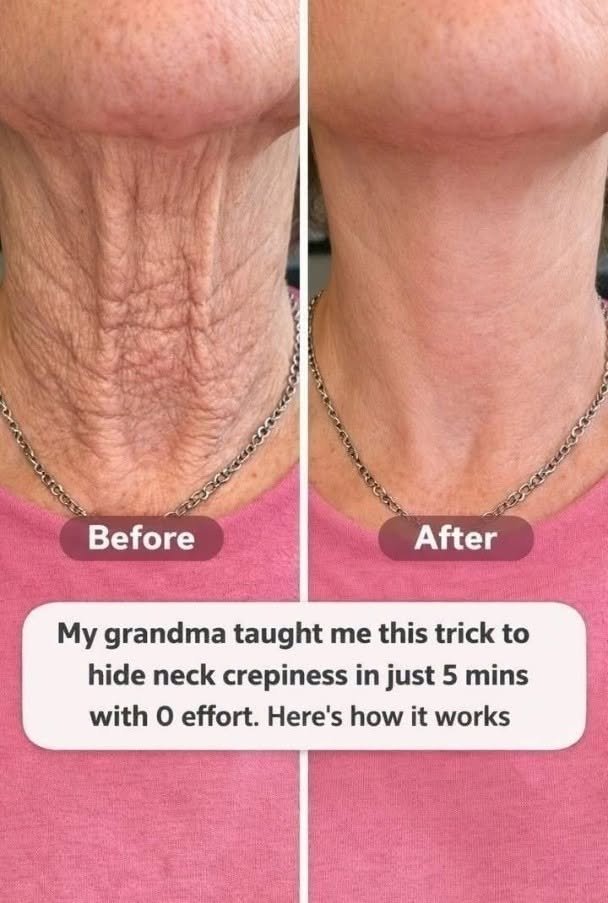
The term “crepey” describes skin that resembles crepe paper—loose, thin, and finely wrinkled. On the neck, this texture is not a single problem but a combination of factors. The dermis, the layer of skin responsible for structural support, becomes thinner with age and loses collagen, leading to that crinkled, tissue-paper appearance. Sun damage accelerates this process, breaking down elastin fibers and causing the skin to lose its ability to snap back. Separately, the platysma muscle—a thin sheet running from the jaw to the collarbone—can become more visible as vertical bands over time. And then there is the matter of posture: habitual downward gazing creates repeated folds that can eventually become fixed horizontal lines. A five-minute topical routine cannot address any of these structural changes. What it can do is temporarily plump the surface with moisture and use light-reflecting particles to blur the appearance of texture. Understanding this distinction is essential to evaluating the viral trick honestly.
Step One: Cleansing and Hydration—The Legitimate Foundation
The first step of the grandmother’s routine, as described in the viral posts, is gentle cleansing followed by a hydrating serum containing ingredients like hyaluronic acid or peptides. This is the most scientifically sound part of the entire process. Dry, dehydrated skin makes fine lines and crepiness appear more pronounced, while well-hydrated skin looks plumper and smoother. Dermatologists acknowledge that moisturizing is a useful part of caring for aging skin, even if the effect is temporary. A rich moisturizer applied with upward strokes helps trap water in the skin, softening the appearance of fine lines for the day. This is why many neck creams seem to “work” at first—they are delivering hydration, not structural change. The viral routine’s emphasis on hydration is legitimate, but it is important to recognize that this step is not a secret trick; it is basic skincare, and its benefits last only as long as the moisture remains in the skin.
Step Two: The Primer and Tapping Technique—Optical Illusion, Not Repair
The second step is where the “trick” reveals itself as cosmetic camouflage. After moisturizing, the routine instructs applying a light-reflecting primer, followed by gently tapping—not rubbing—along the creases with the fingertips. The primer creates a smooth surface that reflects light, instantly minimizing the appearance of lines and texture. The tapping motion helps distribute the product evenly and may encourage circulation, but it does not “blur” lines in any permanent or biological sense. This is the same principle behind makeup primers used on the face: they fill in imperfections and create a canvas that reflects light in a way that makes skin look smoother than it is. The effect is real in photographs and in person under the right lighting, but it washes off. It is clever, accessible, and harmless—but it is not skincare in the sense of improving the skin’s health or structure.
The Posture and Styling Components: Distraction as Strategy
The final elements of the routine involve posture adjustments—keeping the chin slightly lifted and shoulders back—and styling choices like scarves, statement necklaces, or tops with interesting necklines that draw the eye upward. These are not trivial additions; they acknowledge that how the neck appears in photos and in person depends heavily on angle, lighting, and framing. Tilting the head slightly and extending the neck can create a slimming, smoothing effect in photographs. A scarf or necklace can physically cover or distract from crepiness. This is the grandmother’s wisdom at its most practical: sometimes the goal is not to change the skin but to change how attention is directed. It is a legitimate strategy for feeling confident in a moment, but it should not be confused with a treatment for the underlying condition.