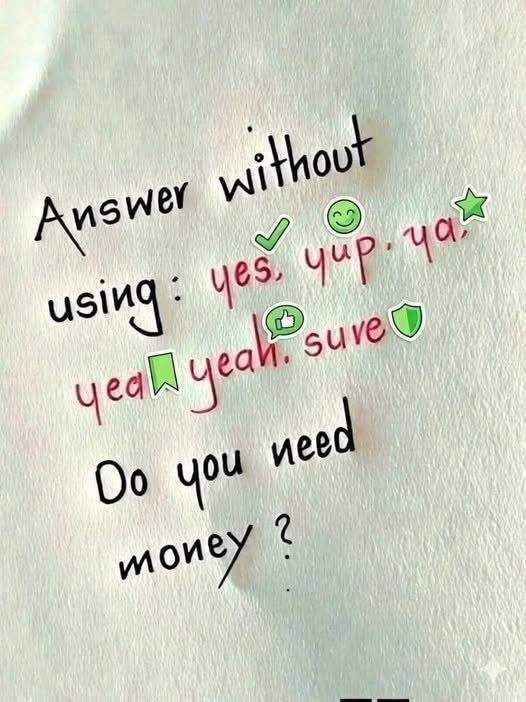
The Power of Saying Yes: A Simple Word That Shapes Our Lives
The power of yes has an important limitation.
Constantly agreeing to requests can lead to exhaustion, stress, resentment, and a lack of time for your own priorities.
There is a major difference between being open-minded and being unable to say no.
If you accept every request, you may eventually have too many commitments to fulfill effectively.
That is why a healthy life requires both words:
Yes—and no.
The Power of Saying No
A thoughtful “no” can be just as valuable as a thoughtful “yes.”
Saying no can protect:
Your time
Your energy
Your priorities
Your finances
Your personal boundaries
Your relationships
Your long-term goals
A refusal does not necessarily mean rejection of a person. Sometimes it simply means that a particular request does not fit your current circumstances.
Learning to say no respectfully can make your yeses more meaningful.
Intentional Yes vs. Automatic Yes
One of the most useful questions to ask before agreeing to something is:
“Am I saying yes because I genuinely want to, or because I feel pressured?”
An automatic yes may come from:
Fear of disappointing someone
Social pressure
Guilt
A desire for approval
Difficulty setting boundaries
Fear of missing out
An intentional yes is different. It reflects a conscious decision based on your values, interests, responsibilities, or goals.
Saying Yes to Yourself
Perhaps one of the most overlooked forms of saying yes is saying yes to your own needs.
This can mean choosing to rest when you are exhausted, learning something you’ve always wanted to learn, taking your goals seriously, or giving yourself permission to pursue an interest.
Sometimes personal growth begins with a quiet internal decision:
“Yes, this matters to me.”
That statement can be powerful because it transforms an idea into something worth acting upon.
Small Yeses Can Create Big Changes
Major life changes rarely happen through one decision alone.
More often, they emerge from a series of smaller choices.
Saying yes to learning a skill may eventually lead to a career opportunity.
Saying yes to meeting new people may lead to an important friendship.
Saying yes to physical activity may become a long-term healthy habit.
Saying yes to a creative project may eventually produce work you are proud of.
The original decision may seem insignificant at the time. Its consequences can become much larger later.
The Importance of Calculated Risk
Not every opportunity deserves a yes.
Before accepting something significant, it can be useful to consider:
What are the potential benefits?
What could go wrong?
What would this require from me?
Does it align with my values?
Can I realistically handle the commitment?
What happens if I change my mind?
This approach allows you to remain open to opportunities without abandoning judgment.
A courageous yes is not necessarily an impulsive yes.
A Simple Question to Ask Yourself
When an opportunity appears, consider asking:
“If fear were not making this decision for me, would I want to try?”
The answer does not automatically mean you should accept.
Fear can sometimes signal genuine danger, and caution is important. But fear can also simply reflect uncertainty.
Learning to distinguish between the two can help you make more thoughtful decisions.
The Ripple Effect of a Single Yes
One of the fascinating things about life is that we rarely know where a decision will lead.
A single yes can introduce a person, place, skill, or experience that changes what becomes possible afterward.
You may not know the outcome when you make the decision.
That uncertainty is part of what makes opportunities meaningful.
The goal is not to say yes to everything. It is to remain sufficiently open that fear, habit, or hesitation does not automatically close every door.
Final Thoughts
“Yes” is a small word, but it can represent curiosity, courage, openness, and willingness to act.
Saying yes to new experiences can create opportunities for learning and personal growth. It can strengthen relationships, build confidence, and introduce possibilities that would otherwise remain unexplored.
But the most powerful approach is not to become someone who always says yes.
It is to become someone who can choose deliberately.
Say yes when an opportunity aligns with your values, interests, responsibilities, or goals. Say no when something crosses an important boundary or takes you away from what matters most.
In the end, the power of saying yes is not found in the word itself.
It comes from what you choose to say yes to—and what you do with the opportunity afterward.