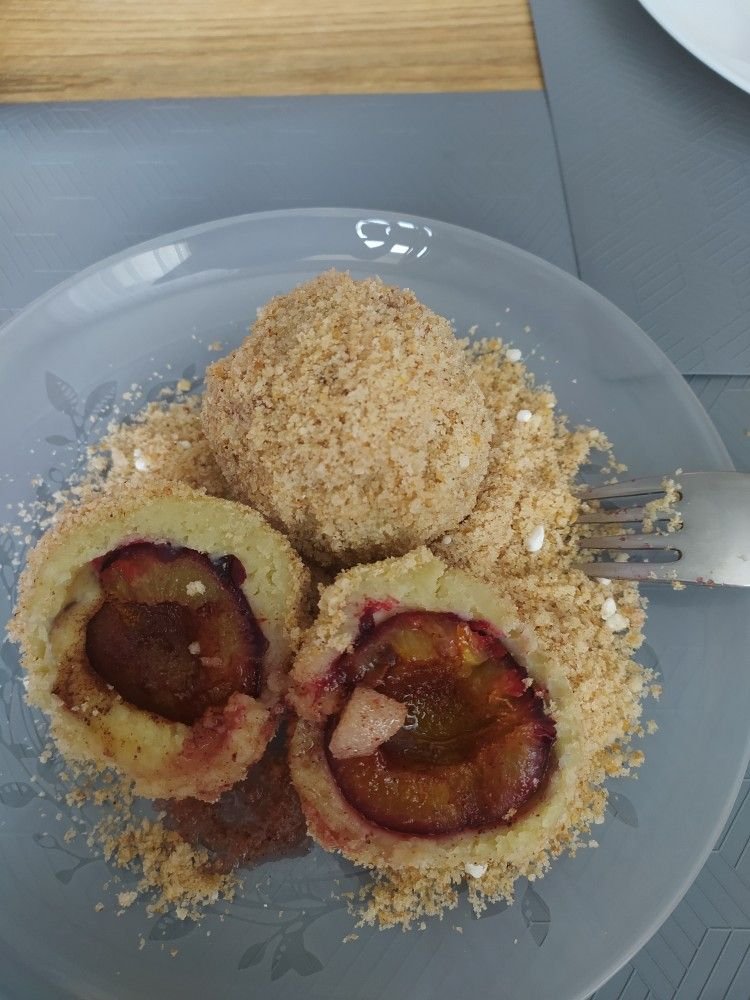
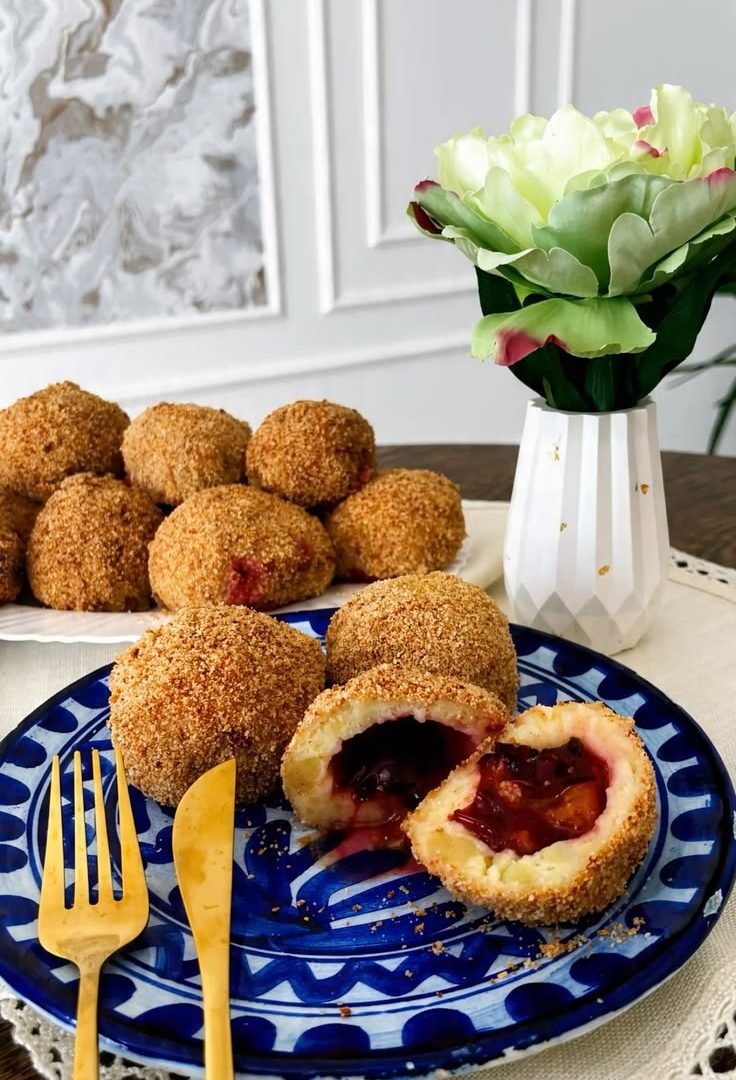
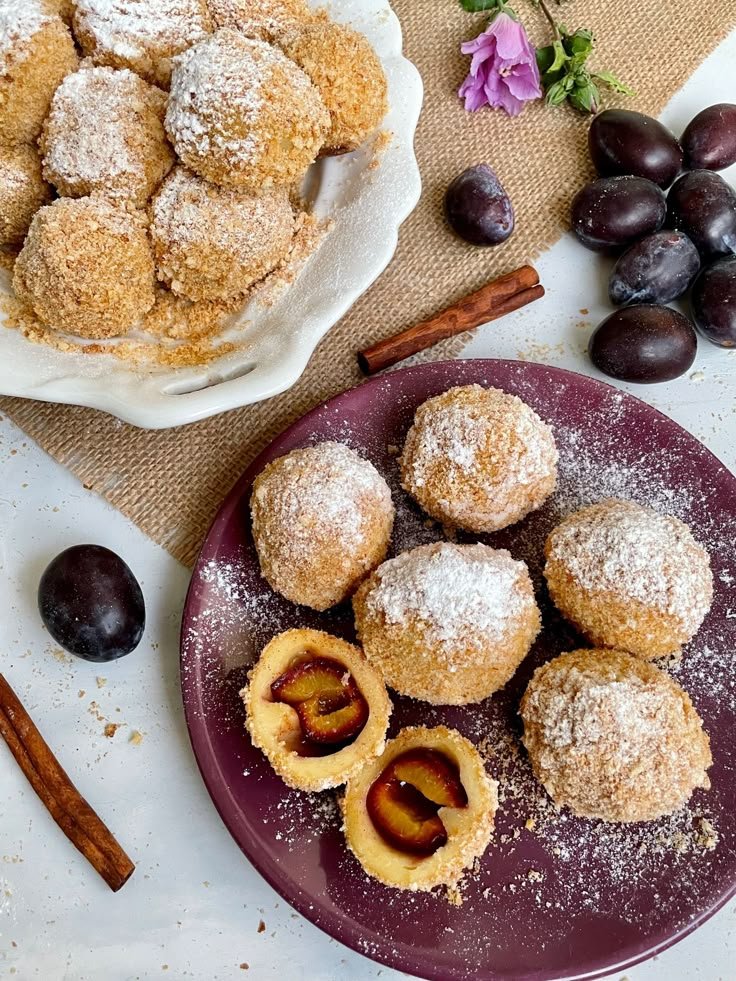
Traditional Hungarian Plum Dumplings (Szilvás Gombóc) 🇭🇺
How to Make Hungarian Plum Dumplings
1. Cook the Potatoes
Place the potatoes in a large pot of salted water and cook until completely tender.
Drain well and allow them to cool enough to handle.
Peel the potatoes and mash them until smooth.
Avoid adding milk or cream. The potato mixture should remain relatively dry so the dough doesn’t become too sticky.
2. Make the Dough
Place the mashed potatoes on a clean work surface.
Add the flour, egg, butter, and salt.
Mix and gently knead until a soft dough forms.
The amount of flour can vary depending on how moist the potatoes are. Add additional flour gradually if necessary, but avoid adding too much.
The finished dough should be soft and workable.
3. Prepare the Plums
Wash and dry the plums.
Make a slit along each plum and remove the pit.
Try to keep the plum relatively intact.
In a small bowl, mix the sugar and cinnamon.
Place a little of the cinnamon sugar inside each plum where the pit was removed.
4. Roll Out the Dough
Divide the potato dough into manageable portions.
Roll each portion out on a lightly floured surface to approximately ¼ inch thick.
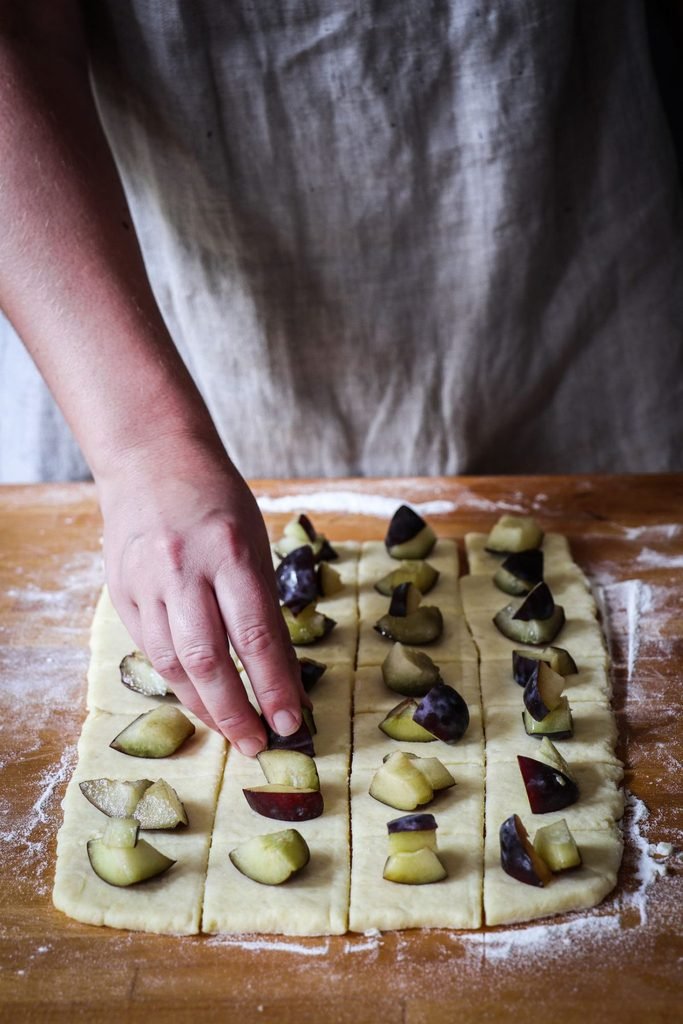
Cut the dough into squares large enough to completely surround a plum.
5. Wrap the Plums
Place one prepared plum in the center of a dough square.
Bring the corners of the dough together around the plum and carefully seal the edges.
Roll the filled dough gently between your hands to create a smooth, round dumpling.
Make sure there are no open seams.
Repeat with the remaining plums.
6. Boil the Dumplings
Bring a large pot of lightly salted water to a gentle boil.
Carefully lower the dumplings into the water in batches. Avoid overcrowding the pot.
When the dumplings rise toward the surface, continue cooking for approximately 3–5 minutes, depending on their size.
Remove them with a slotted spoon and allow excess water to drain.
7. Prepare the Breadcrumbs
While the dumplings cook, melt the butter in a large skillet over medium-low heat.
Add the breadcrumbs and toast them slowly, stirring frequently.
Cook until they become golden brown and fragrant.
Remove from the heat and stir in the sugar and cinnamon.
8. Coat the Dumplings
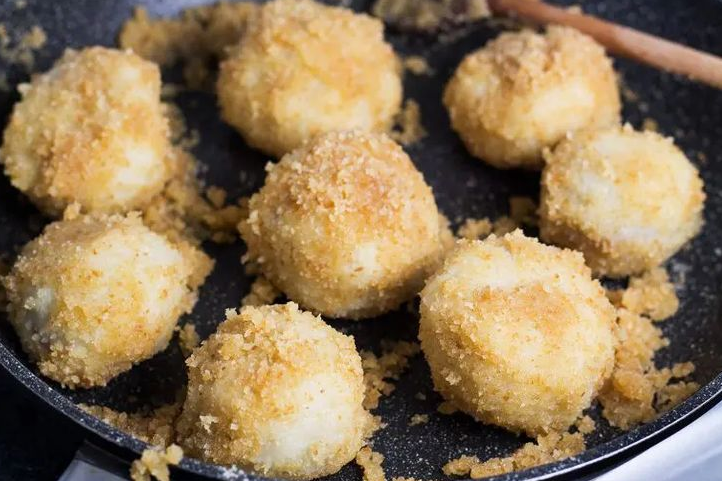
Place the cooked dumplings directly into the toasted breadcrumb mixture.
Gently roll them around until they are completely coated.
Be careful not to press too hard because the dumplings are delicate while hot.
The Secret to Tender Plum Dumplings
The most important ingredient isn’t actually the plum—it’s the potato.
Potatoes with a relatively dry, starchy texture are ideal because they require less flour. Too much flour can make the dough heavy and chewy.
After boiling the potatoes, allow excess moisture to evaporate before mashing them.
This small step can make a noticeable difference.
Choosing the Right Plums
Small, ripe plums work particularly well.
They should be:
Ripe but not mushy
Sweet and fragrant
Small enough to fit comfortably inside the dough
Firm enough to handle during preparation
Traditional Hungarian versions often use smaller European-style plums.
Why the Breadcrumb Coating Matters
The toasted breadcrumb coating isn’t just decoration.
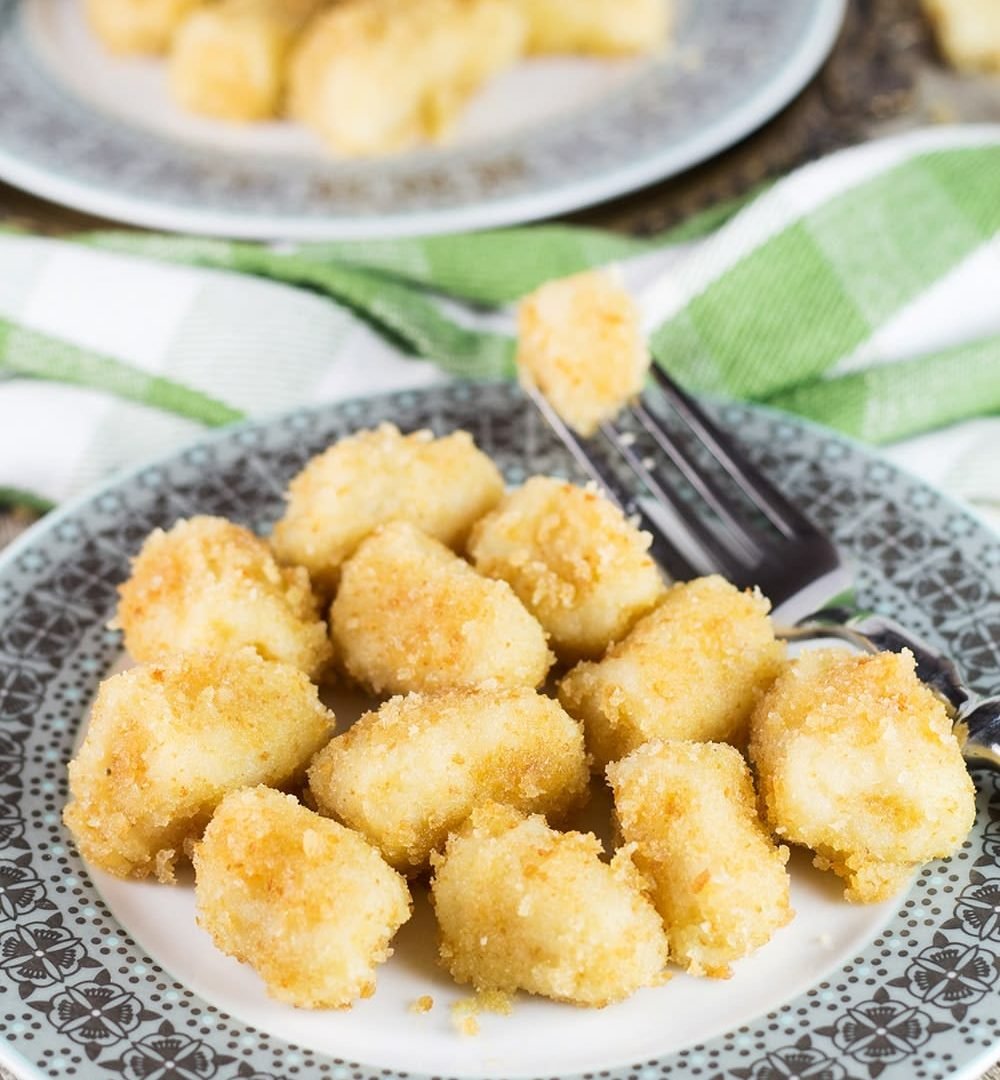
It provides a buttery, slightly crunchy exterior that contrasts beautifully with the soft potato dough and juicy fruit.
The combination of butter, breadcrumbs, sugar, and cinnamon is one of the defining characteristics of Szilvás Gombóc.
Helpful Tips
Keep the Potato Dough Soft
Use just enough flour to make the dough workable. Excess flour can produce dense dumplings.
Don’t Use Hot Potatoes
Allow the cooked potatoes to cool before mixing the dough. Hot, steamy potatoes can make the dough excessively sticky.
Seal Every Dumpling Carefully
Even a small opening can allow the plum juice to escape during boiling.
Don’t Boil Too Aggressively
A gentle boil helps prevent the dumplings from breaking apart.
Toast the Breadcrumbs Slowly
Medium-low heat gives the breadcrumbs time to become golden and nutty without burning.
A Beloved Hungarian Tradition
Szilvás Gombóc is deeply associated with Hungarian home cooking and is enjoyed as both a dessert and a sweet main course.
It belongs to a broader Central European tradition of fruit-filled dumplings, with similar dishes found in neighboring countries.
Hungarian families often have their own preferred versions—some use more cinnamon, some add extra sugar to the plums, and others serve the finished dumplings with additional powdered sugar.
Can You Use Other Fruit?
Yes. Although plums are traditional, similar potato dumplings can be filled with other fruits.
Apricots are particularly suitable because their size and texture work well with the potato dough.
However, plum remains the classic choice for Szilvás Gombóc.
Frequently Asked Questions
Can I use frozen plums?
Fresh plums are easiest to work with, but frozen plums can be used if they are thawed and well drained first.
Why did my dumplings fall apart?
The dough may not have been sealed properly, or the water may have been boiling too vigorously. Make sure the dough completely surrounds each plum.
Can I prepare the dumplings ahead of time?
Yes. The assembled uncooked dumplings can be refrigerated for a short period before boiling. For longer storage, they can be frozen before cooking.
Are Hungarian plum dumplings a dessert?
They can be served as dessert, but traditionally they can also appear as a sweet main course or substantial family meal.
Do I have to use cinnamon?
Cinnamon is traditional and pairs beautifully with plums, but you can adjust the amount according to your taste.
How to Serve Szilvás Gombóc
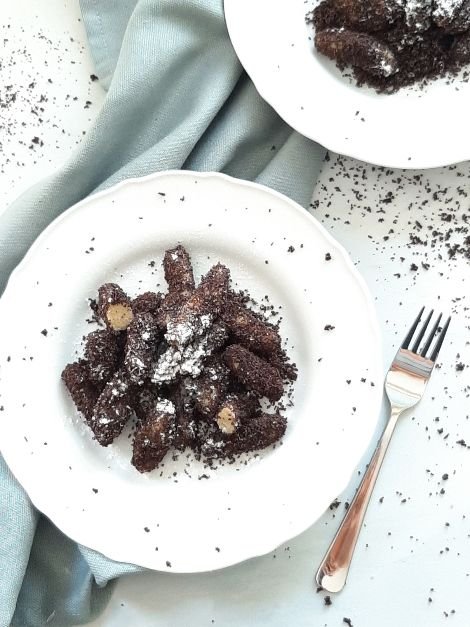
Serve the dumplings warm, generously coated in the cinnamon breadcrumbs.
For an extra finishing touch, add:
Powdered sugar
Extra cinnamon
A little melted butter
Sour cream
They are especially delicious when served shortly after cooking, while the plum filling is still warm and juicy.
Final Thoughts
Traditional Hungarian Plum Dumplings (Szilvás Gombóc) are a wonderful example of how humble ingredients can create an unforgettable dish.
Tender potato dough surrounds sweet, juicy plums, while buttery toasted breadcrumbs, sugar, and cinnamon provide the finishing touch.
It’s an old-fashioned Hungarian recipe that feels comforting, homemade, and generous—the kind of dish that turns seasonal plums and a few pantry staples into something the whole family will look forward to. 🇭🇺