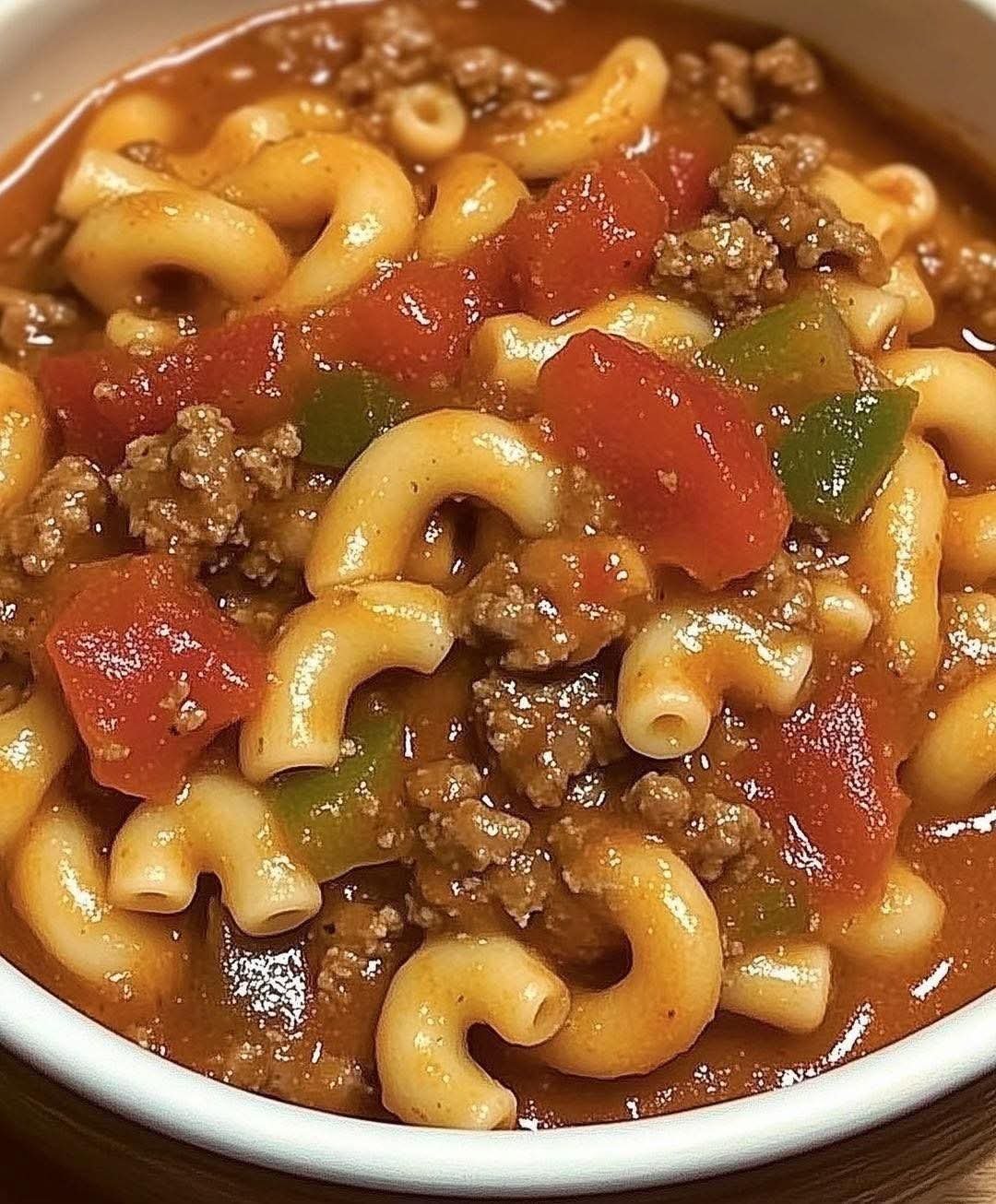
Cut the meat into roughly equal pieces so everything cooks evenly.
Pat the pieces dry and season lightly with salt and pepper.
2. Cook the Onions
Heat the lard or oil in a large heavy pot over medium heat.
Add the chopped onions and cook slowly for about 8–10 minutes, stirring frequently, until they become soft and golden.
This onion base is an important part of the characteristic flavor of pörkölt.
3. Add the Paprika
Take the pot briefly off the heat.
Add the Hungarian paprika and stir it into the onions.
Immediately add a small splash of water and stir. This helps prevent the paprika from burning, which can make it bitter.
4. Add the Meat
Return the pot to medium heat and add the meat.
Stir thoroughly so every piece becomes coated in the paprika and onion mixture.
Cook for several minutes until the meat begins to release its juices.
5. Add the Vegetables
Add the garlic, chopped tomato, bell pepper, and caraway seeds if using.
Stir everything together.
Add enough water or broth to create a moist cooking environment, but don’t completely cover the meat. Pörkölt should develop a thick, concentrated sauce rather than a watery broth.
6. Slow Cook
Cover the pot and reduce the heat to low.
Let the stew simmer gently until the meat becomes tender.
Cooking time depends on the meat:
Beef: about 1½–2½ hours
Pork: about 1–1½ hours
Lamb: about 1½–2 hours
Stir occasionally and add a small amount of water if necessary.
The meat should become fork-tender while the sauce gradually thickens.
7. Finish the Sauce
When the meat is tender, remove the lid and allow the stew to simmer uncovered for several minutes.
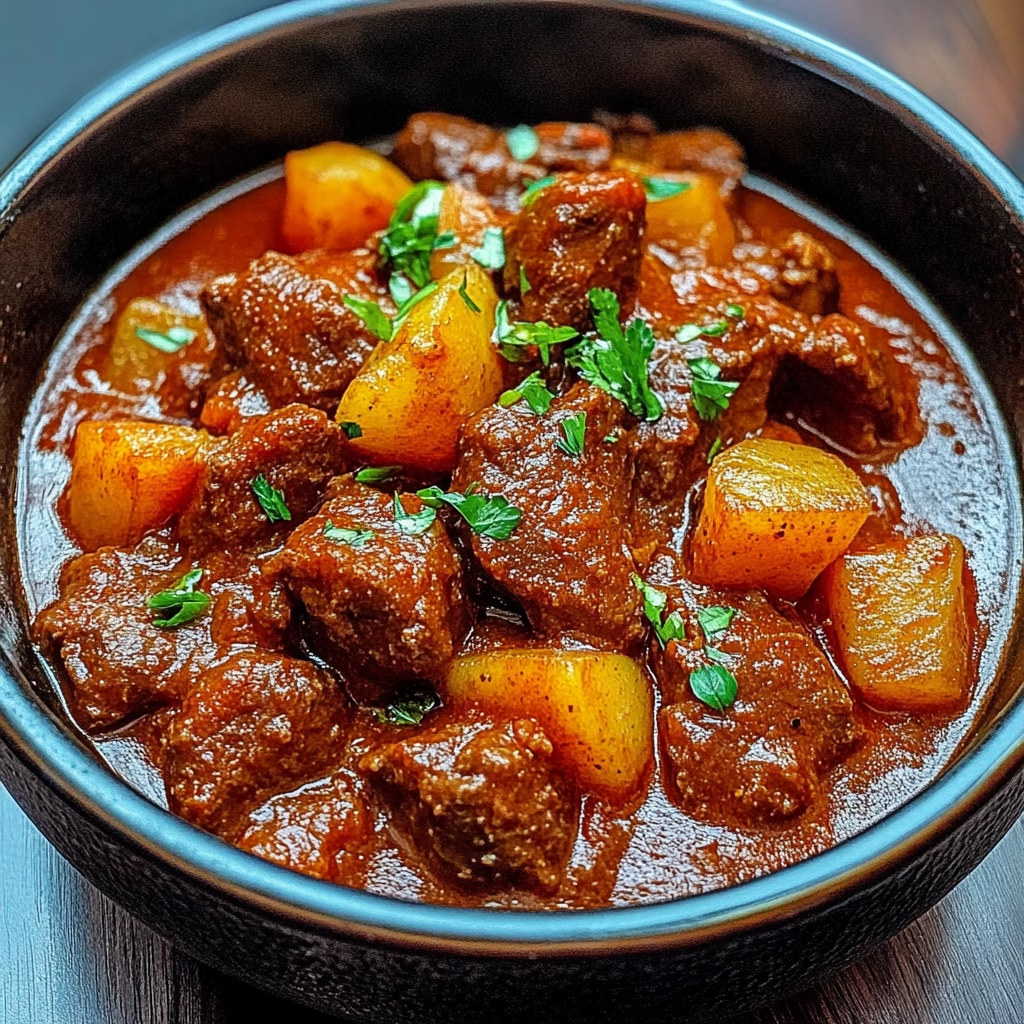
The finished pörkölt should have a rich reddish-brown color and a thick sauce that coats the meat.
Taste and adjust the salt and pepper.
How to Make Traditional Nokedli
Nokedli are small Hungarian egg dumplings and one of the most traditional ways to serve pörkölt.
Ingredients
2 cups all-purpose flour
2 eggs
½ tsp salt
About ½ cup water
Directions
Combine the flour and salt.
Add the eggs.
Gradually mix in the water until a soft, sticky dough forms.
Bring a large pot of salted water to a boil.
Drop small pieces of dough into the boiling water using a nokedli maker or spoon.
Cook until the dumplings float to the surface.
Drain well.
Spoon the hot pörkölt generously over the nokedli.
The Secret to Great Hungarian Pörkölt
The most important ingredient isn’t a complicated spice blend—it’s good-quality Hungarian paprika and the technique used with it.
Paprika should not be fried aggressively because it can burn quickly. Adding it after taking the pot off the heat and then introducing a little liquid helps preserve its sweet, fragrant flavor.
Another important secret is patience. Pörkölt is meant to cook slowly so the meat becomes tender and the onions, paprika, tomatoes, and peppers develop into a rich sauce.
Pörkölt vs. Goulash
Although the dishes are sometimes confused, they are different.
Pörkölt is a thicker stew with a concentrated sauce surrounding pieces of meat.
Goulash (gulyás) traditionally has considerably more liquid and is closer to a hearty soup or stew.
Both are important parts of Hungarian cuisine, but if you’re looking for something rich enough to spoon over nokedli, pörkölt is the perfect choice.
What to Serve With Pörkölt
A traditional Hungarian meal might include pörkölt alongside:
Homemade nokedli
Boiled potatoes
Egg noodles
Fresh bread
Pickled peppers
Cucumber salad
Sauerkraut
The tangy side dishes are particularly delicious with the rich paprika sauce.
Final Thoughts
Traditional Hungarian Pörkölt is the kind of meal that proves you don’t need a long list of ingredients to create incredible flavor. Tender meat, sweet onions, authentic Hungarian paprika, peppers, and tomatoes slowly transform into a rich and comforting stew.
Serve it steaming hot with homemade nokedli and a few pickles on the side, and you’ve got a true Hungarian comfort-food classic. 🇭🇺❤️