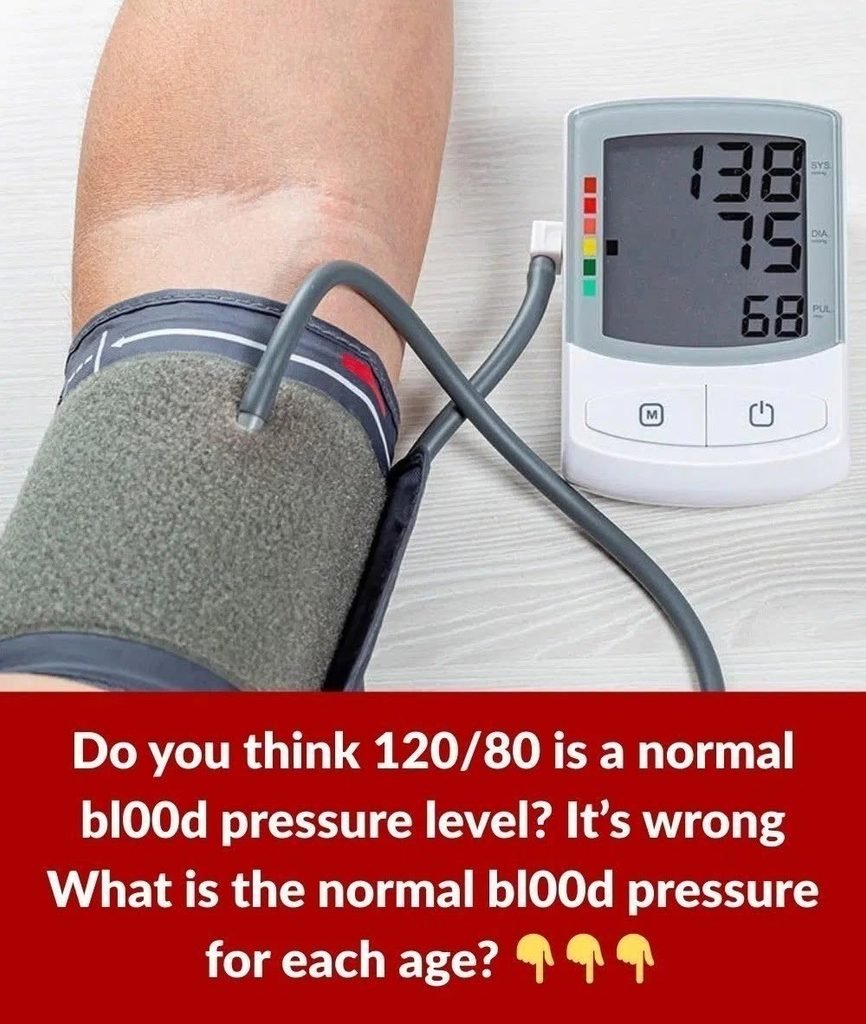
What Is Normal Blood Pressure for Your Age? A Clear, Updated Guide
Blood pressure is one of the simplest health measurements to take, yet it can be surprisingly confusing. Many people ask, “What should my blood pressure be at my age?” They may expect a different normal number at 30, 50, or 70.
The reality is more nuanced. For adults, modern guidelines generally classify blood pressure according to the actual reading rather than assigning a completely different “normal” range to every age group. Blood pressure does tend to change as people get older, but that does not mean high blood pressure should automatically be considered normal simply because someone is older.
Understanding what the two numbers mean, how readings are classified, and how to measure blood pressure correctly can help you interpret your results more accurately.
What Do the Two Blood Pressure Numbers Mean?
A blood pressure reading is written as two numbers, such as 118/76 mmHg.
The systolic pressure, or top number, measures the pressure in the arteries when the heart contracts and pumps blood.
The diastolic pressure, or bottom number, measures the pressure in the arteries while the heart relaxes between beats.
Both numbers matter. A person can have an elevated systolic pressure with a normal diastolic pressure, or vice versa.
Blood pressure is measured in millimeters of mercury (mmHg).
What Is Considered Normal Blood Pressure for Adults?
According to current American Heart Association/American College of Cardiology categories, normal adult blood pressure is:
Systolic below 120 mmHg AND diastolic below 80 mmHg.
For example:
110/70 — normal
118/76 — normal
119/79 — normal
A reading does not have to be exactly 120/80 to be healthy.
In fact, 120/80 is often described as a “normal” blood pressure in everyday conversation, but under current AHA/ACC classification, 120 systolic is already considered elevated when the diastolic is below 80.
Blood Pressure Categories for Adults
Here is the current AHA/ACC classification:
Category
Systolic
Diastolic
Normal
Less than 120
Less than 80
Elevated
120–129
Less than 80
Stage 1 hypertension
130–139
80–89
Stage 2 hypertension
140 or higher
90 or higher
Severe hypertension
Higher than 180
and/or higher than 120
The higher category applies if either number falls into a higher range. For example, a reading of 118/85 would not be considered completely normal because the diastolic pressure is in the Stage 1 hypertension range.
Does Normal Blood Pressure Change With Age?
This is where many people become confused.
Blood pressure commonly increases with age because blood vessels can become less elastic and cardiovascular risk factors accumulate over time. However, aging itself does not make high blood pressure harmless or automatically “normal.”
For adults, guidelines continue to emphasize blood-pressure levels and overall cardiovascular risk rather than saying that a particular high reading is acceptable simply because someone is older.
The European Society of Cardiology’s 2024 guidelines use a somewhat different classification system. They define office hypertension as 140/90 mmHg or higher, while describing 120–139 systolic or 70–89 diastolic as elevated blood pressure. This illustrates why people may encounter different thresholds depending on which guideline or country they are reading.
The important point is that there is no single “normal blood pressure chart by age” that should be used to diagnose yourself.
What About Blood Pressure in Your 20s and 30s?
Younger adults can absolutely develop high blood pressure.
A reading below 120/80 is considered normal under AHA/ACC adult categories, regardless of whether someone is 25 or 35.
Persistently elevated readings in a younger person deserve attention because high blood pressure can remain unnoticed for years while gradually increasing cardiovascular risk.
Lifestyle factors such as excess sodium intake, excess body weight, physical inactivity, alcohol consumption, smoking, poor sleep and chronic stress can contribute to higher blood pressure.
What About People in Their 40s and 50s?
As people enter middle age, blood pressure problems become increasingly common.
However, a reading such as 145/90 should not simply be dismissed as “normal for your age.”
Repeated readings in this range should be discussed with a healthcare professional. Depending on the individual, doctors may consider lifestyle changes, home monitoring, cardiovascular risk factors and, when appropriate, medication.
The goal is not simply to find a number that is typical for your age. The goal is to identify a blood pressure level that is appropriate for your individual health situation.