What Is Normal Blood Pressure for Your Age? A Clear, Updated Guide
Older adults often experience changes in blood pressure, particularly increases in systolic pressure.
This does not mean that hypertension should be ignored.
Treatment decisions in older adults can be more individualized because doctors may also consider other medical conditions, medications, kidney function, cardiovascular risk, falls, frailty and whether blood-pressure treatment causes symptoms such as dizziness.
The European guidelines emphasize individualized decision-making and note that treatment targets can have important exceptions depending on the person’s circumstances.
Therefore, an older person’s blood pressure should be interpreted in context rather than judged from age alone.
Why One High Reading Doesn’t Always Mean Hypertension
Blood pressure naturally fluctuates throughout the day.
It can temporarily rise because of:
Stress or anxiety
Exercise
Caffeine
Smoking
Pain
Poor sleep
A full bladder
Talking during the measurement
Incorrect cuff placement
Recent physical activity
For this reason, a single abnormal reading does not necessarily establish a diagnosis of hypertension.
Repeated measurements and, when appropriate, home or ambulatory monitoring can provide a much clearer picture. The European Society of Cardiology recommends repeated measurements and out-of-office monitoring when hypertension needs to be confirmed.
How to Measure Your Blood Pressure Correctly at Home
A good measurement technique can make a major difference.
Before measuring:
Avoid exercise, smoking and caffeine shortly beforehand.
Empty your bladder.
Sit quietly for about five minutes.
Keep your back supported.
Place both feet flat on the floor.
Rest your arm on a surface so the cuff is around heart level.
Use a properly sized cuff.
Do not talk during the measurement.
Take more than one reading when monitoring your blood pressure.
For home monitoring, the ESC patient guidance recommends taking two readings, separated by about one to two minutes, in the morning and evening over several days, then using the average to help assess blood pressure.
What If Your Blood Pressure Is Low?
Not everyone with a low reading has a medical problem.
Some healthy people naturally have relatively low blood pressure, particularly if they feel well and have no concerning symptoms.
However, low blood pressure can become important when it causes symptoms such as:
Dizziness
Fainting
Weakness
Confusion
Blurred vision
Unusual fatigue
If low readings repeatedly cause symptoms, discuss them with a healthcare professional.
What If Your Blood Pressure Is Very High?
A reading above 180 systolic and/or above 120 diastolic is considered severe hypertension under AHA/ACC categories. The AHA advises waiting at least one minute and repeating the measurement.
If the repeat reading remains that high, contact a healthcare professional promptly.
If very high blood pressure occurs together with symptoms such as chest pain, shortness of breath, back pain, numbness, weakness, vision changes or difficulty speaking, emergency medical care is needed.
How Can You Keep Blood Pressure in a Healthy Range?
Blood pressure is influenced by many factors, and lifestyle habits can make an important difference.
Helpful habits include:
Eating a balanced, heart-healthy diet
Limiting excess sodium
Getting regular physical activity
Maintaining a healthy weight
Eating plenty of vegetables and fruits
Getting adequate sleep
Avoiding tobacco
Limiting or avoiding alcohol
Managing stress
Taking prescribed medications as directed
The 2025 AHA/ACC hypertension guideline emphasizes lifestyle measures such as healthy weight, a heart-healthy eating pattern, sodium reduction, appropriate physical activity and reducing or eliminating alcohol.
The Bottom Line
So, what is normal blood pressure for your age?
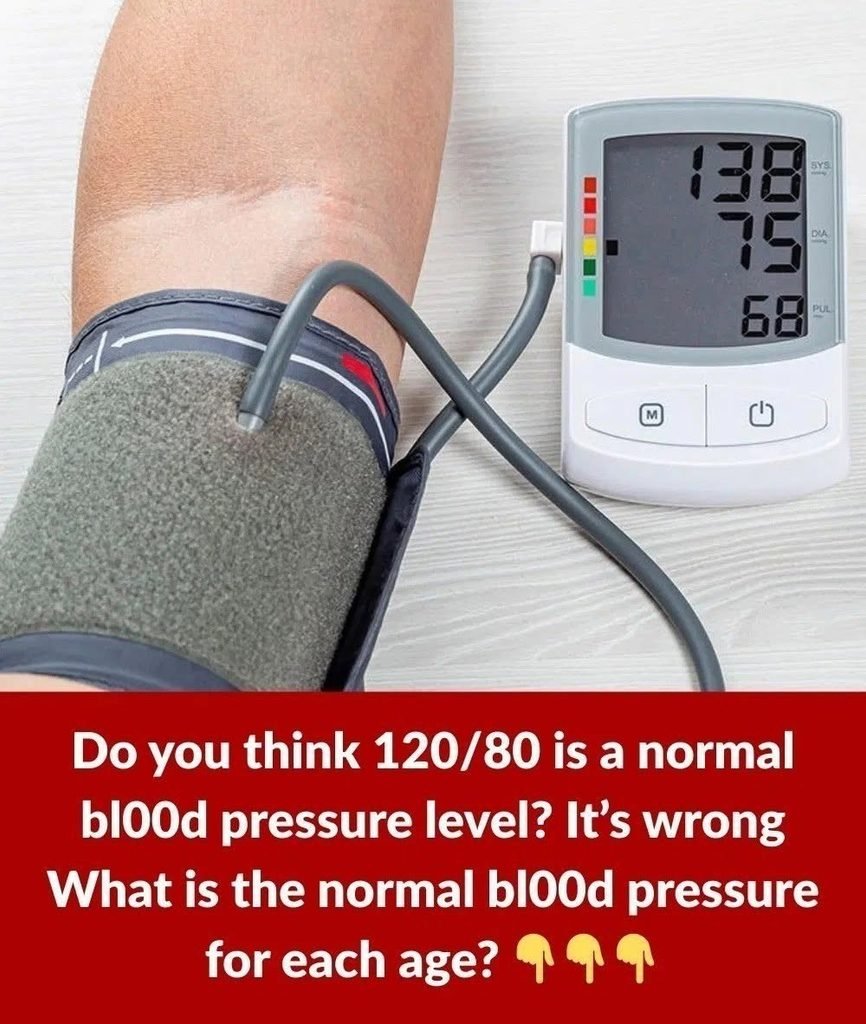
For most adults, normal blood pressure is below 120/80 mmHg according to the current AHA/ACC classification. But blood pressure should not be interpreted using age alone.
A person’s overall health, repeated measurements, medications, cardiovascular risk and other medical conditions all matter.
If your readings are repeatedly above the healthy range—or unusually low and causing symptoms—don’t rely on an age-based chart alone. Keep a record of your readings and discuss them with a qualified healthcare professional.
Blood pressure is one of the most useful health numbers you can monitor, but the trend over time is often more informative than one isolated measurement.