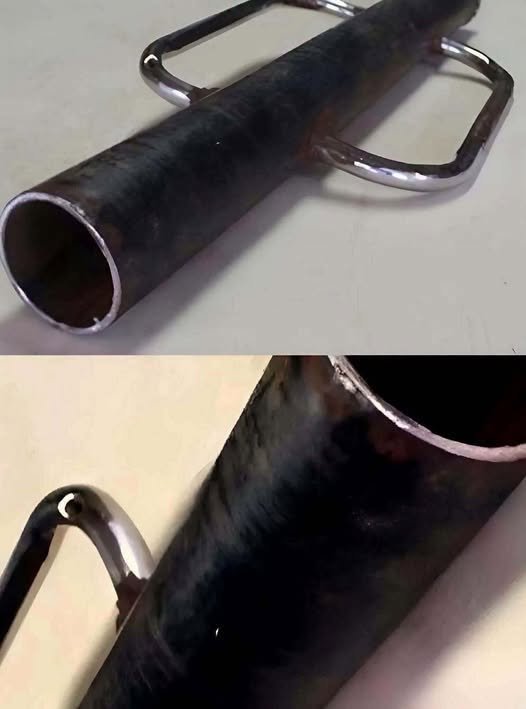
The Mysterious Steel Chunk: What Is This Heavy Metal Tool?
When identifying an unfamiliar steel tool, its shape is often more informative than its weight.
Look for:
Flat Working Surfaces
A broad, flat surface may indicate that the object was intended to support or strike another material.
Holes
Different types of holes can provide valuable clues.
A square or rectangular hole may have been designed to accept a specialized tool, while threaded holes may indicate that the object was attached to machinery or a workbench.
Grooves and Channels
Curved grooves can indicate that the tool was designed to bend, form, or support round materials.
Sharp Edges
A hardened edge may have been intended for cutting, shearing, splitting, or striking.
Handles or Mounting Points
A handle suggests that the object was intended to be carried or positioned manually, while mounting holes may indicate that it belonged to a larger machine or fixed workstation.
Forged Steel vs. Cast Iron
The manufacturing method can also provide clues.
Forged steel is shaped through mechanical force and heat. Forged tools often have a dense, durable construction designed to withstand impact.
Cast iron is produced by pouring molten metal into a mold. It can be extremely useful for heavy machinery and stationary workshop equipment, although it behaves differently from forged steel under repeated impact.
Surface appearance can sometimes offer clues, but determining the exact material from photographs alone is not always reliable.
Look for Markings
Old tools frequently contain identifying information.