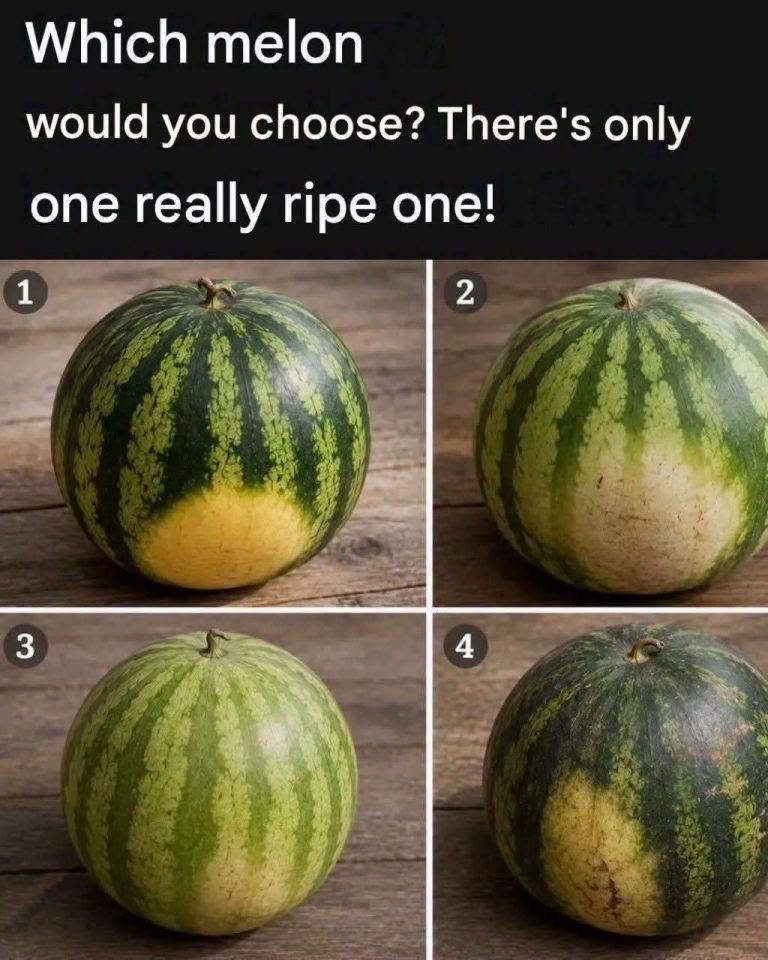
Which Melon Would You Choose? There’s Only One Real Answer
If you’re choosing an actual melon rather than answering a visual puzzle, there are several practical things worth checking.
1. Look at the Color
Different melon varieties have different signs of ripeness, so there isn’t one universal color rule.
For many melons, however, a ripe appearance tends to be more developed and consistent than that of an immature fruit.
2. Check the Weight
A melon that feels surprisingly heavy for its size may contain plenty of water and can be a promising choice.
This isn’t a guarantee of sweetness, but weight can be a useful clue when comparing similar fruits.
3. Smell the Fruit
A ripe melon may have a noticeable, sweet aroma, particularly around the stem end.
If there is little aroma, the fruit may not yet be fully ripe. On the other hand, an unpleasant fermented smell can indicate that it has gone too far.
4. Examine the Skin
Avoid melons with extensive soft spots, leaking areas, deep cracks, or obvious signs of decay.
Minor surface imperfections don’t necessarily mean the inside is bad, but significant damage deserves caution.
There Isn’t Always One “Real” Answer
The phrase “There’s only one real answer” is what makes these puzzles particularly intriguing.
It creates the expectation that one option must be correct. But if the question is simply asking which melon you would choose, there may be no objectively correct answer.
Your choice could be based on appearance, your favorite variety, memories of eating melon, or simply the one that catches your eye first.
That uncertainty is precisely what makes the question fun.
Melon Is More Diverse Than It Looks
“Melon” isn’t a single type of fruit. The category includes numerous varieties with very different flavors and textures.
Cantaloupe is known for its fragrant, orange flesh. Honeydew generally has pale green flesh and a mild sweetness. Watermelon, despite its name and familiar place in the same broad food category, has its own characteristics and is botanically classified within the same broader cucurbit family.
There are also less familiar varieties cultivated around the world, each offering different combinations of sweetness, aroma, firmness, and color.
So the “best” melon can depend entirely on what you enjoy.
The Fun of First Impressions
Part of the appeal of these visual questions is how quickly we make decisions.
You might look at several melons and immediately think:
“That one.”
Only afterward do you begin wondering why.
Was it the color? The shape? The size? The texture you imagined? Or simply the fact that it looked the most appealing?
That instant reaction is a small example of how visual information influences everyday decisions.
How to Choose a Good Melon in Real Life
If the puzzle has made you crave an actual melon, slow down and use several clues rather than relying on appearance alone.
Choose fruit that looks appropriately ripe for its variety, feels substantial for its size, has a pleasant aroma when applicable, and doesn’t show major signs of damage or spoilage.
Once you bring it home, proper storage also matters. Some melons can continue changing after harvest, while others benefit from refrigeration once cut. Cut melon should be refrigerated promptly and handled with clean utensils and surfaces.
Final Thoughts
So, which melon would you choose?
The answer may reveal your preference—but it doesn’t necessarily reveal your personality, and there isn’t automatically a scientifically correct choice.
The real appeal of the question is its simplicity. A few colorful fruits can turn an ordinary decision into a surprisingly engaging conversation.
Sometimes, the best answer is simply the one that makes you think: